In search of holy water
Jonathan Cowie (who has yet to swim in a well) delves into archives of wishing wells, springs and water boreholes in pursuit of local holy water he could take a dip in. But is it wild swimming?
Water, wells and springs is the theme of this month’s issue. Is it swimming if it’s in a well? I can’t say I have ever swam in a well (I don’t fancy being pelted with coins or being rescued by Lassie), but if it involves getting wet then chances are it can be stretched to be called swimming.
Is it wild swimming though? Cue the perennial: “Why do they call it ‘wild swimming’, it’s just swimming.” Well yes, but actually no. It nicely differentiates it from the kind of swimming that involves a heated pool (although barely, what with the energy crisis), cubicles and plug-in hair straighteners in the changing village (who actually uses communal hair straighteners?). And likewise differentiates it from open water swimming or racing. It’s all semantics, innit? As anyone who loves swimming knows, it’s about more than just moving your limbs to propel yourself through water.
Anyway, back to swimming in wells. I felt I was missing out, so I googled some local wells. Well (excuse the pun), what a whole new world opened up to me. Firstly, there is a National Well Record Archive. My initial excitement of finding an archive of wishing wells was tempered when I realised the collection of over 105,000 records of springs, water wells and water boreholes is an inventory of water resources to underpin hydrogeological research. Which is marvellous, but not much help in finding wells to swim in.
More fruitful was the Holy & Historic Wells of Cumbria Facebook page and opensource maps of ancient wells in Cumberland and Westmorland. Nearby wells include Levens Dropping Well, “which is of a petrifying quality, and in a short pace of time will turn moss, wood, leaves, and the like, into stone.” One for just a quick dip, maybe.
Does sitting in a well or holy spring count as swimming? I would argue that it counts as “wild swimming” – the experience of communing with nature as a continuation of the pagan and Christian heritage of the wells, a modern-day baptism in holy waters. Distance swimming in a well would be pretty difficult though.
Cumbria is blessed with numerous holy wells and springs, but in towns and cities many have been lost to urbanisation, destroyed and buried under roads and buildings. There were more than 20 holy wells or sacred springs in London, most of which no longer exist.
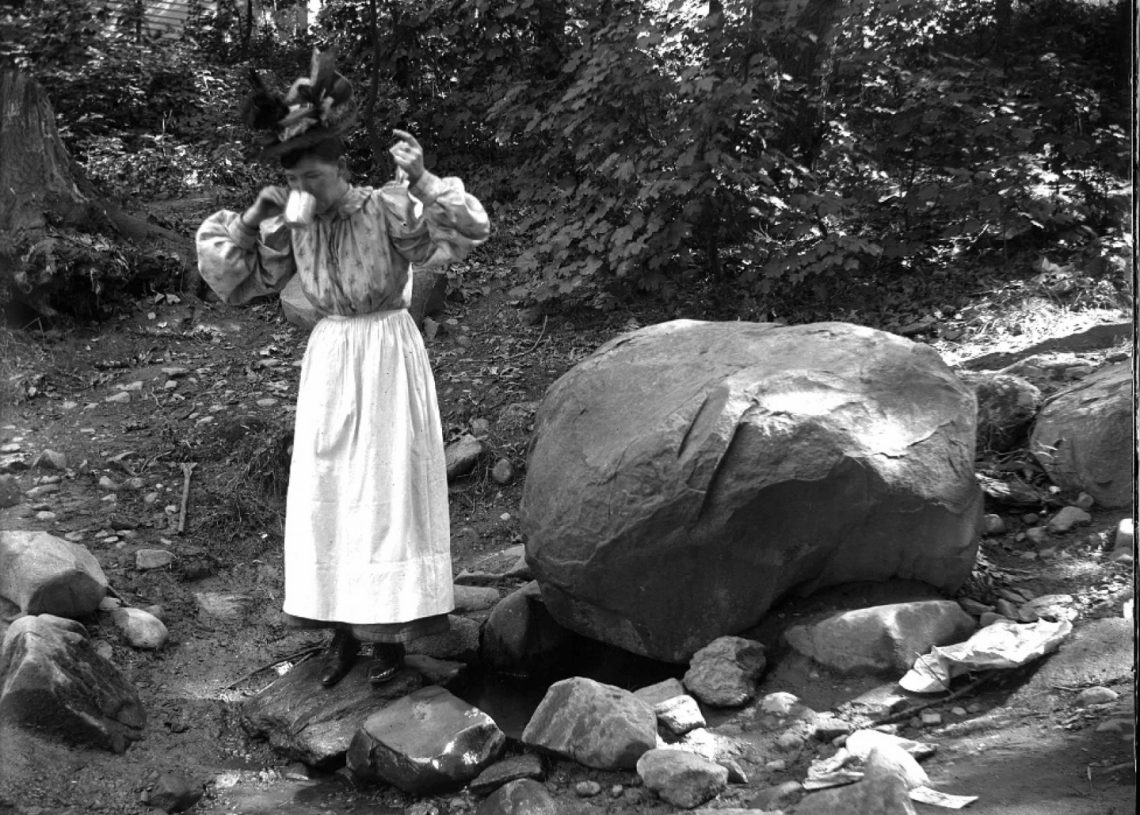
In New York there exists a rich archive of lost wells thanks to the photographs of James Reuel Smith, who catalogued and photographed over 160 wells and springs in Manhattan and the Bronx between 1897 and 1901. These wells were for the daily drawing of water rather than holy sites, but the photographs are a fascinating reminder of the importance of water. Even in today’s climate crisis it is too easy to turn on a tap without thinking of where our water comes from, where it goes to, and how in other parts of the world its scarcity is life-threatening.
The pure water of holy springs is soon defiled with pollution from various sources, not least the sewage pumped into our rivers and seas. And we are lucky in the UK; billions of people worldwide still lack safely managed drinking water and sanitation. As swimmers, we are on the frontline of the battle for safe and clean water. Join your local campaigns to help ensure clean and safe water for all.
Pictured: A Woman Drinks at the Carmen Spring, New York, by James Reuel Smith.