


Lido guide: Stand up and be counted
Despite the positive impact a local lido can have on its wider community, outdoor pools continue to struggle due to lack of funding. Emma Pusill, author of The Lido Guide, reports.
Every outdoor swimmer reading this, as well as any long-suffering loved ones who have picked up the magazine in an idle moment, will know that community is at the heart of what we do. Why else would we be spending hours online debating the relative merits of polarised goggles, seeking advice about the best way to deal with swimmer’s itch and comparing training plans for that first ever 10k swim we entered over the Christmas break – when we were tucked up indoors, warm and snug and on the wrong end of a couple of sherries. It seemed like a good idea at the time, yes?
And any regular lido swimmer will know that the community that is built around an outdoor pool is bonded closer than some families. We’d happily contemplate going on holiday with our favourite lido pals; less so Great Aunt Mildred and cousin Ronald, perhaps.
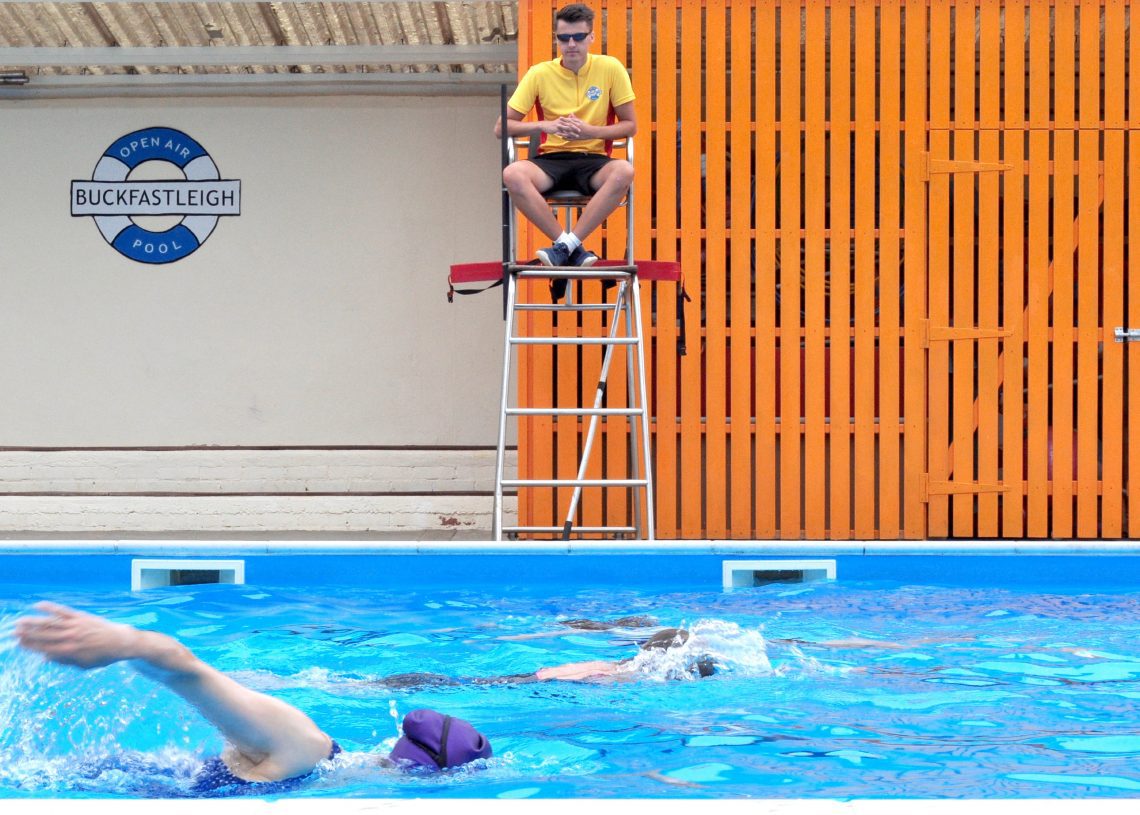
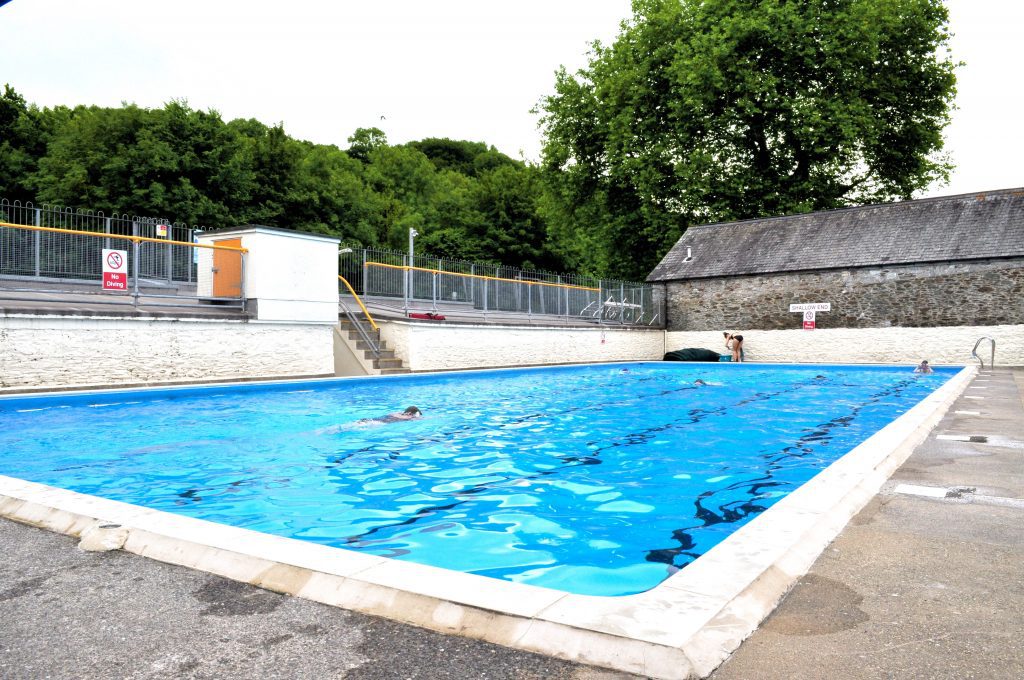
What may be news, however, is just how much impact a local lido can have on its wider community. Buckfastleigh pool, tucked under the hem of Dartmoor’s skirts, is a first-class example of this and proof, if ever it were needed, that small can be mighty.
In 1887 the Hamlyn family, owners of the town’s woollen mill, gave the pool and adjacent Victoria Park to Buckfastleigh for the use of the town in perpetuity. Trusteeship eventually passed to the council, but in 2014 they announced that they would close the pool for lack of funds. This was the latest in a long line of closures seen by Buckfastleigh, a town that faces significantly higher levels of social challenge and deprivation than the rest of the largely affluent South Hams. The community saw it as the final straw and rallied together to save it.
The campaign was successful and in 2014 the pool and park were passed back into the trusteeship of the town. Pam Barrett, who has been chair of the Board of Trustees ever since, describes how saving the pool has ‘galvanised’ the whole community. Businesses, residents of all ages and swimmers from across the area have come together to support the pool and renovate the park, and its success has had noticeable positive impacts. Littering, vandalism and anti-social behaviour have decreased across the town, because there is somewhere welcoming to go that people can, and do, take pride in. The very act of fighting for the pool has been a positive thing. The community has learned that it can succeed, and it takes pride in that.
Media coverage of the success has raised the profile of Buckfastleigh, and that actively draws visitors to the town; benefits recognised by local businesses. There have been transformative initiatives that have grown out of the work done to save the pool. The rural agenda has been brought to the forefront and Be Buckfastleigh, a Community Interest Company set up to provide free activities and services to connect people to each other, their communities and nature, is thriving. Local politics has also been transformed, with independent candidates now having a strong foothold. Decisions are made focussed on the local community, rather than being driven by any national political ideology or agenda.
A lido facing an uncertain future
But despite this success the future of Buckfastleigh pool is far from certain. The financial challenges have never been more severe. Pam Barrett explains that despite widespread local recognition of the value of the pool, lidos are not valued by the likes of the Department for Culture, Media & Sport (DCMS), Sport England, Swim England, NHS England or education providers. Much is made, for example, of social prescribing of activities like swimming. On paper that sounds fantastic and as swimmers we can see the sense in it – but that system is patchy, broken and there is simply no money flowing to pools as a result.
Multi-academy trusts, the privatised model of delivering state education, sit on cash reserves that run into the millions (as well as having been gifted land and buildings valued at much, much more) but contribute nothing to facilities like this that support them with a low-cost way to meet their swimming lesson provision obligations.
Swim England and Sport England (who administer grant funding on behalf of DCMS) do not recognise the unique challenges faced by volunteer-run lidos, nor do they represent the unique opportunities for widening participation in swimming to under-represented groups. As a result, they don’t lobby on behalf of lidos and they design funding application processes that disadvantage them because volunteer trusts running pools don’t have access to the accounts departments and administrative resources that corporate operators of leisure services have. I have been involved with Portishead Lido’s application to the Swimming Pool Support Fund, designed to ease the pressure arising from high energy costs. It has taken over 30 hours of volunteer time to complete, with no guarantee that any funding will be granted.
While national level champions and custodians of swimming communities do not recognise, or value, lidos these vital health and wellbeing facilities, so often left in the hands of volunteers to manage, will continue to struggle to serve their local communities and all the many and varied benefits they bring are at grave risk of being lost.
After ten years at the helm Pam Barrett will soon step down as Chair – she’s earned the rest, frankly. By the time you read this I hope someone else has stepped up. But up and down the country pools are struggling to recruit volunteers, trustees and committee members. You can help, just by being involved. Stand up and be counted. And talk to your MP about your lido and why it matters. If we can collectively get them on the political map the future may begin to look brighter.

Outdoor Swimmer
Outdoor Swimmer is the magazine for outdoor swimmers by outdoor swimmers. We write about fabulous wild swimming locations, amazing swim challenges, swim training advice and swimming gear reviews.