


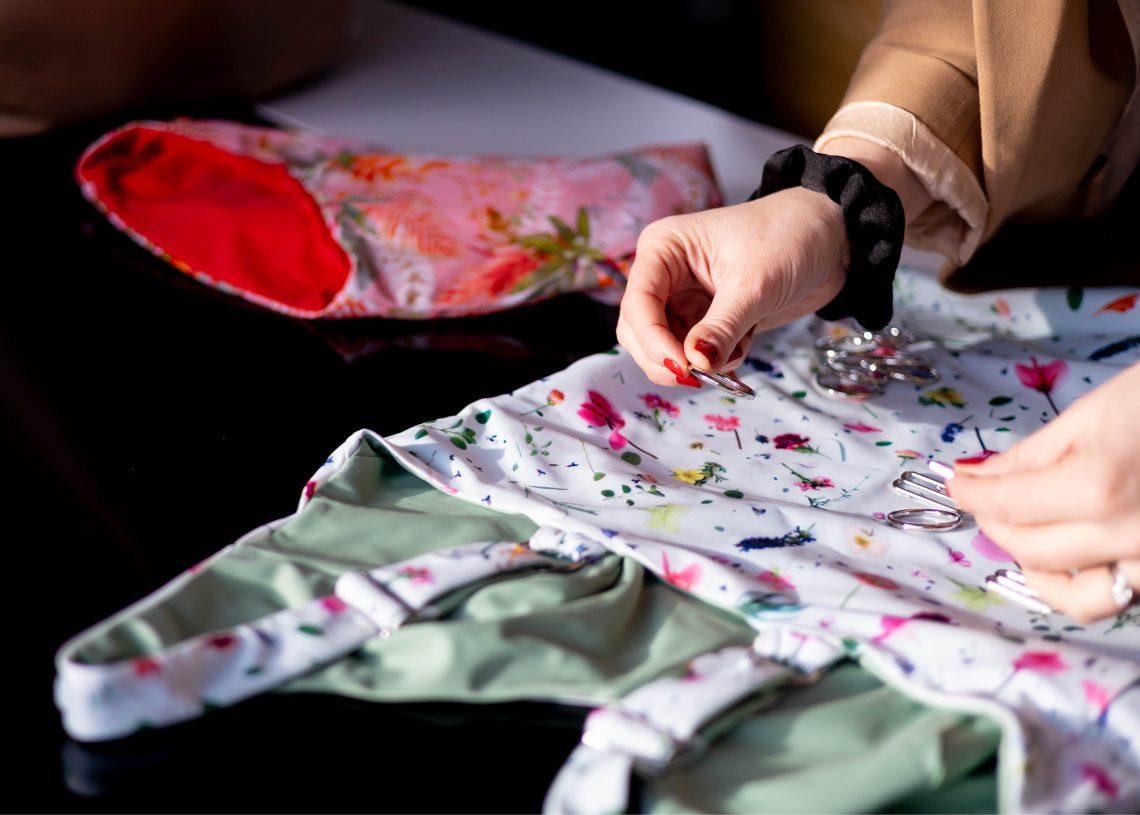
Kit conscious: how to reuse, repair or recycle your swimsuit
What are the greenest ways to manage your swim kit? Rowan Clarke investigates how to reuse, repair or recycle your swimsuit or wetsuit
Wouldn’t it be great if we could just enjoy water naked, wild and free? But (curse those social expectations) the reality is that we need swimming kit. Depending on what kind of swimming we do, the contents of our kit bag cover our nakedness, provide post-swim comfort and enhance our swim experience.
But there’s a dissonance between our desire to be environmentally sensitive and this need for kit – much of it made from plastic of some description. As we bear witness to pollution and littering, how can we ensure that our kit choices have the smallest possible impact on the environment?
Consumer behaviour
Reducing the sheer volume of stuff that we buy is the most powerful thing we can do as consumers. That’s not only about buying less, but also making sustainable choices when we shop: looking closely at the production process of our purchases, the energy used, the carbon footprint and waste from the production process through to the end of the item’s life.
So, how do we do this? One approach is to invest carefully in the things you need. This means spending more on a single item that does exactly what you need it to do and lasts longer. A simple example is investing in some decent earplugs that fit properly, you can use time and again and attach to your goggles so that you don’t lose them.
Another important consideration is where the item was made. If your new changing robe was made in the country where you live, then its carbon footprint will be smaller than if it was made on the other side of the world. Be aware, though that an item can be assembled in your country from imported components and still legally claim it was made there. So, your changing robe might be ‘made in the UK’ but the fabric could be imported from Bangladesh and the zip from China.
Ethically made items are likely to come with a higher price tag. But if you consider what you’re paying for, they can be budget-friendly as well. For example, if your £95 swimsuit lasts four times as long as a £35 swimsuit, then you’re quids-in long term.
“When we talk about sustainable swimwear, we often think about what something is made of and where it’s made,” says Rosie Cook, founder of sustainable swimwear brand Deakin & Blue. “But, the most sustainable option of all is to buy a style you love and feel amazing in because then you’ll wear it time and again and look after it. Owning three or four things that you feel average in, or aren’t fit for purpose, might mean that you don’t really look after them and when they come to the end of their life or they get damaged, you just chuck them away.”
Borrow and buy
Of course, in order to invest in quality, eco-friendly, long-lasting pieces, you do need to have the money in the first place. Luckily for those who don’t, there are a couple of low-budget options that also make good, green sense.
The first is to borrow or hire that big-ticket piece of kit. This works especially well if you’re unsure about what to buy or entering unchartered waters in your swimming journey. For example, if you’ve entered the Dark 10k this year and it’s your first endurance swim, you may want to hire a wetsuit until you decide that you’re sticking with it. Hiring a wetsuit also means that you can get a feel for it before investing in one of your own.
At My Wetsuit Hire and U Swim, you can choose from a range of swimming wetsuits to hire for a couple of days or a full season. Tri Wetsuit Hire also loans neoprene hats, socks and gloves, tow floats and swimrun kits.
Wetsuit hire companies are also great places to pick up an ex-rental wetsuit. Buying second-hand not only saves an item from landfill, but it also helping cut the amount of new stuff being manufactured. Heed Rosie’s advice though – make sure you’re buying what you want, need and love or you might be wasting your money and an item that might be better for someone else.
Lots of swim venues and leisure centres do kit amnesties and preloved sales. Online shops like eBay and Oxfam are also good options. But more recently, preloved shopping apps have popped up to offer easy and safe buying and selling. On Vinted, we found a top brand wetsuit in great condition for £34. On Depop, we found a big brand swimsuit that had barely been worn for £3.50.
How to repair your swimsuit or wetsuit
Preloved apps, websites and sales are also a great way of getting rid of items of swimming kit that you no longer want, need or can use. But what if it’s broken or knackered?
Our disposable culture has diminished our repair skills. Too often, fixing damaged articles isn’t financially viable for retailers, so if your wetsuit zip breaks, it’s cheaper for a company to replace it than repair it, throwing away the broken wetsuit.
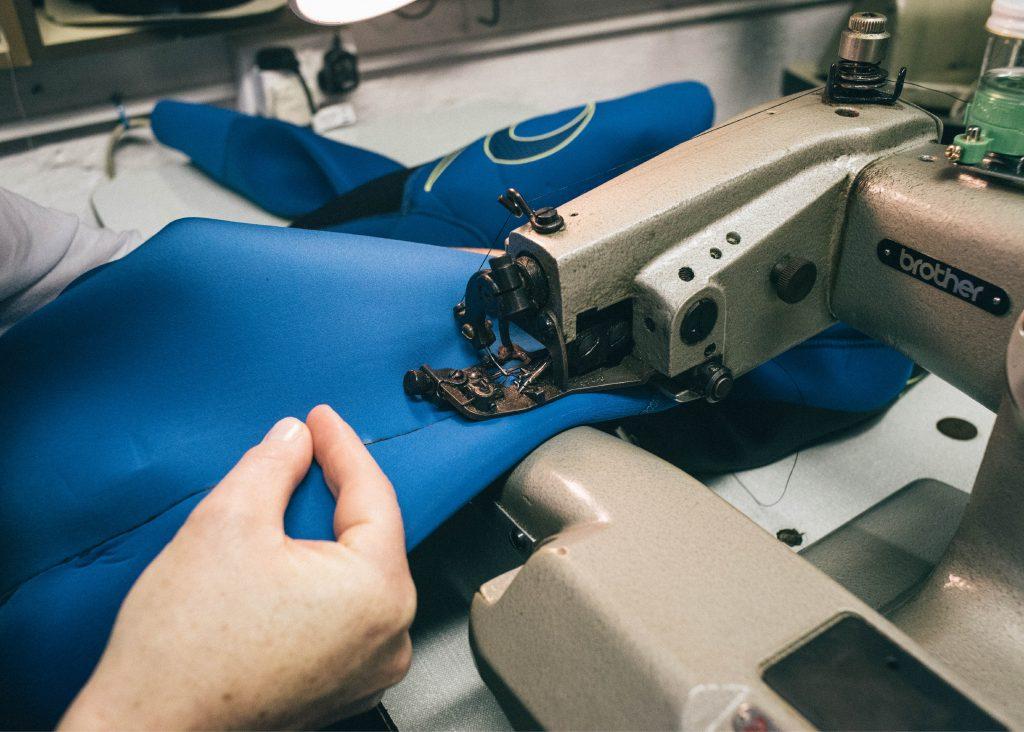
Wetsuits can be repaired by specialist tailors
But, pressure on companies to be green is starting to change that. Lots of retailers will now offer free repairs on manufacturing faults within the first year of an item’s use. For example, if you buy a changing robe from Dryrobe and it develops a fault, they will fix it. Some, like Deakin & Blue, offer free repairs in the first 12 months regardless of fault, so they’ll fix a swimming costume even if you damage it.
Some retailers go even further. Buy from a quality, ethical outdoor clothing company like AlpKit, Kathmandu, Patagonia and Finisterre and you’ll get extensive repair and alteration services. It’s also worth looking out for repair and resale schemes that buy back garments so that they can repair and repurpose them when you no longer want them, either in-house or through organisations such as Reskinned.
Elsewhere, specialist tailors and repair services can breathe new life into your tired swimming kit. Any local tailoring service can patch up your towelling robe or replace the zip on your changing robe. If you can’t get to a local tailor, online services offer inexpensive repair services – eg sojo.uk offers zip replacements from £35 and hole repairs from £17.
“Smoothskin neoprene certainly needs more care and consideration, especially when a swimming wetsuit is being put on and taken off,” says Gary Chambers, who runs wetsuit repair outfit Bodyline Wetsuits. “We could potentially rebuild a whole wetsuit if it was cost effective, but panel replacements, seam repairs, minor alterations for a better fit and replacement zips are the general repairs we most commonly carry out. A customer recently contacted us for a repair after a fox attacked their suit while it was drying on the washing line!”
How to recycle your swimsuit
So, what should you do when it isn’t cost effective to repair your wetsuit? Recycling is better than landfill, but it should still be a last resort for items that are beyond salvaging. This is because many of the items in our kit bags are made of tricky-to-recycle materials and the process of sorting and recycling is difficult.
Take textile recycling for example. If you look at the items in your swimming kit made from fabric – your swimwear, towel, changing robe, wetsuit, bag, warm clothes – they’re all made from different material compositions. Your 100% cotton towelling robe can be easily recycled but not blended textiles such as poly-cotton.
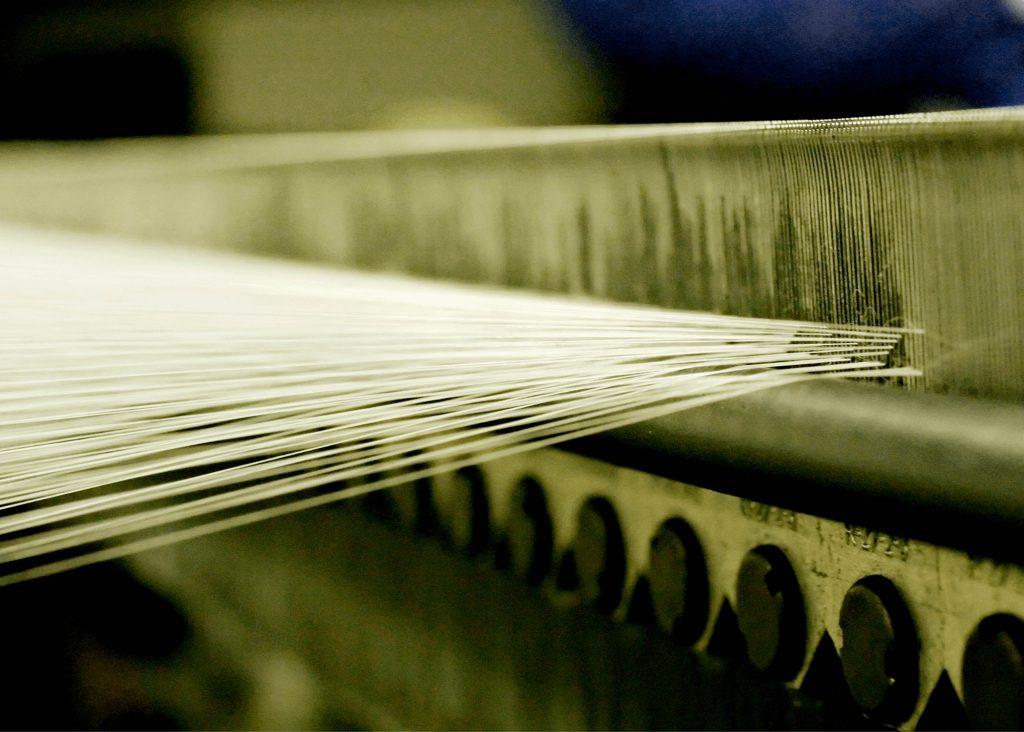
Deacon & Blue use regenerated yarn to manufacture swimsuits (Image: Econly)
Some of those fibres, nylon for example, are actually plastic. Plastic is cheap, infinitely mouldable and durable, so it’s everywhere. But these characteristics make plastic problematic to dispose of – your goggles don’t disintegrate in water and nor do they decompose in landfill, instead they break down into micro and nanoplastics.
But there is hope from technological innovation and new schemes such as Circular Flow and the Leisure Loop. The latter is a scheme that takes ‘pool waste’ such as goggles, pull buoys and swim caps, breaks it down, shreds it and uses it to make flip-flops. Circular Flow uses new technology to recycle neoprene waste into new wetsuits, yoga mats and bags. It estimates that 95 per cent of old wetsuits either go to landfill or incinerators along with factory off-cuts, so it developed a process to break down old neoprene and turn it into new fabric which is also recyclable.
Swimwear recycling schemes use a similar technique. “Suits and bikinis that are sent to us are cleaned to have all the nylon recovered. This nylon is then regenerated and purified back to its original quality, before being processed into new yarn,” says Rosie. “These new yarns have all the same qualities as virgin fossil-based nylons and can be used to create new swimsuits and bikinis. It’s incredibly clever and incredibly powerful.”
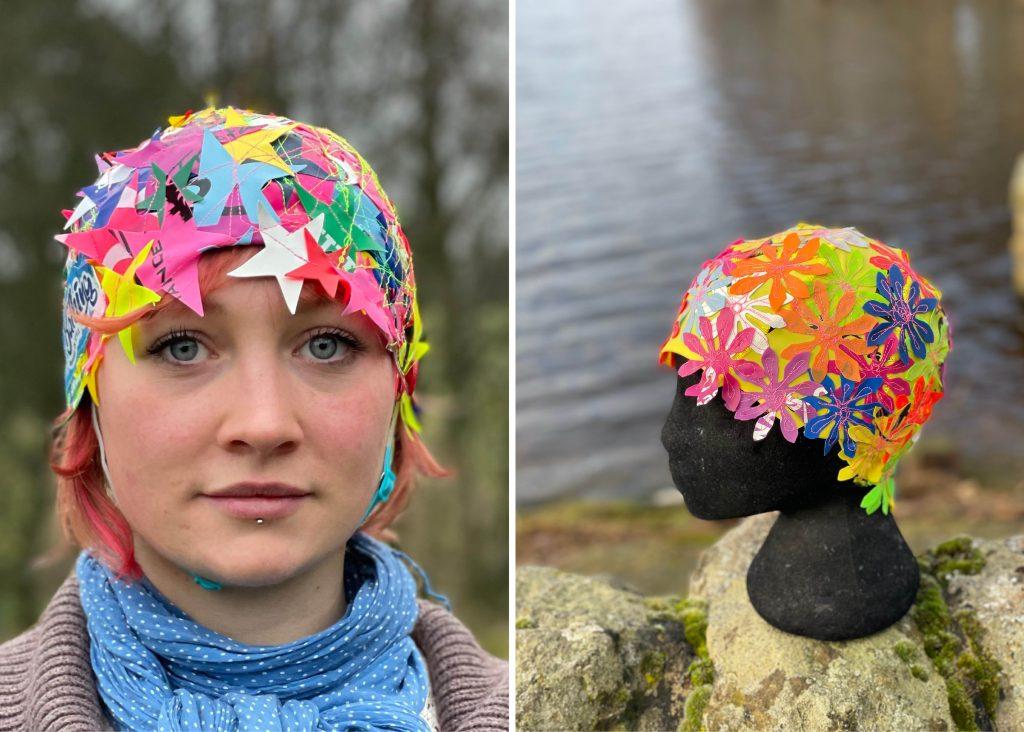
Cool Bathing hats are made out of old swim caps
In Yorkshire, Karen at Cool Bathing has worked out a way to turn old swim caps into new, handcrafted works of art. “I’m sent the hats by people who don’t want them to go into landfill and then I take them to a local charity that works with volunteers to a cutter to create shapes,” says Karen, whose upcycling project is all about recycling and community. “I end up with hundreds of pieces of swim cap, so then the challenge has been how to make those into an actual hat.”
From sustainable shopping, through caring for and repairing your kit, to passing it on or recycling it, it’s possible to have an eco-friendly kit bag for your swimming adventures. Below, we’ve put together a list of resources you can use.
Your REUSE, REPAIR AND RECYCLE directory
Reuse
Outdoor Swimming Society swap and share on Facebook
Reskinned.clothing: sells reconditioned Finisterre swimwear and beachwear
Tri Wetsuit Hire: sells ex-rental wetsuits
Preloved kit: Vinted, Depop, eBay, Gumtree, Facebook Marketplace, preloved.co.uk, secondhand.org.uk
Repair
Sojo.uk: general clothing and coat/robe repairs
Bodyline Wetsuits: repairs any wetsuit
Recycle
Goggles: spectacle recycling at opticians take goggles too
Swimwear: Deakin & Blue, Stay Wild Swim, Tide and Seek, Speedo (on a trial basis for now)
Swim hats: contact Karen at coolbathing.co.uk
Wetsuits: AlpKit, Bodyline Wetsuits, RipCurl, Finisterre
Find your nearest Leisure Loop collection box
For venue operators
Get a Leisure Loop collection box
Get a ReFactory collection box
Join Circular Flow
Get a recycling box for goggles

Outdoor Swimmer
Outdoor Swimmer is the magazine for outdoor swimmers by outdoor swimmers. We write about fabulous wild swimming locations, amazing swim challenges, swim training advice and swimming gear reviews.