


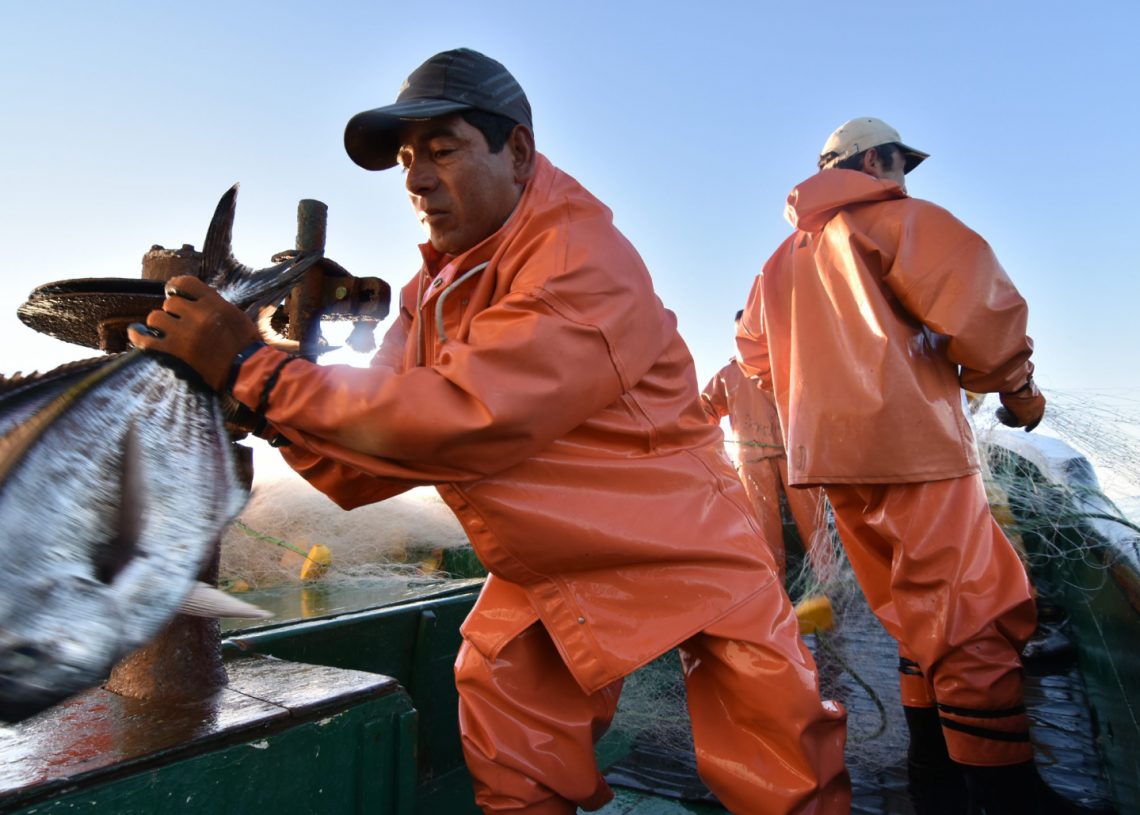
Small-scale fishing solutions
Working to understand the livelihood and ecology of small-scale fishing, Rodrigo Oyanedel, researcher at the SECOS Institute, Universidad Catolica de Chile accompanied fishers on their boats in the Pacific.
A trawler that pulls nets the length of six football pitches nicknamed ‘a floating Death Star’ was fishing off the coast of Ireland in March. FV Margiris can process 250 tonnes of fish in one day. Constantly travelling to new areas of ocean, super trawlers keep filling their nets, and leaving behind swathes of water that has had the life taken out of it. They also leave small-scale fishers struggling in their wake.
Working to understand the livelihood and ecology of small-scale fishing, Rodrigo Oyanedel, researcher at the SECOS Institute, Universidad Catolica de Chile accompanied fishers on their boats. He recognises obstacles, yet retains hope that small fishing boats can provide sustainable fish for sale.
“Imagine spending hours and hours braving the harsh conditions of the Pacific, facing bone-chilling cold winds and massive swells. It’s not uncommon for fishers to come back to shore with only a few fish, but what always struck me was their unwavering love for what they do. As I travelled along the coasts of Chile and Peru, fishing alongside these brave men and women, I was captivated by the intricate and sometimes magical world of small-scale fisheries. I was hooked, and I knew I had to do something to help sustain the ocean’s health and the livelihoods of those who depend on fishing. However, it soon became clear that illegal fishing activities posed a significant obstacle to achieving this goal.
Shockingly, it wasn’t just foreign boats coming to take resources, but also small-scale fishers engaging in illegal practices to make a living from overexploited resources. The more I delved into these complex issues, the more I realised that the reasons behind following rules or not were multifaceted. Factors such as social norms, peer pressure, and feelings of illegitimacy could heavily influence decision-making, making it challenging to promote sustainability. Despite the difficulties, I am committed to finding solutions that will work for everyone. By understanding the complexities of small-scale fisheries and addressing the root causes of illegal fishing, we can help create a more sustainable future for the ocean and the communities that depend on it.”
This article is from the May 2023 issue of Outdoor Swimmer. Click here to subscribe to the magazine.

Outdoor Swimmer
Outdoor Swimmer is the magazine for outdoor swimmers by outdoor swimmers. We write about fabulous wild swimming locations, amazing swim challenges, swim training advice and swimming gear reviews.