

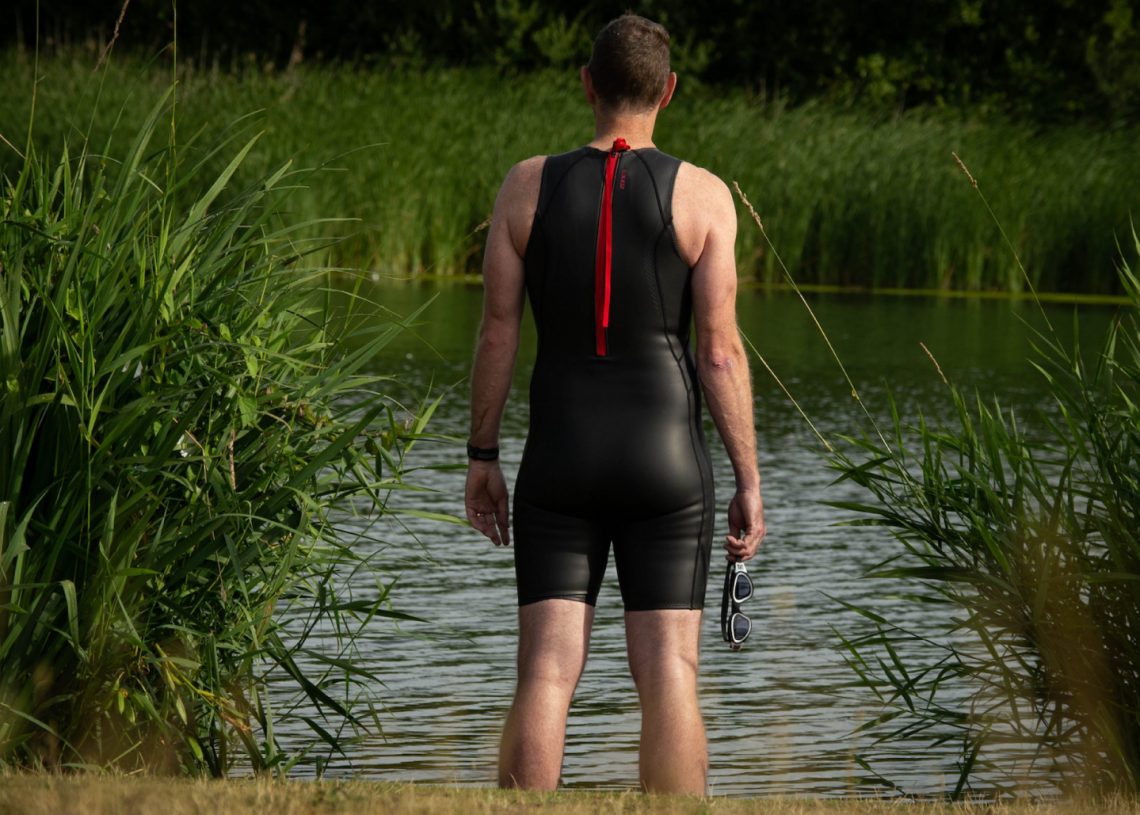
Swimming in rivers
Having an understanding of how water moves in rivers and how to use that to your advantage will help you in any river swimming races you do and boost the fun of your recreational swimming. Simon Griffiths has your guide to river skills training.
Back when I still did the occasional triathlon, I took part in the Olympic distance event in Windsor. The swim was a single loop course in the river of about 700m upstream and 800m back. One year the current was particularly strong, and I was able to take advantage of experience gained from kayaking.
I’m sure most triathletes know the current in a river is generally stronger towards the middle. However, it was apparent that very few were taking advantage of that knowledge. Hugging the bank was a slightly longer route, so it didn’t look faster, but judging from the number of people I went past, I’m sure it was.
At the top of the loop was a turn buoy, roughly in the middle of the river. Many swimmers headed directly for this, fighting the current. However, it was quicker to stay by the bank until almost level with the buoy before cutting across.
Then, on the way back, the quickest water was in the middle, but many swimmers drifted towards the right hand bank, again losing speed.
I normally write a pool training session in this section but the skills needed for river swimming are best learned in that environment. This month, therefore, I’ve created some exercises to help improve your river swimming.
You will need a stopwatch and a river that’s safe for swimming, ideally with a flow that is noticeable but not so fast that you can’t swim against it. Find a quiet time when it’s safe to swim across and up and down a short section. Identify some landmarks about 200m apart to use as markers for timed swims. If the river has a bend, even better.
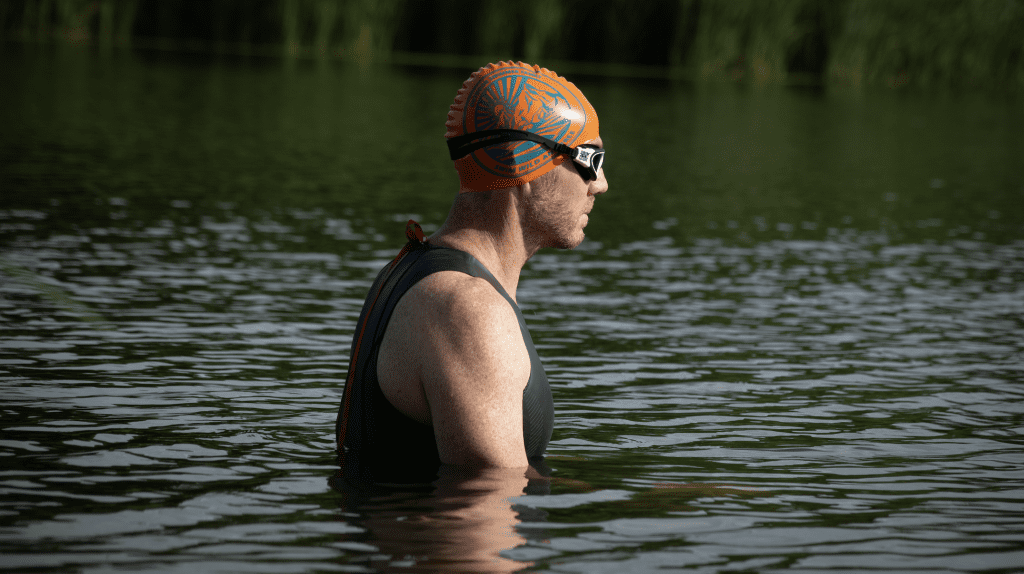
RIVER SKILLS TRAINING
Impact of current
Swimming in the middle of the river* head upstream for about 200m to your upstream marker point. Record how long it takes you. Return along the same line to your downstream marker, and with the same level of effort, and record the time again.
Now repeat the exercise firstly on one side of the river (hopefully on the outside of a bend) and then on the other. Swim as close to the bank as you safely can. Record the times.
From your notes, identify the fastest and slowest upstream and downstream times, and do two more loops. On the first, take the slowest routes (probably up the middle and down one of the sides) and on the second, take the fastest routes. Compare your combined times for the two routes to see how much you can save by taking the optimum route, even if it’s not the shortest. Rivers usually flow fastest around the outside of a bend.
River crossings
If you try to swim directly across a river and set off perpendicular to the bank, you will end up downstream of the point you originally aimed for. To swim straight, you need to aim upstream. The stronger the current, the more you will have to angle yourself into the current.
For this exercise, identify a point across the river and try to cross the river by the shortest route by angling your swim direction upstream. You will need to experiment to get a feel for the right angle based on your swimming speed and the current. You may need to change the angle towards the centre of the river. You could also try doing both these exercises on a paddle board or kayak. Being on top of the water instead of in it will give you a better understanding of what is happening.
River safety
Rivers are wonderful places to swim but you need to be aware of the risks. For these exercises, you need to be sure you can safely cross the river and swim either side. This might not be possible if there are other people such as anglers, kayakers or rowers using the water at the same time. Think before you swim. Never swim alone. Ideally, have someone supporting you from a kayak or paddle board.
For more on river swimming including additional safety advice see our river swimming guide.
Images: Bruno Teves Visuals

Simon Griffiths
I started Outdoor Swimmer in 2011 (initially as H2Open Magazine) as an outlet for my passion for swimming outdoors. I've been a swimmer and outdoor swimmer for as long as I remember. Swimming has made a huge difference to my life and I want to share its joys and benefits with as many people as possible. I am also the author of Swim Wild & Free: A Practical Guide to Swimming Outdoors 365 a Year, I provide one-to-one support to swimmers through Swim Mentoring and I'm the creator of the Renaissance Swimmer project.