


Swimming with sparkle
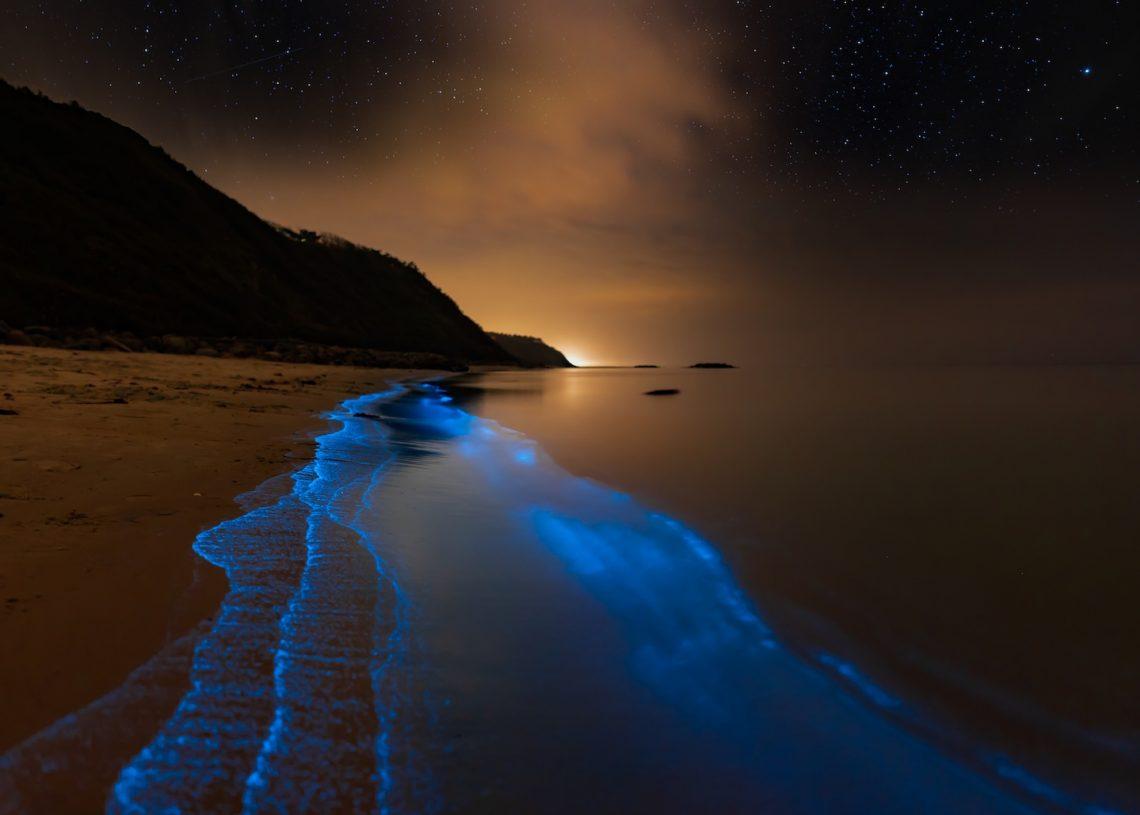
When the sea begins to glow, it feels like swimming through a waking dream. Marine biologist Helen Scales dives into the science and wonder of bioluminescence, from tropical shorelines dusted with living light to the deep ocean where creatures flash, flare and vanish in blue fire. For swimmers lucky enough to encounter it, she reveals what’s really happening when the water starts to sparkle
I remember a magical swim, on a moonless night many years ago. It was unusual for me to be venturing into the water after dark. I was working as a marine biologist in Malaysia, on the northern coast of Borneo, and spending long days conducting research underwater while snorkelling and scuba diving. Most days, by the time the sun sank below the horizon at 6pm sharp, I was ready to wash off the salt and get an early night. But there were times when the peaceful darkness of the tropical sea called me back.
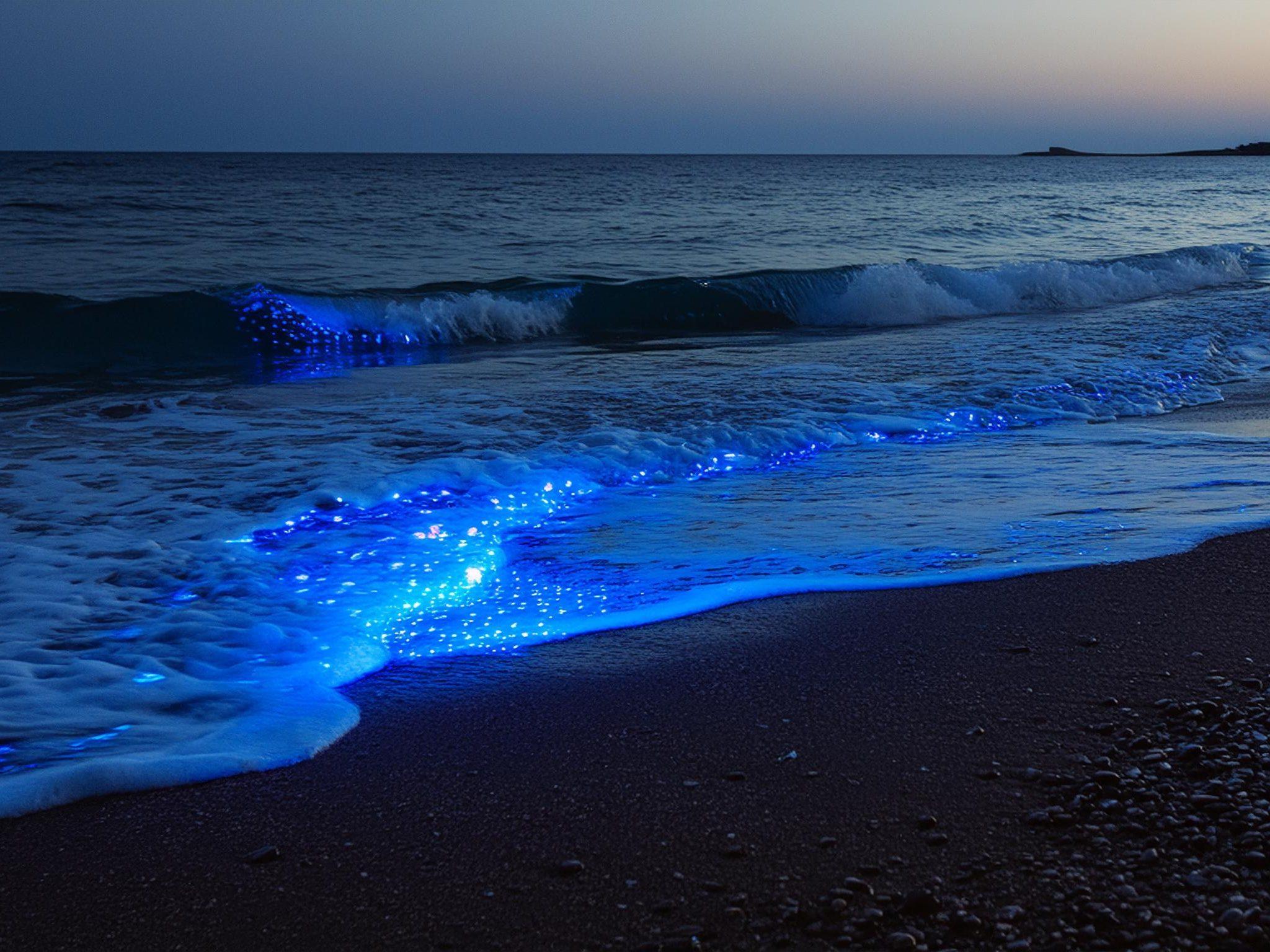
During the daytime, whenever I was working in the sea I would always zip myself into a wetsuit to protect my skin from sunshine and stingers and to stay warm throughout long hours watching fish. So, it was liberating to feel the warm, night time water against my skin. And after a few moments floating on the surface, my eyes adapting to the dark, I began to notice the sparkles. Whenever I moved, my body ignited a puff of twinkling lights that lasted for the blink of an eye.
The level-headed scientist in me knew full well what was causing this phenomenon: tiny dots of life, single-celled creatures called dinoflagellates (although which exact kind I didn’t know) were releasing flashes of light whenever I agitated the water around them. And yet, while I was immersed in that dark sea, I felt like I was swimming through a flock of invisible fairies.
It was even more amazing when I swam back to the beach and got out. As I dripped and dried off, a layer of those aquatic cells must have settled on my body. When I absentmindedly rubbed an arm, a bright smear appeared on my skin. Having discovered this magic trick, I traced my fingers over my body drawing patterns that glowed for a split second before vanishing into the night.
Bioluminescence is as close as you can get to magic in the real world. All sorts of living creatures have evolved the ability to make their own lights. Some inhabit forests and fly through the skies. There are fungi that glow and various types of insects. While I was living in Malaysia, I recall glimpsing what at first I thought were shooting stars, but then they traced meandering paths through the darkness, and now and then flashed on and off. They were not meteorites falling on a straight trajectory to earth, but fireflies (in fact a type of beetle) signalling their intentions to their mates. It’s in the aquatic realm that bioluminescence is most common and spectacular.
One of the earliest glowing animals that humans knew of were likely the piddock clams that drill into rocks on European coastlines. Apparently, the Ancient Romans liked to eat these glowing molluscs, the shining juices dripping between their fingers and down their chins. It would surely make for a showy party. On the coasts of Australia, there are sea snails with shells that illuminate like light bulbs when they’re disturbed, quite likely a defence mechanism aimed at scaring away predators.
Down in the dark depths of the ocean it’s almost compulsory for living things to glow in the dark. In open waters deeper than 200 metres, roughly three quarters of all animal species are bioluminescent. Sunlight barely touches these shadowy waters and it makes perfect sense that organisms living there have evolved the ability to light up their bodies.
Imagine if you lived in a world of permanent dusk or sunless night, how useful it would be to make and control your own light. You could see where you are going, search for food and send messages to friends and warnings to enemies – and that’s exactly how a great variety of deepsea animals use their bioluminescence.
Roughly one in ten species of sharks live in the deep sea and glow in the dark. They include kite sharks, which are up to three metres long and light up their bellies to hunt for prey as they slowly swim over the deep seabed. Lanternfish have glowing patterns on their bodies which are unique to each species, offering a handy way to identify potential mates in the pitch darkness.
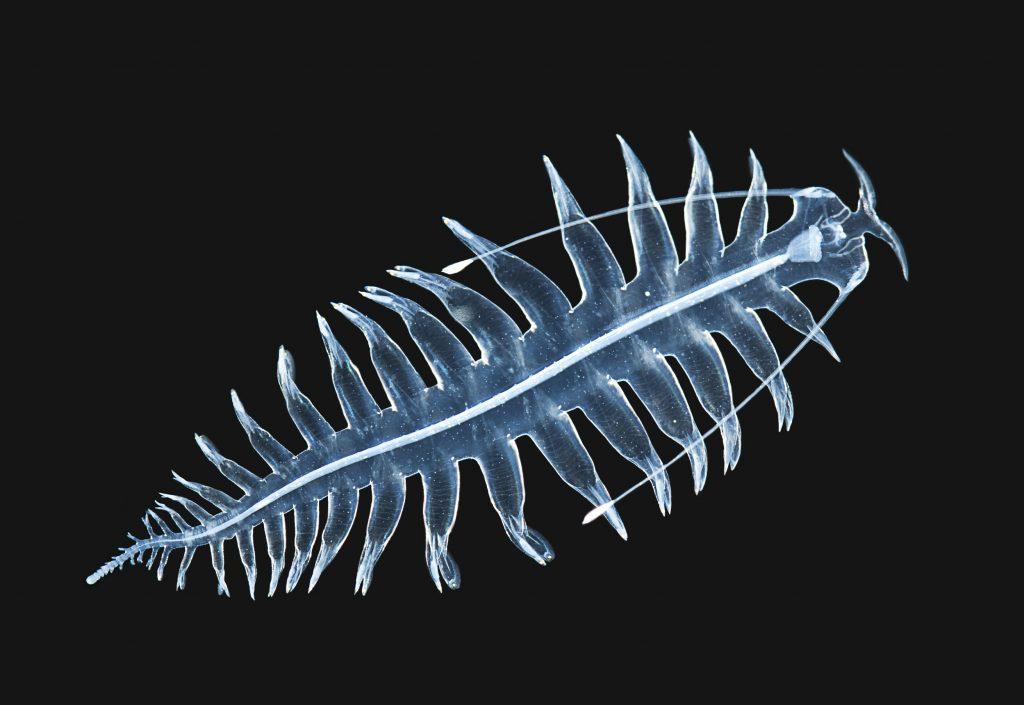
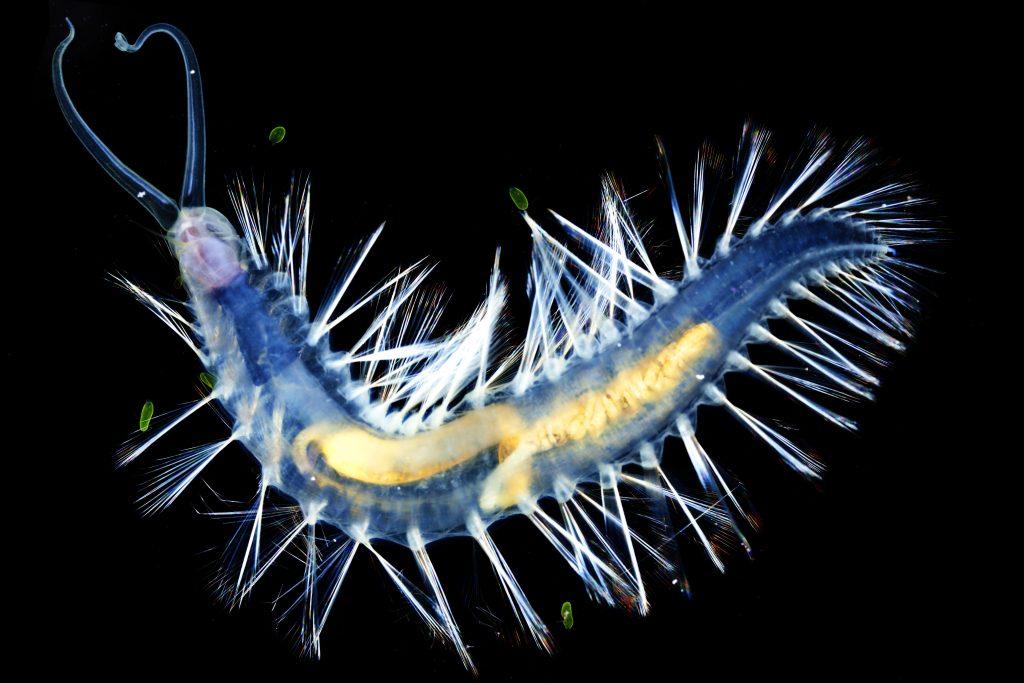
Gossamer worms look like swimming centipedes and throw explosions of sparkles into the water to startle attackers while they escape into the dark. Bomber worms do a similar thing with orbs that detach from their bodies and burst into light. Cousins of jellyfish called siphonophores use their lights to lure in prey to the poisonous stings arranged along their bodies that look like fancy feather-boas. And many animals, including the brilliantly named ninja lanternsharks, use their lights to hide in the deep sea when there’s nothing to hide behind. Their glowing bellies match the dim blue light trickling down from the surface, thus disguising their silhouette from predators looking up from below. This is a specialised form of camouflage known as counterillumination.
Perhaps best known among the deepsea creatures that glow in the dark are anglerfish, with a shining lure dangling in front of their face that tempts prey to blunder into their enormous mouth. Even more splendid are the deep-sea viperfish that not only have a glowing lure, but they’ve evolved crystalline teeth that are so transparent they don’t reflect their own light and give the game away.
Sneakiest of all are stoplight loose jaw fish which emit red light – a rarity in the deep sea, where bioluminescent light is usually blue or green. Most deep-sea animals can’t see red light and so the loose jaws use this as a secret wavelength, like they’re wearing night-vision goggles to see in the dark while other animals are none the wiser.
From octopuses and squid, to snails, fish, jellyfish and plankton, bioluminescent creatures all make themselves glow in one of the same two ways. Either they produce two types of chemicals inside their cells, which when mixed together undergo a reaction that releases pulses of light. Alternatively, they have glowing bacteria living inside their bodies which produce light via similar chemical reactions. Some deep-sea fish go the extra mile and have both forms of bioluminescence in their body: bacteria in a prong sticking up from their forehead, plus chemicals in a gleaming beard dangling from their chin.
In coastal waters, nature sometimes puts on stunning displays, lighting up waves and making whole bays glow blue-green. The source of these lights are minute creatures called Noctiluca scintillans (from Latin words meaning shining at night), or more commonly known as sea sparkles. In the right conditions they can swiftly multiply into bright blooms.
If you’re wondering whether it’s safe to swim when the sea is having a glow up, don’t worry. Outbreaks can be harmful to fish and other aquatic life especially when slicks of these cells die and decompose, stripping oxygen from the water. For humans, sea sparkles are not toxic although it’s a good idea to avoid leaping into water that’s thick green or red in case it’s a different, more dangerous species. There’s no easy way to predict when and where these aquatic spectacles will happen. So, if you do find yourself in the right place at the right time, count yourself lucky and enjoy the show.

Outdoor Swimmer
Outdoor Swimmer is the magazine for outdoor swimmers by outdoor swimmers. We write about fabulous wild swimming locations, amazing swim challenges, swim training advice and swimming gear reviews.