

Education, not exclusion
Venues offer safety, community and inclusivity, which make them invaluable, says adaptive swimmer Sophie Etheridge
The right to swim is a powerful and often contentious topic within the open water swimming community. Across different countries, access to rivers, lakes, and coastal waters varies dramatically, shaped by cultural attitudes, legal frameworks, and safety concerns. In England, restrictions are particularly visible: many rivers and lakes are lined with signs declaring “Danger – No Swimming.” These warnings reflect councils’ fears of liability should accidents occur, but they also raise questions about whether prohibition is the best way to protect the public.
Blanket bans may discourage swimmers, yet they do little to educate people about staying safe around natural water. Most drownings happen when individuals never intended to enter the water in the first place. Wouldn’t it be more effective if signage focused on safety guidance – highlighting risks, while giving advice on cold water swimming, currents, and entry and exit points rather than simply forbidding swimming? For those who love wild swimming, the issue becomes not just about personal freedom but about how society balances risk, responsibility, and access to nature.
This leads back to last month’s column, where I explored the role of open water venues. If swimmers argue for the right to swim anywhere, why do organised venues exist, and why are they so important?
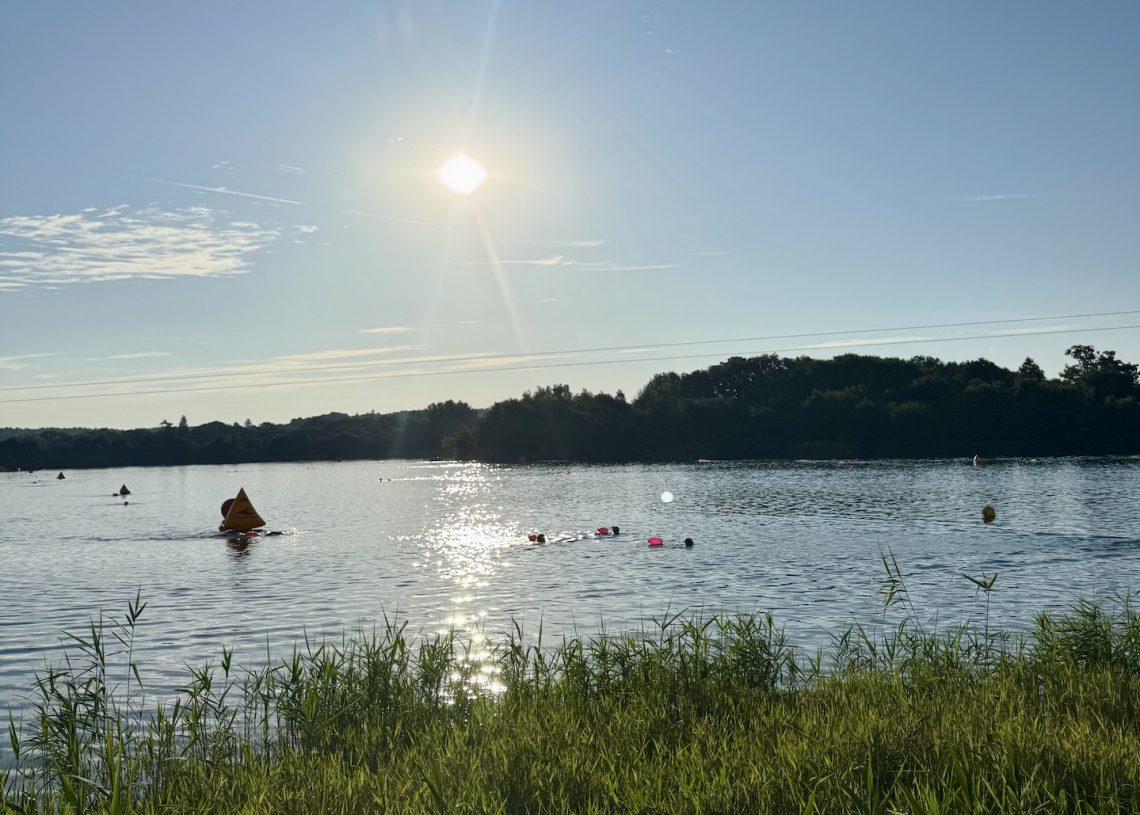
The answer lies in the unique benefits they provide. Venues offer safety, community and inclusivity, which make them invaluable, especially for newcomers. Wild swimming has its magic, but it also carries risks. Swimming alone in a river or lake is never advisable; venues provide lifeguards, monitored water quality, and have structured environments.
Beyond safety, venues are increasingly investing in facilities that enhance the experience such as saunas and fire pits where swimmers can warm up. These amenities transform swimming from a solitary pursuit into a social activity. Venues aren’t just about swimming but belonging to a community.
Sadly, the intersection between the ‘right to swim’ and organised sessions can create friction. Some swimmers feel entitled to use lakes outside permitted times. Yet this overlooks the agreements venues make with coaches who hire lakes much like they would hire lanes in a pool. Swimming outside designated sessions jeopardises their existence. If venues perceive that rules are being ignored, they may withdraw permission altogether, costing coaches their livelihoods and depriving communities of safe swimming.
Respect, therefore, becomes central. Choosing not to swim in lakes during organised sessions unless you are part of them is a matter of courtesy as well as legality. It acknowledges the work of those who create opportunities for others and ensures that venues remain viable for the long term.
The campaign for greater access to blue spaces must recognise the value of venues. They are not obstacles to freedom but partners in expanding it. By working with venues, wild swimmers and campaigners can build a culture that respects safety, supports community, and strengthens the case for broader rights to swim. The right to swim should not be about individual desire but about collective responsibility and the shared joy of water.

Outdoor Swimmer
Outdoor Swimmer is the magazine for outdoor swimmers by outdoor swimmers. We write about fabulous wild swimming locations, amazing swim challenges, swim training advice and swimming gear reviews.