


You may have more swim freedom than you think
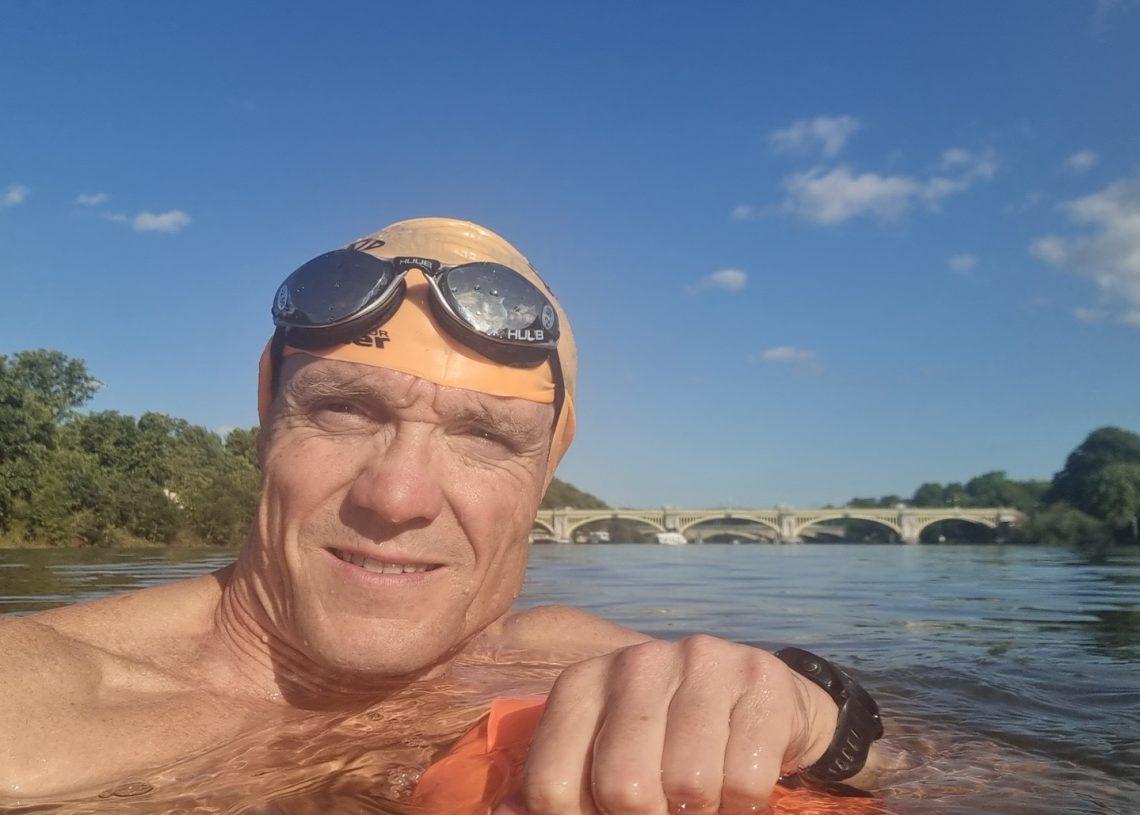
Despite having a glorious swimming resource on his doorstep, it didn’t occur to Simon to use it
When I first moved to live near the Thames, in the early 2000s, I didn’t know that swimming in the river was permitted. This was before I started Outdoor Swimmer and at a time when I was primarily interested in triathlon. When I wanted to practice open water swimming, I went out to Heron Lake or Datchet and did circuits with the other triathletes.
You’ll have to forgive me, but despite having a glorious swimming resource on my doorstep, it didn’t occur to me to use it. I just assumed it was forbidden and dangerous. Those 1970s public service warnings about deadly undercurrents cast a long shadow.
Permission not required
I remember entering the Windsor Triathlon and being terrified about the swim: were they really going to make us swim 1500m in the Thames? They did, and it turned out to be delightful. As Windsor is only a few miles upstream of Kingston, I started thinking that maybe the river wasn’t so dangerous after all. But I still assumed you must need permission to swim in the river.

It was only after starting the magazine that I properly explored swimming rights. And while swimming is often (and unreasonably) restricted in many places, the Thames is a navigable river and so swimming is permitted. I was delighted with this newly discovered freedom, and soon the Thames became my favourite swimming place.
Still, I’m sure the belief that swimming in the Thames is forbidden was – and possibly still is – widespread. I still get asked if what I’m doing is legal – although now it’s more likely people will ask me if it’s clean.
The tidal Thames
Most of my swimming is in the non-tidal Thames but I sometimes like to swim downstream of Teddington Lock, where the Thames is tidal and under the jurisdiction of the Port of London Authority (PLA).
Although swimming is allowed here as far as Putney Bridge, the PLA doesn’t encourage it. On their website, they warn about powerful tides that will “overpower even the strongest swimmers”, undertows that “can suck swimmers under in seconds” and that “bitingly cold river water will cripple the most accomplished swimmers”. Moreover, swimming is prohibited within the fairway and swimmers are therefore not allowed to cross the river.
Swimming in the tidal section is undoubtedly more challenging than in the calmer waters further upstream. However, it’s a beautiful and fun place to swim, and the risks can be managed by experienced swimmers, despite the PLA’s warnings.
One person pushing for greater acceptance of swimming in the tidal Thames is Lord Bethell. He argues that the river is no longer an economic asset but a social one. “It is an anachronism to claim it’s a ‘busy industrial waterway’”, he says. “We don’t ban people from dangerous mountains nor do we keep them out of the sea. Society relies on the principle that people are essentially sensible. It’s their right to make their own decisions. It should be the same with the Thames.”
Call to action
If I, as a keen swimmer, was ignorant of my swimming rights, I imagine many other people are too. I therefore suggest swimmers have a responsibility to ascertain their local swimming rights and, if swimming is allowed, share that message widely. And where swimming isn’t allowed but it’s safe (and it’s often safer than authorities that want to ban swimming think it is), then campaign for better access.

Simon Griffiths
I started Outdoor Swimmer in 2011 (initially as H2Open Magazine) as an outlet for my passion for swimming outdoors. I've been a swimmer and outdoor swimmer for as long as I remember. Swimming has made a huge difference to my life and I want to share its joys and benefits with as many people as possible. I am also the author of Swim Wild & Free: A Practical Guide to Swimming Outdoors 365 a Year, I provide one-to-one support to swimmers through Swim Mentoring and I'm the creator of the Renaissance Swimmer project.