

Finding a wild pool
The best swimming spots aren’t always marked on a map. Learn how to read the river, seek out hidden pools and experience the changing season from the water.
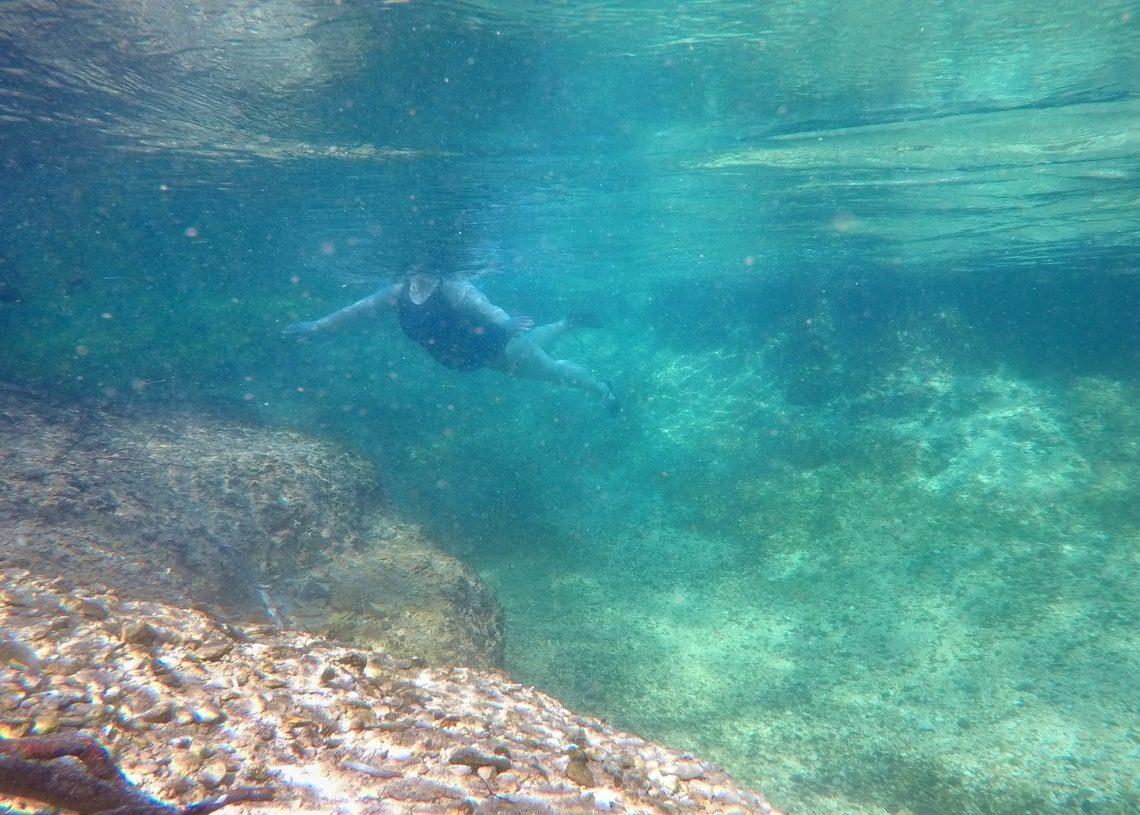
Not far from the source of the River Thames, when the beginnings of the great river are but a trickle and spring, there is a curve in the course the river takes which over time, due to heavy rain or fast flow, the water has carved out a bowl shape pool. It is gin-clear, sometimes emerald green and in the deep of winter, a sharp blue, topaz colour. I first learned about it from a photo someone shared with me from a walk they did down the Thames Path and I couldn’t stop thinking about it. I quizzed them about where they had taken the photo and worked out on a map where it might be before dragging a swim-pal to Gloucestershire to find it. It was March, but the day we went there was snow on the ground, which made discovering it even more beautiful. It was deep and mesmerising, deep enough to dive! Today, it looks very different, rivers and their banks, beds and meanderings are ever changing, but I often think about it.
Many river swimmers I know has one. A bend they return to, a pool they found by accident and now can’t stop thinking about, a slower stretch where the current eases and the water goes green-gold over gravel. Nobody told them it was there. They found it by wading further than they meant to, or following a dog, or simply refusing to turn back at the first obvious spot. That’s the swim I want for you this month, not a location pin, but the process of finding one for yourself.
September makes this easier than it sounds. Rivers that were low and lazy in August start to move again as the first proper rain arrives. Banks that were choked with nettles and balsam begin to open up. And the equinox, on 23 September this year, gives the whole month a shape, day and night pulling level before the nights start winning. There’s something in swimming through that shift that a summer dip doesn’t quite offer. You feel the season change on your skin, not just see it in the diary.
Reading a river for a pool isn’t complicated once you know what you’re looking for, but it does ask you to slow down and look properly, which is really the point. Watch for a bend where the outside bank is undercut and the water runs deep and slow, that’s usually your spot. Listen for where the sound of the river changes, a dull steady note usually means depth, a lively chatter means shallow and quick. Notice where the colour darkens, where leaves and debris gather and turn slowly instead of shooting past. None of this is instinct you’re born with. It’s attention, and it comes back quickly once you start paying it.
Could your swim this month involve:
• Walking further upstream or downstream than you normally would, just to see what’s round the next bend?
• Reading a stretch of river before you get in, working out where you’d expect a pool to be, then checking if you’re right?
Top tips:
• Always check river levels and flow before searching out a new pool, September’s first rains can move a gentle stretch into something much stronger, much faster than you might expect.
• Look before you leap, always. A pool that looks deep from the bank can hide submerged branches or a shelf of rock. Wade in gradually and check with your feet first.
• Go with someone else the first time you swim a new spot. Two pairs of eyes read a river better than one, and it’s safer if you’ve misjudged something.

Ella Foote
Ella is renowned outdoor swimmer and journalist. As well as leading the editorial, digital and experiential outputs for Outdoor Swimmer she is also Director of Dip Advisor, a swim guiding business helping people enjoy wild water. Ella also teaches swimming to children and adults, is an Open Water Coach and RLSS Open Water Lifeguard.