
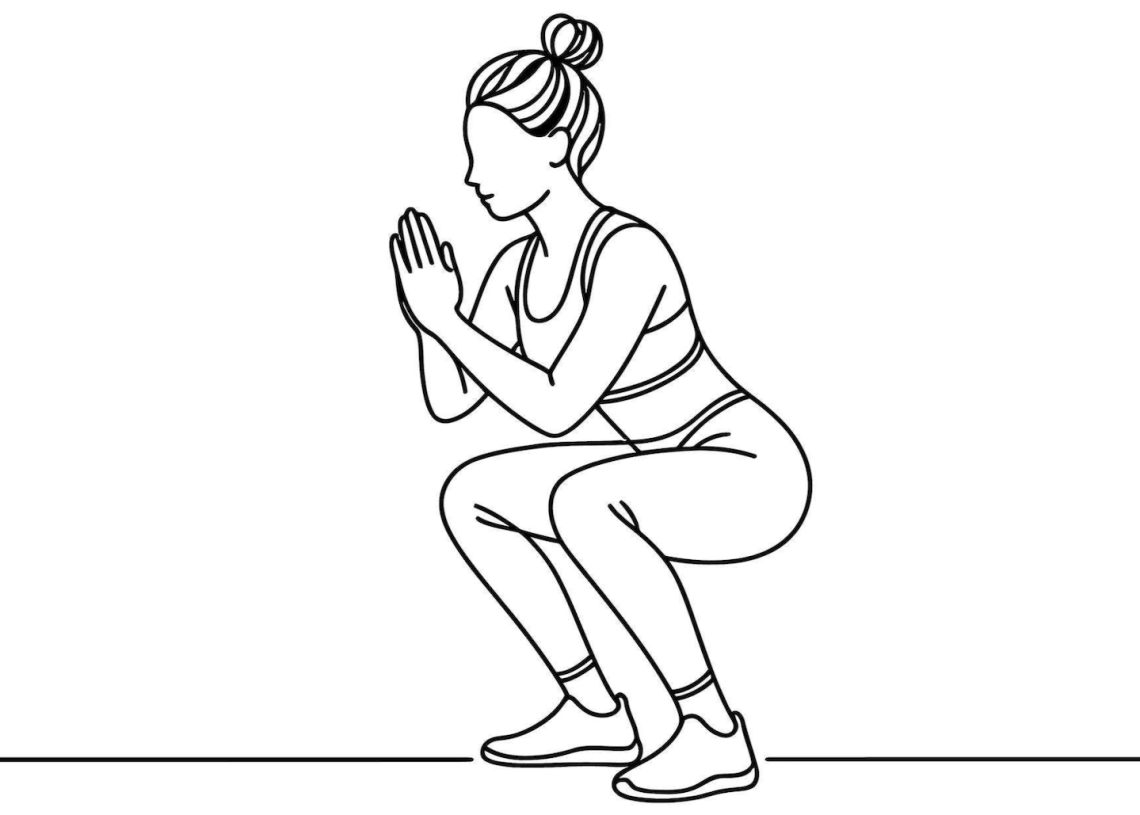
Squats: A fundamental movement for life
Squats aren’t just for the gym. This simple, fundamental movement can build lower-body strength, power and mobility, helping you swim stronger and stay confident on your feet both in and out of the water.
Love them or loathe them, squats can be a great move to improve lower body strength, power and mobility. Alongside supporting swimming performance, strong legs help when navigating slippery riverbanks, rocky beaches and other precarious situations!
Before chairs and seated toilets became commonplace in many parts of the world, humans squatted and sat on the floor frequently. Regularly practising squats through a comfortable range of motion can help maintain or improve hip and ankle mobility while strengthening the muscles around the knees and hips.
It’s never too late to train the squat pattern, and there is a variation for everyone. When working on squats, especially as a beginner, it’s important to stay in a range of motion that is accessible to you, and not to work through any pain.
Technique
Hip anatomy and femur length can vary significantly, so play around with different foot widths to find a comfortable squat stance. Keep the chest lifted while allowing a natural forward lean of the torso. As you bend the knees, let them move forwards in line with your feet as the hips move back and down with control.
For beginners
Begin with sit-to-stands. Sitting on a chair, engage the core and power through your legs to bring you to standing. Lower back down with control and repeat for 1-3 sets of 8-12 reps, resting between sets.
Once this feels doable, try freestanding squats. For more of a challenge, you could add a pause at the bottom for a few seconds or place a dumbbell in a goblet hold close to the chest.
Variations
• Heel-elevated squats place greater emphasis on the quadriceps (front of the thighs). Raise heels by placing them on something sturdy with a height of a few inches (e.g. weight plates).
- A wider-stance sumo squat may increase the contribution of the adductor (inner thigh) muscles while still challenging the glutes. Take the feet wider than hip width and turn toes out. Drive knees out on the way down and squeeze glutes as you come up.
- To perform mobility focused squats, gradually work towards a deep squat, using a table leg or similar for support if needed. Hold for 20–60 seconds, increasing the hold time as it becomes easier. Remember to work within your available range of motion, only coming into positions where you feel you have control and stability.
A note on joint pain
If you have persistent knee, hip or ankle pain, or a condition such as osteoarthritis, consider discussing exercise modifications with a physiotherapist or other qualified healthcare professional. They can help you find squat variations and ranges of movement that work for you.

Outdoor Swimmer
Outdoor Swimmer is the magazine for outdoor swimmers by outdoor swimmers. We write about fabulous wild swimming locations, amazing swim challenges, swim training advice and swimming gear reviews.