


Interview: Mark Turner, co-founder, UltraSwim 33.3
What inspired the UltraSwim 33.3 format, and what keeps Mark up at night?
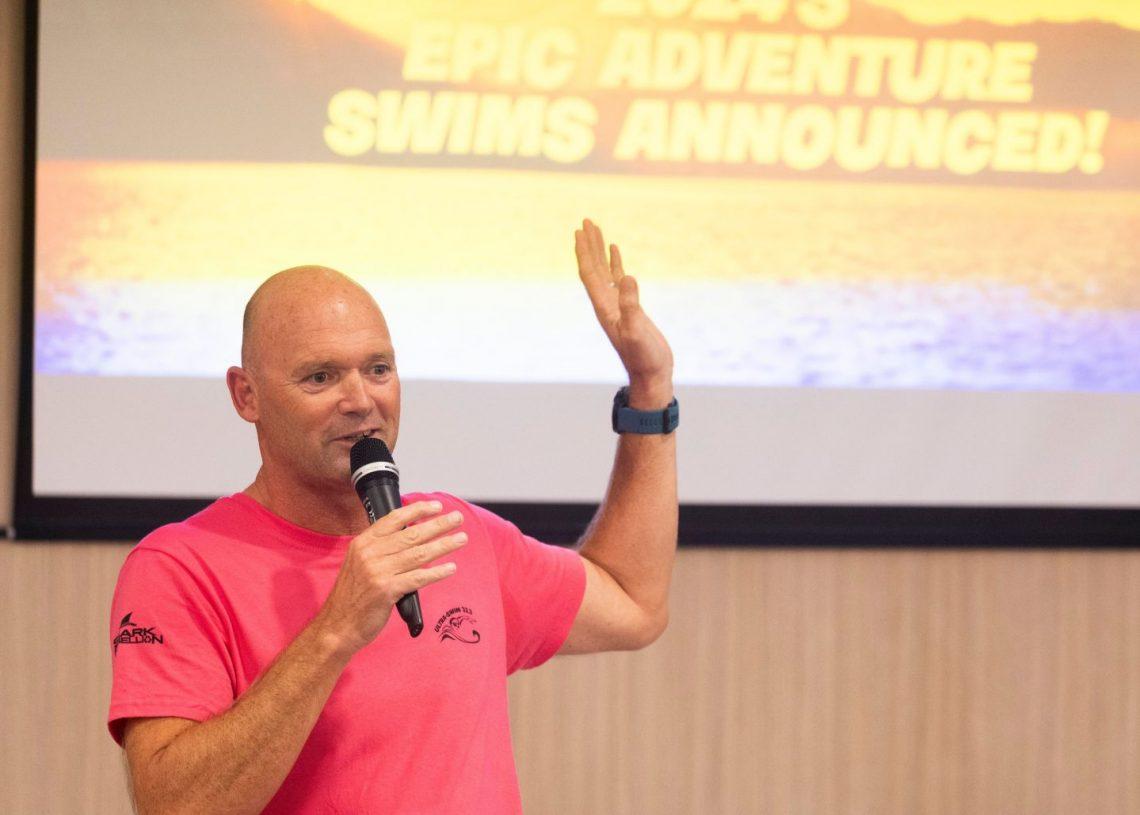
Mark Turner is the co‑founder of UltraSwim 33.3 and brings decades of experience from the Royal Navy, offshore sailing and global sports management to the world of open water swimming. We caught up with him to discover how he combines adventure, challenge and premium support into the multi‑day UltraSwim 33.3 experience.
With UltraSwim 33.3, did the idea come to you in a moment of inspiration, or was it the result of deliberation and research?
There were a few different drivers, I think. First, having co-founded the Haute Route bike series in 2012, I had always wondered how could we create something similar in open water swimming. Second, the English Channel story always interested me, but I had no personal interest in cold water adaptation and the grey, dark waters, and everything that comes with that.
Then, as I’ve got older, I’ve come to appreciate having premium surroundings in the challenges I take on. And, having moved on from the sailing world that I’d worked in for several decades, I was looking to what sports I thought I could bring fresh thinking and ideas to (without assuming I’d succeed!).
Of course, you start with the ones you are passionate about. I did a few swim events myself whilst thinking about launching UltraSwim 33.3 (just before COVID) – great events like Rottnest and Morocco Swim Trek, the only other similar format event. I also did solo changes like Gibraltar and Bonifacio.
These experiences showed me there was a gap in the market for a premium multi‑day event with a clear goal: the English Channel distance. I wanted to create something that combined:
- the challenge of solo swims like channel crossings
- the atmosphere of events with many more people from all over the world in them
- a premium aspect of treating people like professional athletes with great hotel options, massage, physio etc.
- supporting and accompanying people from the day they enter, rather than the ‘pay and turn up’ of most events
- point-to-point swims, not laps
- wild, amazing places to swim
- a long weekend format, so those short on time but not money could still make it
- involving partners who don’t swim, rather than leaving them on a finish line waiting for you
- huge diversity – and the remarkable characters and values you find in open water swimming that you don’t always encounter in other endurance sports.
Why did you think it would work?
I don’t think you can ever know for sure, and we still have steps to go before knowing if it’s financially sustainable – we’re still in an investment phase – but it certainly feels like there is a need for our event. The feedback has been incredible; our reviews and NPS (net promoter score) are higher than anything else we can find in the whole swimming universe (not to say we can’t improve).
But I’d already seen with the Haute Route how multi-day events are a game changer for the impact on participants (and with it a lot more complexity for the organiser!). And also that we go point-to-point, whereas most open water swimming events outside the classic crossings are laps, like triathlon. That’s something that suits organisers, but it shouldn’t be what open water swimming is about; otherwise, just stick to the pool!
Then I could see swimming was growing in stature as a positive for mental health, and of course physical health, especially as ageing makes people more prone to knee injuries. An ageing, reasonably wealthy population seemed like a trend that could be a good place to build a new category of events.
At the events, participants have the impression of a well-oiled machine, but I know you and your team work incredibly hard behind the scenes. Can you give us an example of something that has kept you working through the night, that swimmers are blissfully unaware of?
Well, I’ve learnt you need a well-oiled machine because there are inevitably spanners thrown in the works, especially in outdoor events. They are weather and people dependent, and neither ever go quite to plan. So being adaptable and having a team of people ready to react and improvise, and who are solution-oriented in their approach, is key.
The most complex parts are the weather and interactions with local authorities. We’ve had coastguards announce a few hours before a start that we are not allowed to get in the water, for example. This is sometimes for good reason, but not always. We look at the same range of weather models as they do, but different models can sometimes predict many possible outcomes.
We also get things like a last-minute shipping change – such as a cruise liner coming across our course two hours earlier than planned, right at swim start time. But other constraints might mean we can’t change our start time. It gets complicated!
On one occasion – during thunderstorm weather in Montenegro – I set an alarm every two hours the whole night to get up and re-check the forecasts to be able to make a decision on plan A, B or C. But hey, from my days in the Royal Navy or racing sailboats across the oceans, I’m quite happy doing ‘watchkeeping’ all night…
What do you enjoy about those scenarios when you have to pull out all the stops to keep the show on the road?
We all get huge payback from seeing the positive impact on the swimmers – that’s what keeps us going through so many moments of exhaustion and pressure!
Having the 33.3km goal really helps push us, and the participants, to work as a team and find solutions to getting enough swims even when the odds, weather and logistics are stacked against us. That makes it a fun challenge. Add in that we can’t ever compromise the safety of the swimmers. We have to find the balance between getting out there swimming and not taking the wrong risk.
For sure, juggling that and the great team we have managing changing logistics stretches us, but it’s rewarding when we deliver. So far, we have managed to get the 33.3km in every edition. I’m not sure this will always be the case, but it provides this magic, authentic and meaningful goal for us all.
For me, it’s rewarding to combine and use experiences and knowledge from my time in the Royal Navy, as a sailor, and as an event organiser on water and land (and now in water). It tests leadership, and many other aspects, such as using technology, marketing, operations and so on, that all need to come together in this event.
Find out more: https://ultraswim333.com/
Main image: (c) Mark Lloyd / UltraSwim 33.3

Simon Griffiths
I started Outdoor Swimmer in 2011 (initially as H2Open Magazine) as an outlet for my passion for swimming outdoors. I've been a swimmer and outdoor swimmer for as long as I remember. Swimming has made a huge difference to my life and I want to share its joys and benefits with as many people as possible. I am also the author of Swim Wild & Free: A Practical Guide to Swimming Outdoors 365 a Year, I provide one-to-one support to swimmers through Swim Mentoring and I'm the creator of the Renaissance Swimmer project.