

Review: Don’t Be Prey
A documentary about one man’s quest to rebuild his life through swimming the Oceans Seven
Trauma is inevitable. Everyone goes through tough patches. So why invite more suffering and potential heartbreak into your life by taking on extreme challenges?
Don’t be Prey doesn’t set out to answer this question. But as it follows Mark Sowerby’s journey to complete the Oceans Seven, it suggests some answers.
Villain to hero
It’s not a spoiler to outline the basic story. After Mark’s business and reputation were trashed, he fell into a pit of despair. The film doesn’t shy away from Mark’s suicidal thoughts of swimming out into the ocean and never coming back.
But several years previously, he’d swum the English Channel and raised more than AUS$1 million for charity. Tim Denyer, the swim coach who took him across the Channel, reached out and suggested taking on the six remaining swims of the Oceans Seven, which gave Mark new meaning and direction in life.
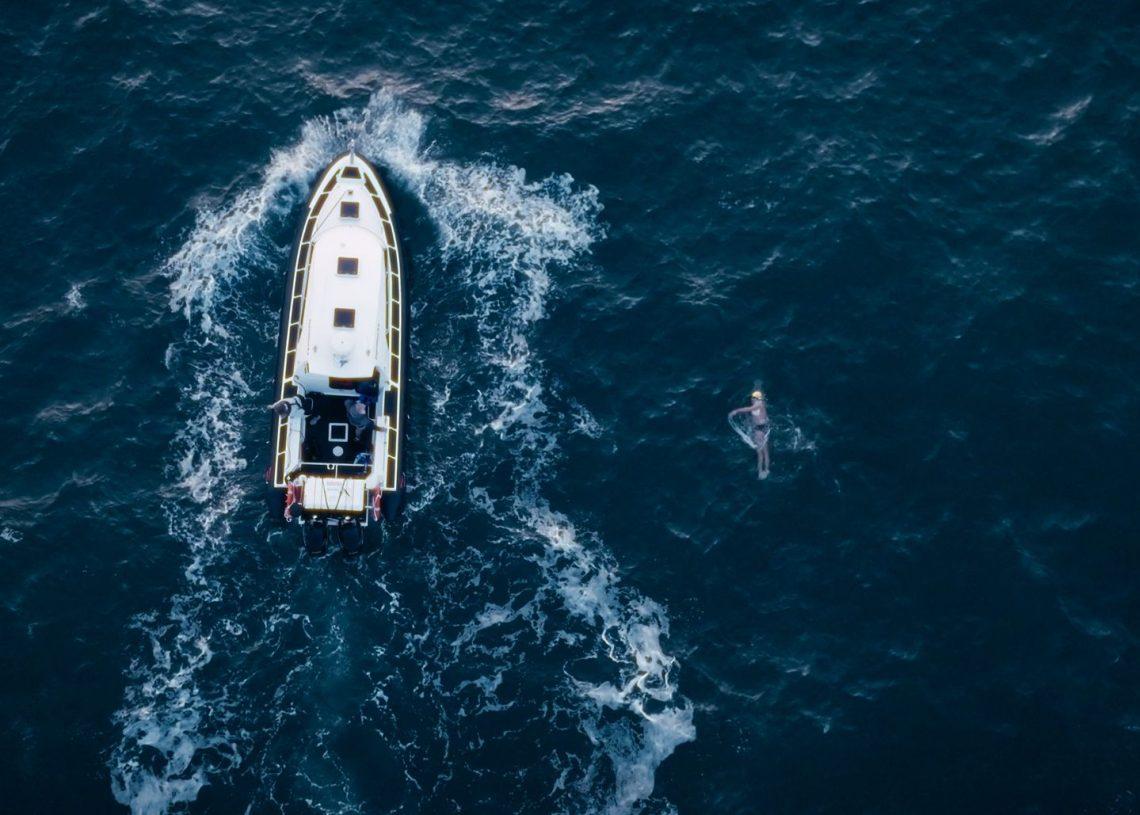
As well as the grandeur and spectacle of ocean swimming, we see the harsh reality. The hypothermia, exhaustion, jellyfish stings, the vomiting. People have died on these swims. But doing these swims changes people’s lives and forges incredible bonds between them.
Speaking before the UK Premiere of the film, Mark said it wasn’t just his story, but Tim’s too. Tim’s journey into coaching was also driven by trauma. On the boat back from Tim’s own Channel swim, his coach, Mark Rickhuss, collapsed and died, turning celebration into tragedy. Tim’s coaching style – intense, focused, controlled and totally committed to his swimmers’ successes – shines through. He’s empathetic – fully understanding what swimmers are going through – but never sympathetic.
The magnificent seven
It’s also the story of how a short blog post became a global obsession in the marathon swimming community. Steven Munatones, a former open water world champion and founder of the World Open Water Swimming Association, dreamed up the idea of the Oceans Seven as a way promote the sport. In the days after posting a blog with his ideas, his inbox was flooded with messages from potential contenders.
Steven features in the film, explaining why and how he picked those seven swims for the Oceans Seven. He then joined Mark on his final swim across the Tsugaru Strait. Steven has family connections to Japan and had completed this swim many years previously. Don’t Be Prey also hints at Steven’s broader legacy and profound influence in modern marathon swimming.
Other swimmers make appearances too. People Mark has swum with or trained alongside. If you’ve been around the world of swimming for a while, you may know or recognise some of them. Mark talks about ordinary people doing extraordinary things – but these are extraordinary people. You get a sense of strength, mutual admiration and support that runs deep in marathon swimming.
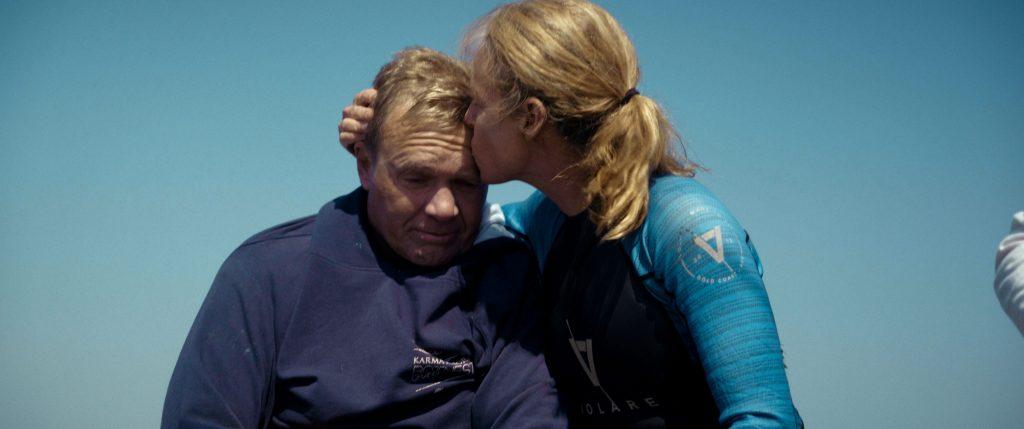
Finally, this is a love story. Not a boy-meets-girl Hollywood romance, but of real-life enduring love. You could easily imagine that Mark’s career derailment, followed by his obsessive pursuit of the Oceans Seven, could destroy a marriage. Yet Heidi, Mark’s wife, remained unwavering. It’s clear Mark couldn’t have done this without her, and how much he knows and appreciates this.
The storytelling is thoughtfully paced. Footage from the actual swims at times has the audience leaning forward, wondering what will happen next, while interviews with seasoned swimmers provide context and depth. You physically feel the anxiety, fear, despair and jubilation of ocean swimming.
But why?
As for why people do these swims and push themselves to their limits, Don’t Be Prey points towards a few ideas. It seems, for example, that voluntarily exposing yourself to controlled suffering – perhaps counterintuitively – is a potential treatment to alleviate the pain of trauma. And, by extension, it prepares you to cope better when life inevitably deals you a hard blow.
Speaking after the film, Mark suggested other reasons too. One, he said, is to build courage. Partway through his Oceans Seven challenge, Mark found the courage to tackle an issue related to his business, which he attributed to his swimming. He also spoke about reputation and self-belief, and how swimming the Oceans Seven helped rebuild his.
The film’s subtitle is One Day to Change Your Life. This could be negative – tragedy can strike without warning – but it may be positive too. The day you cross a channel or complete a major challenge could be the one that changes your life for the better.
Don’t Be Prey is currently on a UK and Ireland Q&A tour with Mark and Tim. Find out more: https://www.dontbeprey.film/
Whether you’re a swimmer, a supporter, or just someone fascinated by stories about people rebuilding their lives, Don’t Be Prey offers something that lingers.

Simon Griffiths
I started Outdoor Swimmer in 2011 (initially as H2Open Magazine) as an outlet for my passion for swimming outdoors. I've been a swimmer and outdoor swimmer for as long as I remember. Swimming has made a huge difference to my life and I want to share its joys and benefits with as many people as possible. I am also the author of Swim Wild & Free: A Practical Guide to Swimming Outdoors 365 a Year, I provide one-to-one support to swimmers through Swim Mentoring and I'm the creator of the Renaissance Swimmer project.