

Rising swim stars
Rowan Clarke investigates swimming films, and how open water inspires filmmaking
Since Esther Williams portrayed a swimming star in The One Piece Bathing Suit in 1952, outdoor swimming has held a fascinating place on our screens. But what is it about outdoor swimming that inspires filmmakers? Perhaps it’s the natural drama of open water as an allegorical and literal conveyor of stories. Perhaps it’s the wild beauty of blue landscapes. Perhaps it’s the extraordinary human stories that swimming espouses.
Whatever the reason, the creativity and variety in swimming films has come a long way since the fifties. A sport that, on the surface at least, seems as simple as any other sport has inspired filmmakers to produce a vast range of genre-bending, awe-inspiring, heart-warming cinematic stories that touch audiences everywhere.
More than entertainment
This rise of outdoor swimming films in both quantity and variety is mirrored by the film programming at Kendal Mountain Festival. Launched in 1980, the festival originally showed films by mountaineers and climbers as a way of fundraising for their future expeditions. It’s changed hugely since those early days, with a huge increase in investment and creativity that has helped develop the genre of outdoor films.
“Looking back over the last eight to ten years, we did have a mix of categories, but wild water was more like gnarly kayaking and paddling,” says Design Manager and Film Programmer, Jenny Rice. “Climbing and mountaineering is at the core of what we do, but it’s become way more encompassing. Swimming’s much more involved and in less extreme, more accessible ways.”
Naturally, outdoor swimming’s rise in popularity is part of the reason that it’s become the subject of more films. But Jenny also hits on a shift in the purpose of the kinds of films that make the Kendal Mountain Festival schedule selection. For a start, the subjects of these films have shifted from endurance athletes taking on a challenge to relatable individuals at all levels, from marathon swimmers to dippers. Secondly, films are being make to help generate support for social change, such as tackling environmental issues and improving diversity in outdoor spaces.
“It’s a joy to see the variety of films being submitted to Kendal over the last few years – and we take pride in platforming people who have historically been excluded from the outdoor and adventure world,” says Jenny. “Their stories continue to enrich the world of adventure. And while many films do come to us, as a programming team we also spend time scouting films from festivals around the world, from filmmakers that might not know about us or think we are a place for them.”
This shift also gives more space for independent, self-funded filmmakers and creatives who find inspiration in the environment and the communities that enjoy them. And for screenings, events and festivals, so much variety means exciting film schedules for every kind of audience.
“Because we have so much variety, then so many different people see something in one of the films that resonates with them,” says Jenny. “I think there’s that draw of films where you can watch and relate and say, ‘I couldn’t do that now, but if they’ve done it, I could definitely do it too.’ And there are films you watch where you’re just like, ‘holy shit’, there’s absolutely no way that I could do that but I bloody love watching on the big screen!’.”


Creating the unexpected
Films about awesome challenges that fall into this latter category have held centre-stage in sports documentaries and biopics, and open water swimming is no exception. From dramatised stories such as Nyad (2022) to documentaries such as Against the Tides (2021), tales of incredible feats of human endurance contain so much drama and suspense that they naturally lend themselves to cinematic storytelling.
But what makes them so compelling is the stories contained within the main narrative arc. For example, in Nyad, Diana’s relationship with her coach and friend, Bonnie and her experiences as a young swimmer are beautifully conveyed within the film. Equally compelling is Beth French’s struggle with motherhood in Against the Tides.
In some films, the protagonist’s societal, personal or cultural challenges takes centre stage. For award-winning independent filmmaker Rachel Sarah, the human story is very much her focus. Candid and intimate, Rachel used her first feature-length film, The Ice Mile (2022) and her newest film Under the Surface (2023), to intentionally turn the challenge film trope on its head.
“Ice Mile is an in-depth character portrait, really. Obviously, it’s a challenge film but for me, it’s not really about the challenge; it’s about Becca and her life, and how that fits in around swimming, her relationships and her relationship to the swimming community in the UK,” says Rachel. “I am really drawn to making things that I can relate to but also things that I’ve not seen before. Under The Surface is also a challenge film, but it’s not really about the challenge. It’s about Jim and his struggles with his mental health and injury as well.”
Swimming symbolism
Generally speaking, challenge films tend to be inspired by the challenge itself – Diana Nyad’s mission to swim from Cuba to Florida, Beth French’s ambition to swim all seven ocean crossings. So, what’s interesting about Rachel is that she’s so inspired by the human story, the swimming becomes a side dish.
“I think as a filmmaker, there’s pressure to have a niche, which helps with finding work. But pinning myself to one activity doesn’t really interest me because for me, it’s all about people’s relationship to themselves and each other and to the landscape,” says Rachel. “With Becca in Ice Mile and Jim in Under the Surface, it was who they were as people and their relationship to swimming that drew me in.”
But, would The Ice Mile have been so emotive if it was about climbing Snowdon? Would Under the Surface have been so compelling if it was about a member of a cycling group training for a challenging ride?
Although Rachel’s films aren’t really about swimming, it is important. Not only because both films’ subjects, Becca and Jim, found relief from their mental and physical health symptoms in cold water, but also because swimming in cold, open water is a unique vehicle for telling a human-centred story. The key is in both the qualities of water and our complicated relationship with it.
Water, especially natural water, has always been allegorical in the creative arts. Ancient Roman civilisations personified rivers as mythical figures equally capable of bringing life and prosperity and wreaking havoc, and this is represented in their art. In modern popular culture, water still embodies ancient connotations – the sea can represent danger, fear of what lies beneath, journeys of the self, life and death, transformation and other-worldliness. For example, Ariel’s transformation into something that could love a man in A Little Mermaid is considered an LGBTQ+ allegory that came from Hans Christian Anderson’s own unrequited love for another man.
Try remembering your first experience of watching a film where people were in open water. How did it make you feel? Fear as unsuspecting swimmers were terrorised by a monstrous shark in Jaws (1975). Or in The Princess Bride (1987) where the princess encounters the dreaded shrieking eels. Or wonder at Daryl Hannah as a mermaid in Splash (1985).
Rivers, lakes and seas are so prevalent in popular culture that those earlier experiences lay down emotions that are triggered when we see them again. Add our own feelings around swimming outdoors and it’s little wonder that we find films set in open water so evocative. Setting is a tool that filmmakers can lean on to convey meaning.

Inspired by place
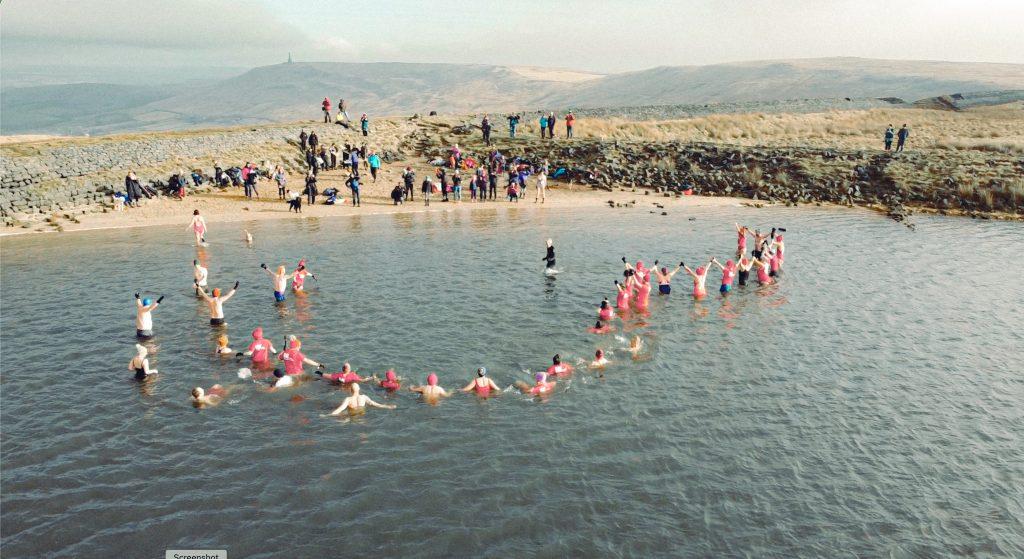
A great example of this is the new film, Wild Water that featured at Kendal Mountain Festival. Following the cold water swimming community of Gaddings Dam in West Yorkshire, it’s notable for its unique place, culture and identity.
“The area has a close community drawn together from a long history of northern co-operatives, counter-culture and hard living,” says producer Pete Wilkinson. “In the context of Gaddings Dam, people have the time to connect when they’re up there, which is recognised by the line in the film with a swimmer stating that, ‘it is surprising the bonds people can get doing something challenging’. It can be brutal and very cold up there, and the experience fast-tracks friendship.”
While community-centric films are broadly similar in that they tend to focus on strong relationships, wellbeing and identity, they’re characterised by their locations and the stories that emerge are very distinct. Compare Wild Water with The Ponds, which is about the communities that swim in the men’s and ladies’ ponds of Hampstead Heath. The latter is enclosed and intimate with a focus on gendered friendships, while Wild Water is wild and expansive, steeped in its own distinct cultural tradition.
“Gaddings Dam’s location, which is on top of a moor and a former mill pond, is unique. It’s very northern and industrial but can be very wild,” says Pete. “The landscape is so evocative that it has been used as inspiration from some of our most significant literature; as the Brontës and Ted Hughes can attest, I think that seeps into the uniqueness.”
Finding the story
Places like Gaddings Dam, the west coast of Ireland and Loch Innish in the middle of winter may offer an escape for swimmers, but they’re also hostile film locations. Added to environmental challenges like ice and water, filmmakers have to capture shots quickly and without the chance for another take.
One solution for documentary filmmakers is to shoot over a long period of time – Wild Water was shot over 16 months and The Ice Mile over a year. But that creates the challenge of having to edit days of filming into a narrative with a purpose.
“A lot of filmmakers do impose what they want to tell, but there’s a fine balance between documenting what happens but then saying, how do I now make this into a 50-minute piece that people are going to be engaged by?” says Rachel. “When I got to the edit of The Ice Mile, I felt like I missed out a lot of stuff I should have filmed and filmed a lot of stuff that wasn’t important, but I didn’t know at the time. My process is to sit down with a massive whiteboard and map the emotional journey that I want someone to go on when they’re watching it.”
When you get a bit of insight into the challenges of filming in water, on ice, in hostile weather conditions, you start to appreciate the skill in drawing out the stories that engage us. Being inspired by outdoor swimming is one thing, but being able to tell compelling, engaging stories through film is a real art.
But these films are more than stories. What’s even more extraordinary about outdoor swimming films, is that they all take us on an emotional journey. It’s as true of stories about marathon ocean-crossings and portraits of an individual’s battle with mental or physical health as it is of depictions of a community or a film about a cultural or environmental challenge – even of a film like The Invincibles which is less than three-minutes long.
It’s the journey
Perhaps we’ve uncovered the answer. Open water landscapes are dramatic and cinematic, they contain symbolism and allegory, they’re often wild and beautiful, and from these landscapes emerge extraordinary human stories. But its our emotional response that inspires creativity and translates so brilliantly onto the big screen.
“The link [between water and creativity] in relation to swimming comes from a clearing of the mind that comes with swimming in cold water and being immersed in nature,” says Pete Wilkinson. “Getting rid of mental clutter leaves room to let the mind wander and be creative from there.”
As outdoor swimmers, we recognise that ridding of mental clutter just as we recognise the emotional journeys undertaken by swimming film protagonists. As a film audience, we come preloaded with understanding of what certain types of water mean – fear of what lies beneath, awe at the power of the sea. And that means we can relate, sympathise and invest in others’ stories on a deep, emotional level.
As filmmakers seek inspiration from our swimming endeavours, diversify more and imagine bigger, we are in for a treat with more genre-bending, awe-inspiring, heart-warming swimming stories coming to screens near us.
Ones to watch: our top ten swimming films to watch
- The Ice Mile
- The Invincibles
- Dark Side of the Lens
- My Big White Thighs and Me
- The Water Holds Me / The Water Binds Us
- Nyad – Watch on Netflix
- Smoke Sauna Sisterhood
- Beyond The Blue by Swim Dem Crew
- Sea Donkey
- Wild Water
Photos: Sam Walker, Rachel Sarah

Outdoor Swimmer
Outdoor Swimmer is the magazine for outdoor swimmers by outdoor swimmers. We write about fabulous wild swimming locations, amazing swim challenges, swim training advice and swimming gear reviews.


You May Also Like

The Thames: London’s wildlife artery

Weekending: Oakhill Ponds