The buoyancy you’ve never actually built
Intuitive Swimming Coach Brian Holliday explains how we can feel our way to better swimming
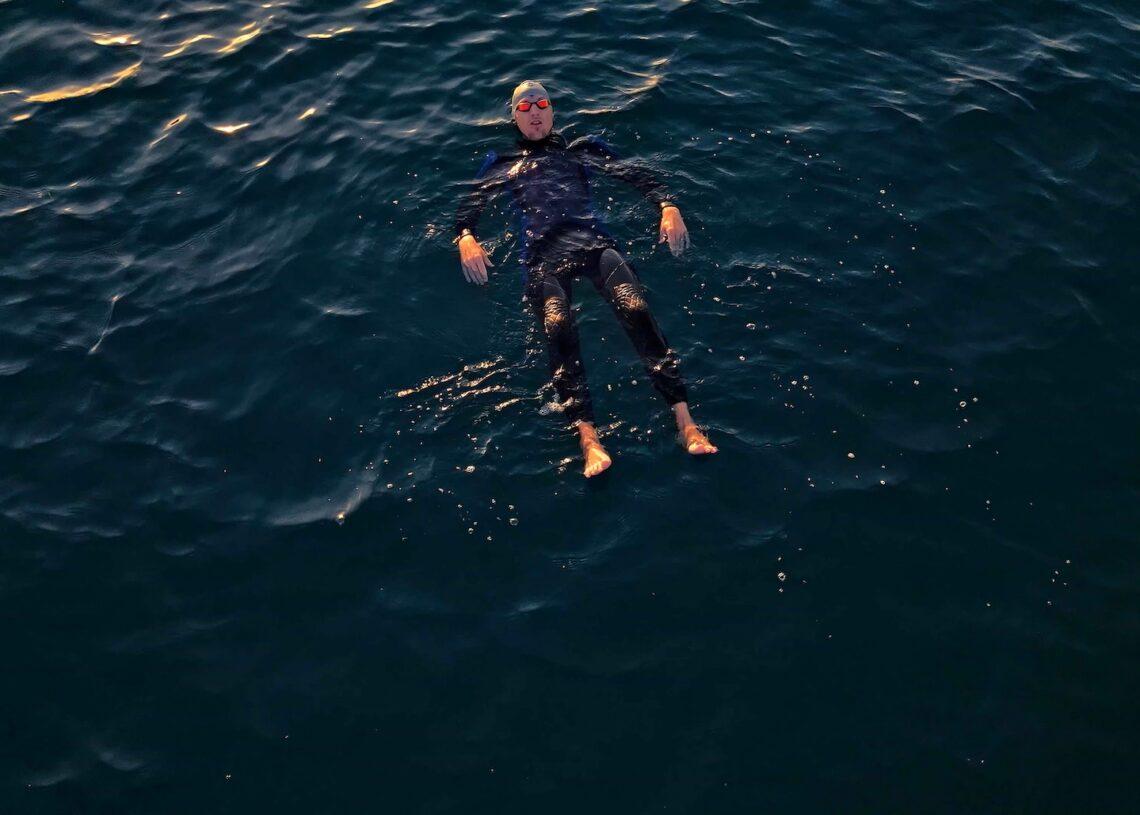
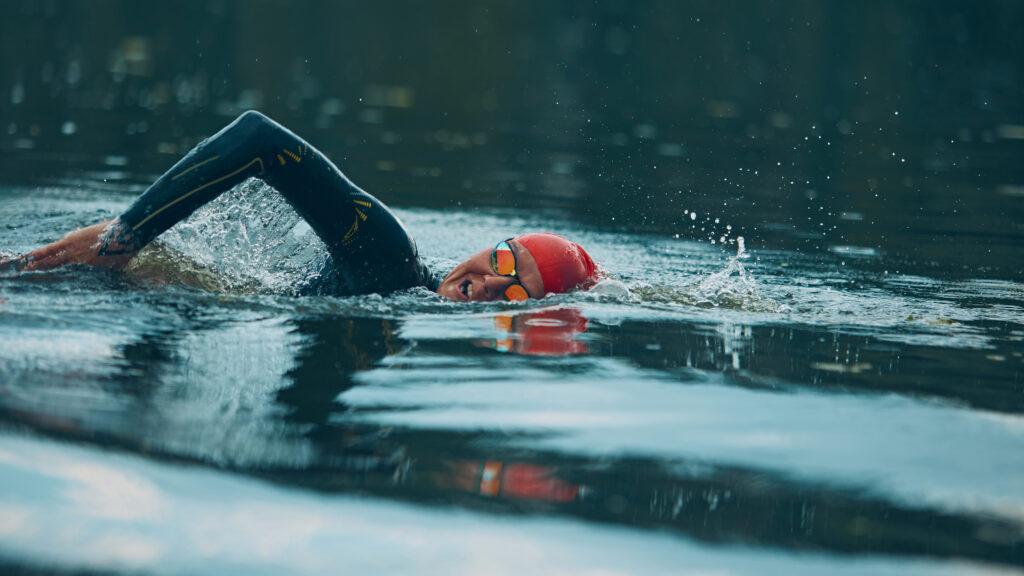
Most open water swimmers and triathletes have never developed real buoyancy. The wetsuit has been doing it for them. That’s not a criticism; it’s simply what a wetsuit does. Neoprene floats, and your body floats with it, often without you ever needing to understand why or how. For years, that’s been completely fine. Then one day the wetsuit shifts mid-swim, or you’re somewhere warm enough to swim without one, or conditions get choppy enough that buoyancy alone isn’t the issue anymore – and suddenly you’re relying on a relationship with the water you never actually built.
I’ve spent years coaching front crawl, and the same pattern shows up constantly: swimmers obsess over getting their technique perfect, but never stop to notice what their body is actually doing in the water – or what their mind is doing while they swim. Open water and triathlon swimmers have their own version of this. And the wetsuit is often sitting right at the centre of it.
What the wetsuit quietly replaces
Buoyancy isn’t just about staying afloat; it’s a feedback system. When you’re genuinely buoyant – through your own breath, your own balance, your own relationship with the water – you can feel small shifts in your position and correct them almost without thinking. When a wetsuit is doing that work for you, you lose access to that feedback. You float, but you don’t necessarily feel why you float, or notice when something changes.
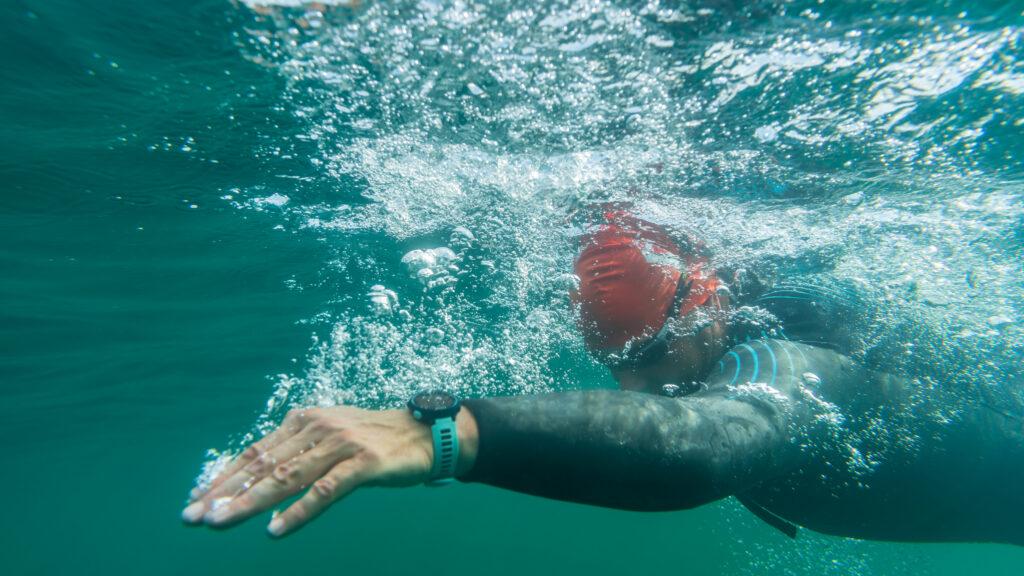
This becomes obvious the moment conditions get difficult – choppy water, a pack start, sighting a buoy that keeps disappearing behind swell, cold water tightening your chest before you’ve taken a stroke. The wetsuit is still doing its job. But the swimmer’s own sense of balance and control, never having been built in the first place, has nothing to draw on. The instinct in that moment is to compensate with effort. Pull harder, kick harder, fight the water. But effort isn’t the same as control, and more effort usually means more tension – which is the opposite of what buoyancy and balance actually need.
The sensation you’re not getting
There’s a second, less obvious thing a wetsuit takes away, and it has nothing to do with buoyancy. Neoprene dulls the contact between your skin and the water. You can still feel the water broadly – pressure, resistance, temperature through the suit – but the fine-grained sensation, the kind that tells your brain exactly how your hand is angled or whether your hip has dropped, is significantly reduced.
This matters more than it sounds like it should, because your sense of balance and position in water isn’t just mechanical. It’s built from a constant stream of small sensory signals – water on skin, subtle shifts in pressure, the feel of your own movement passing through it. Reduce that signal and your brain has less to work with. Which is part of why so many strong, well-trained wetsuit swimmers describe open water as feeling slightly disconnected, even robotic, even when their stroke is technically sound. The body is moving correctly. The felt connection between mind and water, the thing that actually makes swimming feel like swimming rather than just exercise, is muffled.
This is worth knowing, because the fix isn’t more technique. It’s paying attention to whatever sensation does get through – the pressure of water against your palm as it enters, the pull of your hip through the suit – rather than tuning it out entirely and relying on memorised mechanics instead.
The pause
There’s a concept I teach, rooted in my training in the Alexander Technique, that I call The Pause. It’s a deliberate moment – barely a heartbeat – where you stop reacting and simply notice. Not think. Notice.
In open water this matters more than in a pool, precisely because there’s so much more sensory pressure pushing you toward panic before you’ve had a chance to notice anything. The moment a wave catches you off guard, or sighting goes wrong, or another swimmer’s foot clips your shoulder, the instinct is to immediately do something: swim harder; lift your head; kick more. The Pause asks you to do the opposite: for a fraction of a second, stop adding effort and instead notice what’s actually happening in your body. Where’s the tension sitting? Is your neck rigid? Are you holding your breath without realising?
That noticing, brief as it is, breaks the panic-effort loop.
Tone awareness: neither tense nor limp
Here’s a simple way to feel this for yourself, on land. Take an empty crisp packet and crumple it tightly in your fist. Notice the effort, the rigidity. Now let it sit loosely in an open palm – barely held at all. Notice the lack of control.
Neither of those is what you want in the water. What you’re after is something in between – enough tone to maintain shape and direction, not so much that you’re gripping. I call this Tone Awareness. It’s one of the most overlooked skills in swimming generally, and it’s exactly what a wetsuit lets you avoid developing – because the suit provides a kind of structural rigidity that your own body never has to learn to provide for itself.
Most swimmers, wetsuit or not, default to the crumpled fist version the moment things get hard. More grip, more tension, more white-knuckle effort. It feels like it should help; it doesn’t.
Try this next time you’re in
Wetsuit on or off, next time you’re in open water and feel any rising tension – the chop, the cold, a moment of disorientation – stop kicking for one stroke cycle. Just glide. Notice what your body is actually doing before you do anything else. Is your jaw tight? Are your shoulders up around your ears? Are you holding a breath you don’t need to hold? You don’t need to fix anything in that moment. Just notice. Then carry on. If you swim without a wetsuit occasionally – even just for a length or two in a pool – you’ll get a much clearer read on how much of your sense of stability has been coming from neoprene rather than from you.
A different starting point
None of this means a wetsuit is a problem, or that you should swim without one. Wetsuits exist for good reasons – warmth, safety, genuine performance benefits in racing. But it’s worth knowing what they’re quietly doing for you, so that the rare moments you’re without one – or the moments conditions overwhelm even a wetsuit’s buoyancy – don’t catch you with nothing of your own to draw on.
The starting point isn’t better technique, or a stronger pull. It’s noticing – really noticing – what’s happening in your body before you try to fix anything. Pause before you react. Find the tone between gripping and collapsing. Build, even gradually, a relationship with the water that doesn’t depend entirely on what you’re wearing.
Brian Holliday’s book, ‘Why Front Crawl Feels Hard: Stop Copying, Stop Struggling, Start Swimming Your Way’, available now in paperback and Kindle on Amazon.

Outdoor Swimmer
Outdoor Swimmer is the magazine for outdoor swimmers by outdoor swimmers. We write about fabulous wild swimming locations, amazing swim challenges, swim training advice and swimming gear reviews.