

Too cold to swim?
How the Little Ice Age could be at least in part responsible for Europe’s swimming drought in the Middle Ages. By Elaine K Howley.
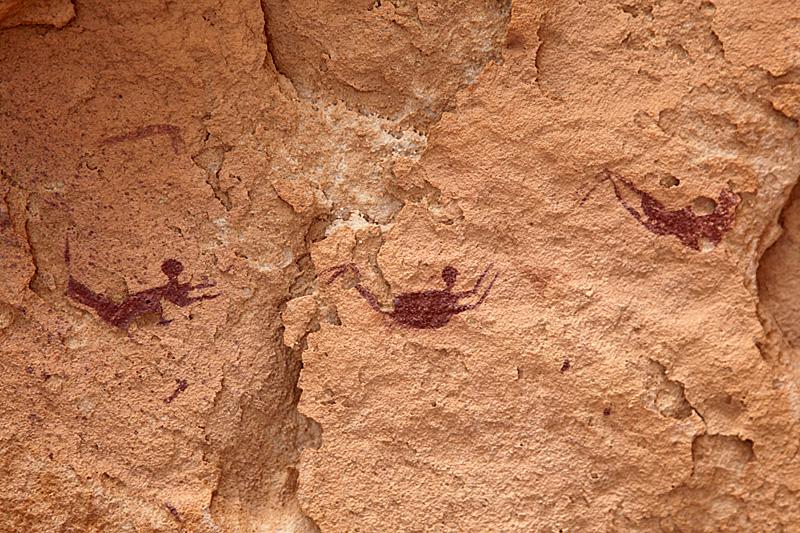
In a quirk of human history, some of the earliest, most cogent artistic representations of humans swimming hail from an incredibly arid region where there’s not a drop of swimmable water. In a remote area of the eastern Sahara desert near the Egyptian-Libyan border, ancient paintings of swimmers adorn the walls of a dry, sandy cave at Wadi Sura.
These ageless images gracing the walls of the Cave of Swimmers suggest that once upon a time, the area sustained water-based recreation, which supports the idea that it wasn’t always the bone-dry place we know today. Instead, there may have been a time when that vast expanse of barren wasteland might have been a lush, tropical oasis with plenty of rain and lots of lovely lakes in which to dip.
Exactly when the Sahara dried up is a subject of some debate, but the paintings are believed to be between 6,000 and 9,000 years old, though some historians have suggested they may be older. Some historians also date the onset of aridification in the region to about 11,000 years ago, so the suggestion that the paintings represent an erstwhile way of life seems plausible.
A planet in flux
The Cave of Swimmers at Wadi Sura isn’t the only instance of how an ever-evolving climate can affect humankind’s ability to enjoy a nice swim. In fact, it seems the phenomenon of swimmable water is closely tied to climate.
A 2019 piece by John Lanchester in The New Yorker magazine notes that “perhaps only 34 million years ago, crocodiles swam in a freshwater lake we know as the North Pole, and palm trees grew in Antarctica. The reality is that our planet oscillates between phases with no ice, phases with all ice, and phases in the middle.”
Though we have been in one of those cosy middle spaces for the past nearly two centuries, it’s increasingly become clear that human activities are contributing to a warming climate that could become far too hot for comfort in the very near future. That will certainly have far-reaching effects on human society and the way we not only recreate, but whether we as a species can survive at all.
For swimmers, a warmer planet may not seem so obviously scary at first blush, since toasty water is usually more pleasant to bathe in than freezing pools. But in a clear instance of “be careful what you wish for,” too-warm conditions can lead to all manner of swim-disrupting catastrophe including a proliferation of stinging jelly fish or an expanded range for the terrifying brain-eating amoeba that thrive in warmer water.
Clearly, balmy isn’t always better.
But fairly recent history shows that tipping into colder climes isn’t necessarily the best answer either. That’s based on a relatively new understanding of the impact of the Little Ice Age, which is now being credited by some historians with nearly wiping out all knowledge of swimming among humans on planet Earth – an historical moment that took place not that long ago, geologically speaking.
Frozen flight
In the Middle Ages, Europeans apparently forgot how to swim, a regrettable period that French historian Jules Michelet described as “one thousand years without a bath.”
Exactly why Europeans stopped swimming is still debated, but in her 2022 tome Shifting Currents: A World History of Swimming, Karen Eva Carr writes that where historians had once thought moral propriety or fears about what might be lurking below fully explained this exodus, more recently, some researchers have suggested that the “significant and widespread climate change of the late Middle Ages is likely to have played a more important role.”
Sure, superstition and a growing prudishness likely were at least partially responsible for why a vast swath of humans climbed out of the water, given that this shift coincides with the rise of the Mongol Empire that swept down from the east and brought a non-swimming culture that discouraged public displays of skin. But falling temperatures may have been a more immediate and practical reason to stay on dry land.

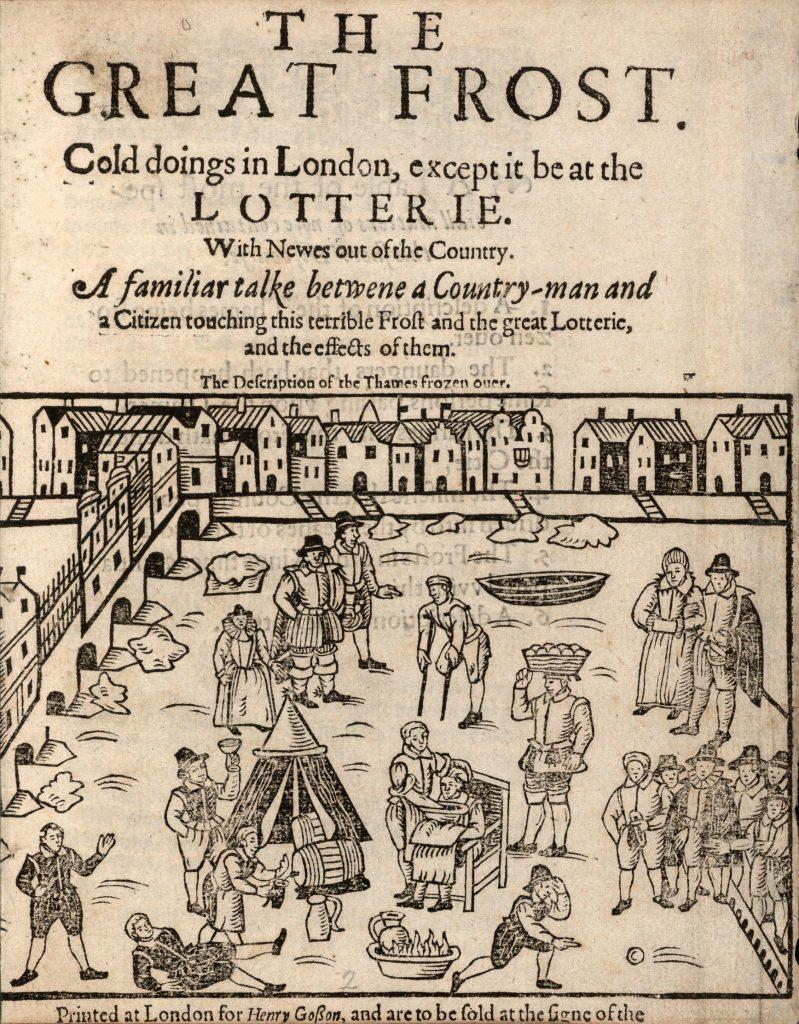
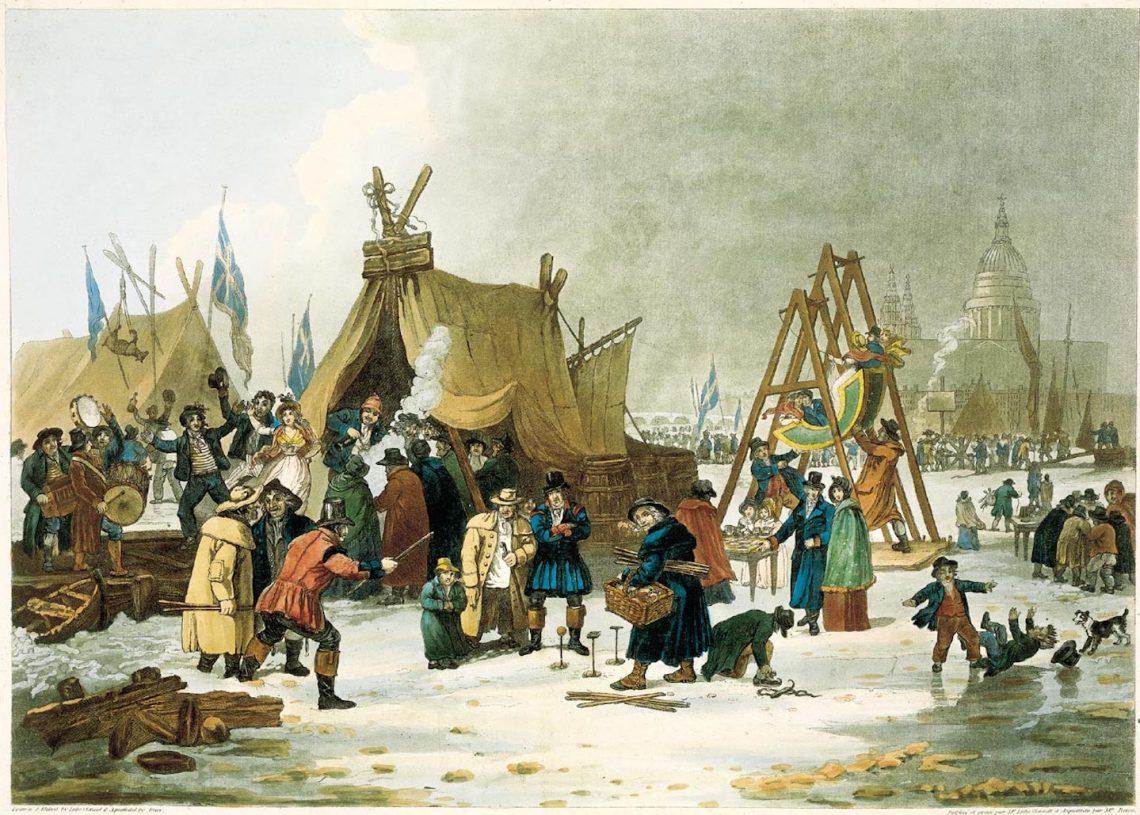
Beginning about 1300, the earth’s climate began to cool. In 1570, that cooling trend accelerated for the next 110 years. During this period, it got so cold that Frost Fairs – public festivals that took place on the surface of the frozen River Thames – were held several times during the coldest winters. And some of those winters were brutally, unbearably cold; in the winter of 1683 and 1684, for example, the Thames froze solid for more than two months, with the ice reaching a thickness of 28cm in London.
Exactly why this cooling happened is hotly debated, but one leading theory is a drop in sunspot activity, which caused a weakening of solar radiation reaching the Earth’s atmosphere. Another theory suggests an increase in volcanic eruptions spewed more dust and ash into the atmosphere, which reflected solar radiation and cooled the planet.
Another hypothesis suggests humans were in part to blame; the migration of Europeans to the Americas triggered the death of some 56 million people, leading to a drastic decline in agricultural activity in the western hemisphere. Fewer people to tend the land allowed more trees to reclaim once-cleared areas and soak up lots of warming carbon dioxide from the air – the inverse of the current climate change process we’re experiencing where excess CO2 emissions are elevating the global temperature.
A 2021 study conducted at the University of Massachusetts Amherst offered a potential new culprit: an unusually warm period just prior to the onset of the Little Ice Age. More precisely, that study points to a shift in the global ocean current process called the Atlantic Meridional Overturning Circulation – a planetary conveyor belt of sorts that shuttles warmer tropical waters north in the Atlantic ocean while bringing cooler water southward from the Arctic to keep currents churning normally.
That process may have accelerated and melted too much arctic sea ice, which diluted the salt content of the North Atlantic. In turn, that dilution could have led to the collapse of the AMOC and an eventual cooling of the North Atlantic. Those fluctuations might have been enough to launch the Little Ice Age, the researchers argue. (And some other researchers have argued that our current warming trend could eventually prompt another collapse of the AMOC in the near future.)
No matter the triggering cause, during the Little Ice Age, summers in Europe “became colder and rainier, bringing frequent crop failures and forcing wine-making further south,” Carr writes. As a result, swimming became “less attractive.”
On average, global temperatures dropped by as much as 2 degrees Celsius during the Little Ice Age. These declines in temperature were felt most acutely in Europe and North America.
But it wasn’t strictly a northern hemisphere issue. India and Africa experienced serious droughts, which likely impacted how people thought about water and how it should be used, Carr writes. The global south began drying as more ice became locked in glaciers to the north, which may have altered attitudes. “Droughts associated with the Little Ice Age in South Asia may have caused people to feel yet more strongly that water was sacred, perhaps discouraging people from entering it,” Carr suggests.
These disruptive climate changes along with the rise in Central Asian cultural dominance “led people all over Eurasia and North Africa to stop swimming by the end of the Middle Ages,” Carr writes. That situation echoed a previous exodus from the water during the Ice Age (more precisely called the Pleistocene Epoch), which started some 2.6 million years ago and lasted until about 11,000 years ago, the National Oceanic and Atmospheric Administration reports.
Over time, many people drifted further from a swimming background, Carr argues. “By the end of the Middle Ages, distinctions between swimmers and non-swimmers were almost as stark as they had been at the end of the Stone Age,” which coincided with much of the Pleistocene Epoch. “Across northern Eurasia, swimming had faded away. Most people were scandalized at the idea of naked swimmers and the over-arm crawl stroke had disappeared.” Anyone in these northern climes who still doggedly engaged in swimming usually used a head-up breaststroke or a doggy-paddle stroke, but they were few and far between. (The crawl stroke was still practiced in some regions of the world, such as the islands of the South Pacific.)
When weighing all potential factors related to why Eurasian people stopped swimming, Carr writes, it’s “small surprise that these wet, cold, hungry people also lost interest in going swimming.”
While Carr presents a convincing argument, she cautions that “we should be wary of our generation’s inclination to find climate change at the root of all historical events.” However, she concludes “the serious, prolonged changes in global temperature and rain patterns that make up the Little Ice Age must have affected people’s interest in swimming.”
The Great Thaw
Eventually, Eurasia thawed out, and from the early 19th century onward, swimming regained an audience. In the United Kingdom, competitive swimming began emerging as a sport in the 1830s.
The Little Ice Age officially ended in 1850 and since then, Earth’s climate has been on a warming trajectory. This process has only worsened in the last few decades as human activity releases excessive amounts of carbon dioxide into the atmosphere where it raises temperatures and may lead to cataclysm if we don’t act quickly.
In November 2023, the World Meteorological Organization reported that “2023 has shattered climate records, accompanied by extreme weather which has left a trail of devastation and despair.” The year was declared the warmest in recorded history, clocking in at 1.4 degrees Celsius above the pre-industrial 1850–1900 baseline.
The report also notes that “the past nine years, 2015 to 2023, were the warmest on record.” Record-high greenhouse gas levels and record high sea temperatures were also recorded. “All data sets agree that ocean warming rates show a particularly strong increase in the past two decades,” the report states.
As any open water swimmer knows, warmer water alters the nature of the challenge inherent to many events. Here in Boston, for example, the 8-mile Boston Light Swim (pictured below in the 1920s) was long considered a key cold water event that many people used as a stepping stone to longer, colder swims like the English Channel. With water temperatures typically hovering around 14 to 16 degrees Celsius at the turn of the 21st century, the Boston Light Swim was a formidable test.
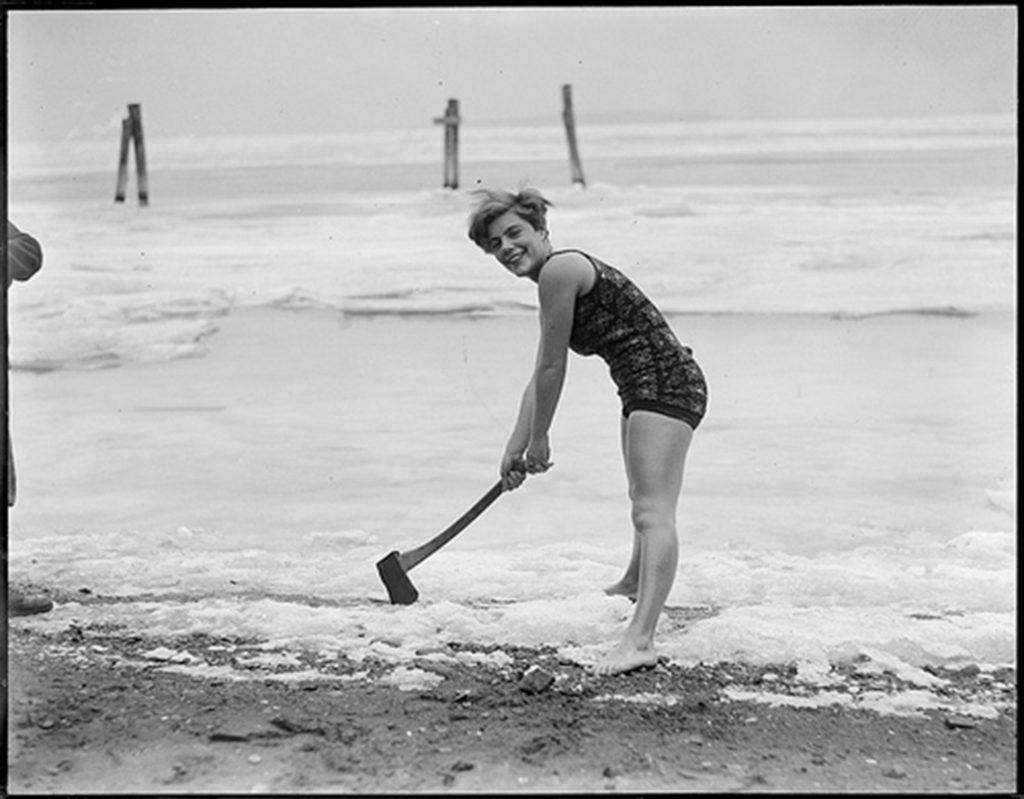
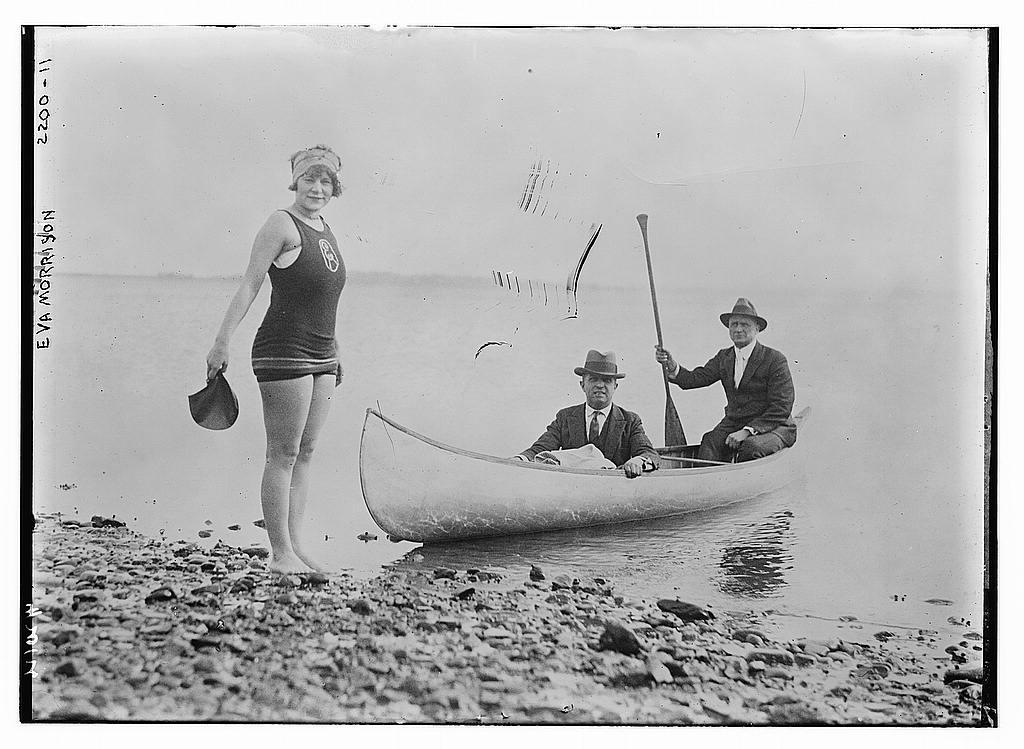
But over the past decade, the average temperature for that event has increased significantly. It’s now common to see temperatures between 18 and 20 degrees on race day. That 4- to 5-degree difference changes the nature of the event; on one hand, it puts it within reach of more swimmers who might otherwise have struggled with the cold. But on the other hand, that broader accessibility could be thought of as diluting the prestige of completing the swim.
Faced with this warming trend and questions about how hard the swim should be in order maintain its identity, we organizers have discussed whether we should move the event earlier or later in the season to ensure colder water temperatures.
So far, we have not changed the date, but we do wonder what the next decade will bring for America’s oldest marathon swimming race. It was first staged in 1907, just 57 years after the Little Ice Age ended. Reports from the first dozen years consistently note how frigid the water was, with some suggesting it was sometimes below 10 degrees Celsius.
Today, the Boston Light Swim is no longer one of the coldest swims out there, and we’ve been thrilled that so many swimmers have succeeded recently. But that joy is tempered by concern for the planet and the changing climate, which brings a whole different set of existential trials for future generations, swimmers and non-swimmers alike.

Outdoor Swimmer
Outdoor Swimmer is the magazine for outdoor swimmers by outdoor swimmers. We write about fabulous wild swimming locations, amazing swim challenges, swim training advice and swimming gear reviews.