The Tidal Year
Register to get free articles
Want unlimited access? View Plans
Already have an account? Sign in
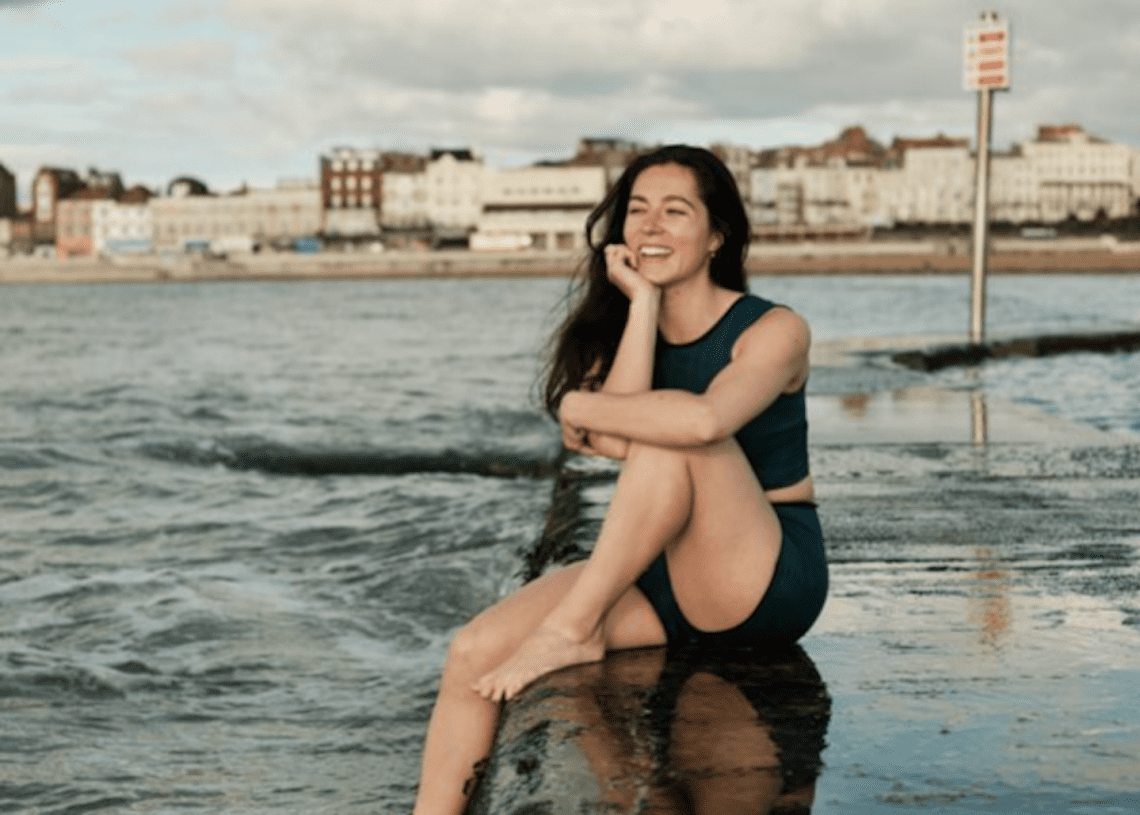
A new book, The Tidal Year, follows swimmer Freya Bromley attempting to swim in every tidal pool in mainland Britain. Ella Foote meets Freya to learn why and how (spoiler alert) it doesn’t matter that she didn’t finish the task.
At just 19-years-old, Freya’s younger brother Tom died from a rare bone cancer. Freya, herself just out of university, was living in London and starting her career. Understandably, Tom’s death shook Freya and left a gaping hole in her family.
She grew up in Surrey, one of five siblings: two older brothers and her twin siblings, Tom and Emma. Their childhood was spent outdoors exploring, walking and swimming across the Lake District or Dartmoor. Her parents, who moved to Wales after Tom’s death, are the kind who listen to BBC Radio 4 and have a National Trust membership. Four years passed after Tom died with Freya carrying her grief like a secret, using dating, dancing and her work in London to distract her from her grief. That was until she met Miri on a wild swimming retreat in Cornwall.
“My life changed when I met Miri, she is probably the most romantic story of my life,” says Freya. “I remember seeing her at the train station and thinking, she is cool. Then it turned out we were going to the same place, so yeah, a romantic meeting.
She has been incredibly supportive and helped me a lot.” Miri and Freya were joined by eight other women on the swimming trip where they ate together and swam across Cornwall. In her book, their relationship grows from admiration on Freya’s part into a friendship bound by the water. Coincidently they both lived in south London and so were able to continue to share their appetite for escaping the city in search of swimming spots, which led them to the first tidal pool in Freya’s story.
Start of an adventure
Walpole Bay Tidal Pool in Margate, Kent was close enough to London that it could be done in a day and so Miri and Freya headed to the south east coast. “That was the start of my obsession,” says Freya. “I had never swum in a tidal pool before and being able to swim in the sea but in the safety of a pool was sublime.”
Freya started researching, seeking similar pools and discovered there were many more but very little connecting them; maybe she could collate and connect. Miri was easily persuaded to join.

After Kent, the pair headed to Blue Pool Bay, Gower, Wales where there is a large, natural, circular pool at the western end of the beach. “Hiking holidays and getting into water, even if we didn’t have
swimsuits, was part of my childhood,” says Freya. “I don’t know when I stopped. As I got older, especially as a woman, I think I became a bit more uncomfortable with my body. I grew hips and got my period, I completely stopped swimming. It was only after Tom died, when a friend I had met through a bereavement retreat said she was going to the Hampstead Heath swimming ponds, that I returned to the water. It was the first day of January and it was the worst time of year to start, but I just became totally hooked.”
Play time
Freya rediscovered a playful, childlike feeling in the water and a connection to her childhood which, in turn, reconnected her with Tom. “When someone dies, you feel quite serious and sad for a long time,” she says. “Being able to connect with this part of myself that was more playful was a welcome break. Tom was ill for a long time before he died. We watched him get very ill, so a lot of my memories are sadly of him suffering. But there is something about water that just connects me to a time that he was free, which I love. Your body holds memory, doesn’t it?”
Freya found peace in the water, a place where the chatter of her mind cleared more so than anything else she had tried.
“At the time I felt like it wasn’t acceptable for me to have feelings, especially at work. I had to put on a mask. When I was at the pond it felt like people were all swimming for their own reason and it felt like a safe place to have something going on in your life.”
A swimming community
Over the ‘tidal’ year, Freya and Miri travelled to well-known pools such as Clevedon Marine Lake and Tunnels Beach in Ilfracombe, as well as lesser-known places like Trinkie Wick and Pittenweem in Scotland. In between they would meet and swim at their local pool, Brockwell Lido in London. While swimming Freya began to meet and chat to more and more people, hearing other people’s stories and reasons for swimming.
“There is always a story behind a swimmer,” she says. “I became interested in collecting the human stories that weren’t really about swimming at all, but why they got in.” During her own swimming journey Freya founded and started The Tidal Year podcast, which has since featured many swimmers including magazine founder and publisher Simon Griffiths. “It was an incentive to write more and raise my profile, but also to learn something new.”


After hearing Freya’s podcast featuring author Cathy Rentzenbrink, a book agent reached out. “I hadn’t thought about a book about the swims, I wanted to write novels,” says Freya. “It was my agent (Jo Bell) that suggested I consider a proposal about the tidal pool project. I don’t think I would have ever had the confidence to write a book about me, so instead I was writing a novel that was clearly about me, but I was pretending it wasn’t – which is why it didn’t work. Miri and I had started documenting our swims in a blog online, but when the book idea came up, we took it offline. It then became an emotional journey alongside a physical one.”
A truthful chronicle
Freya stitches in her story while swimming, sharing memories of her brother and her experiences of grief, as well as reflecting on how the rest of her family deals with the loss. There is the friendship with Miri as well as dates and relationships with men that litter the book with the reality of being a single twenty-something in London. At times it is raw and reflective, at other times it’s light and amusing, peppered with female experience. It feels brave to write some of it down for all her family and friends to read.
“I still feel a bit uncomfortable with the word ‘memoir’,” says Freya. “Funnily enough, I was on a writing course and at dinner we were joined by author Tessa Hadley who joked about twentysomethings writing memoirs. Later when we met, she asked what I was writing, and we laughed about her comment. We ended up having a great conversation, and she was very open about why she thought that it was complex or problematic. I agreed with her, but I was also lucky to have the structure of the swims. It gave me a container for what felt like scary, too much, unbounded and deep feelings.
Having the pools to write about helped me navigate the emotions. In fact, for my first book it was fantastic to have the structure. I still had to write it and view it as a story sometimes, because if it felt too much like I was writing about myself, I didn’t have enough compassion and became too judgemental. I wrote some of it in third person and then changed it later when I was able to access the courage.”
Exploring her grief
As well as writing about parts of yourself and your life that friends and family might not always see, writing about grief is complex. “The book became a beautiful tool to be able to share my grief with my family,” says Freya. “It was uncomfortable talking about Tom with my sister Emma, Tom’s twin. I shared the book with her first and she came back to me surprised I felt similar ways to her, not knowing I was feeling it too. I was so worried about it, but it became a new way for us to have a dialogue that was too hard to do in person.” Even when you are grieving the same person, it doesn’t mean the grief is always the same. Freya explores this in the book and how her mum grieves in comparison to her. “Some of the writing I am most proud of is when I was writing about my mum. How difficult it was to feel her grief against mine.”
Freya’s book reminds me of another brilliant memoir that tackles grief through swimming and nature, The Green Hill by Sophie Piece. Sophie and Freya have connected and will be discussing their work at an event in June.
“One of the things Sophie kindly said about the book was that it’s OK for things to be unresolved. I couldn’t finish all the tidal pools because what a ridiculous thing to set out to try and do in a year. You also cannot complete grief, which I think I was trying to do. I thought swimming around pools would put me in touch with myself and I wouldn’t be sad all the time. But in the end, I realised, it is going to be like this forever and I must adapt. The journey continues and changes, but it is good, and I feel more comfortable with that now.”
Images: Liz Seabrook
Freya’s book the Tidal Year is published by Hodder & Stoughton