Claiming access to swimming may be easier in cities
Urban waterways can be places we cherish, celebrate and care for, says Simon Griffiths
Throughout history, human societies have settled around water. We need it to drink and for basic survival. It’s a source of food to transport and a defensive barrier. Being on or near water is calming and good for our mental wellbeing. Properties with views over water almost always come with higher price tags.
Still, our relationship with water is troubled. Sometimes it rises up against us. It can be a breeding ground for mosquitoes and nasty diseases. Many lives are lost through drowning.
So, as well as celebrating and enjoying water, we try to contain and control it. We hide it away and build over it. We need water but we fear it too.
This tension shows up in our attitudes to swimming, especially in urban environments. We put up barriers and warning signs. We run publicity campaigns to remind people how dangerous water is. It is deadly cold, we are told, and full of hidden hazards and undercurrents that could overwhelm even the strongest swimmer.
Yet swimmers keep coming. Not just now, but throughout history. Sometimes the swimmers have the upper hand. Other times the doom mongers and nay sayers hold sway.
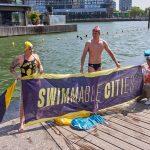
Today, it feels as if swimmers are enjoying a moment of confidence as people reclaim urban waters for recreation. You will have seen plenty in our pages about the Swimmable Cities movement. You may have swum in the former docks in London, Liverpool and other places. You may have taken part in city centre events in New York, Paris, Copenhagen or Amsterdam.
Always risky
Swimming will always carry risk, which means it will always attract controversy. But when we consider water as a place for sport or recreation, it adds something to our relationship with it. It becomes not only something we need and fear, but also something we cherish, celebrate and care for. Instead of hiding water away, we open it up. Instead of mistrusting it, we learn to understand and accept its moods.
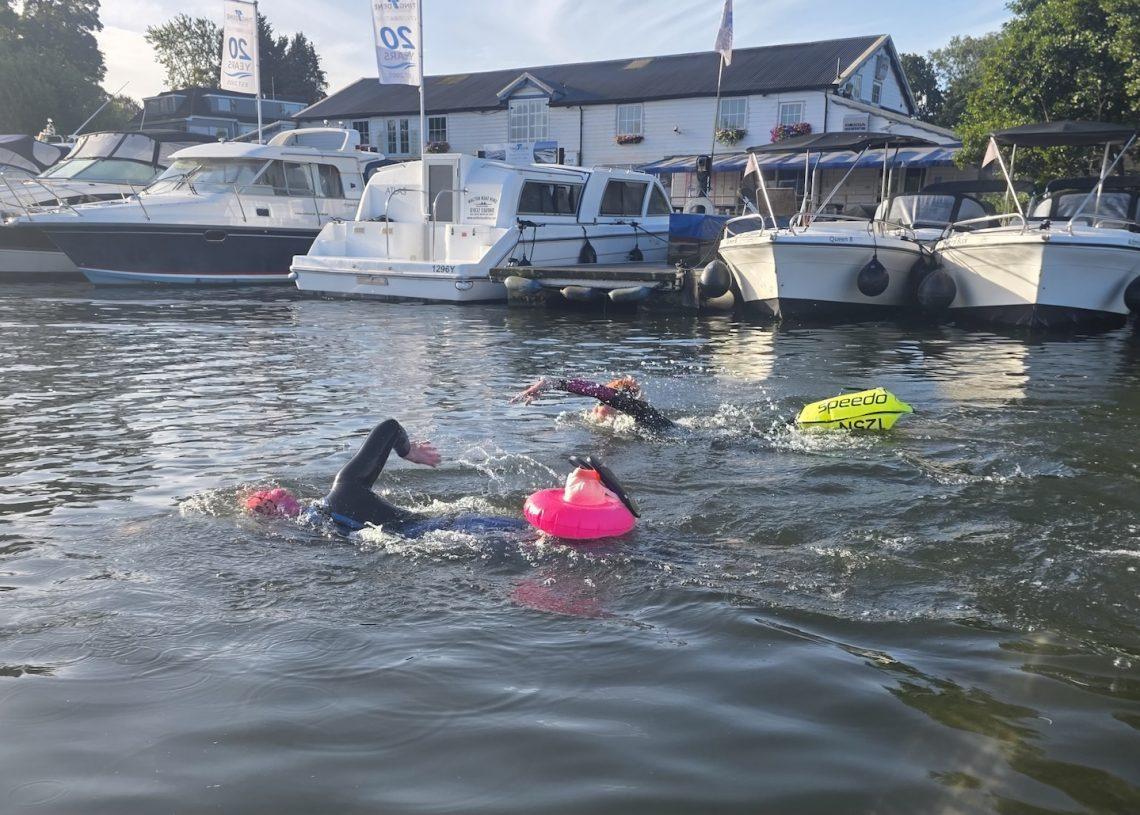
Urban waterways can also bring a touch of nature into built environments and swimming offers a unique way to reconnect with that nature. Where I swim, in the Thames between Kingston and Richmond, the river barely feels urban even though it is far from unspoiled countryside. If you follow the river further downstream towards London, parts of it actually feel more wild. Riding the outgoing tide from Richmond, past Kew Gardens on one side and Isleworth on the other, you can almost imagine setting off on an adventure through unexplored jungle.
Of course, you can see this stretch of river from a boat or the towpath, but only swimming gives you such an immersive, multi-sensory experience. The river drags you gently toward the heart of the city, which you sense but cannot yet see or hear.
Better in cities?
In fact, cities often provide better outdoor swimming opportunities than rural areas. I heard a member of parliament observing that although he could swim outdoors with ease in London, it was almost impossible in his rural constituency.
In claiming our urban waters for swimming, we are choosing not just to live beside water because we need it, but to live with it because we love it.
When we swim in urban rivers, docks or city lakes, we embrace water not as a threat to be hidden away but as a shared resource to be enjoyed, protected and valued.
If you’re in an urban environment, take time to explore swimming opportunities, support the people improving access, and add your voice to those calling for cleaner and safer blue spaces. The more we swim in them, the more we care for them, and the more our cities can rediscover the life enhancing power of water. As we campaign for better access to swimming, cities may offer us the lowest hanging fruit.

Simon Griffiths
I started Outdoor Swimmer in 2011 (initially as H2Open Magazine) as an outlet for my passion for swimming outdoors. I've been a swimmer and outdoor swimmer for as long as I remember. Swimming has made a huge difference to my life and I want to share its joys and benefits with as many people as possible. I am also the author of Swim Wild & Free: A Practical Guide to Swimming Outdoors 365 a Year, I provide one-to-one support to swimmers through Swim Mentoring and I'm the creator of the Renaissance Swimmer project.