


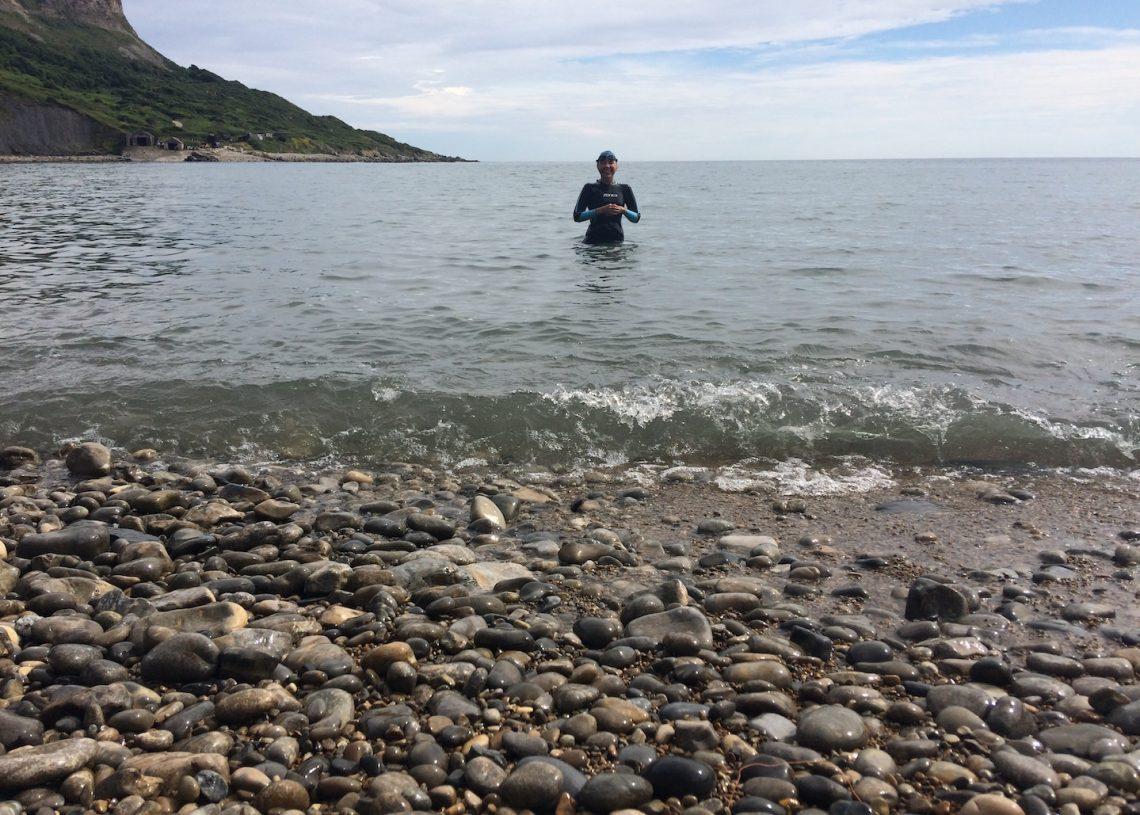
Swim away the pain
Can cold water help with chronic pain? Rowan Clarke asks philanthropy writer, author and swimmer, Gillian Best
One early experience of chronic pain stands out to Gillian Best because it happened while swimming. But, as she learned about pain, studied it and lived with it, she found solace, relief and joy in the water. Gillian’s new book Chronic: Understanding Pain takes a deep dive into a fascinating, slippery subject onto which medicine barely has a grip. She meets the researchers carrying out ground-breaking research into understanding and treating chronic pain. We asked Gillian about her work, her experience of chronic pain, and how she finds support in the water.
Turning to the water
We all experience pain. But a staggering number of us also live with chronic pain, which is defined as persistent or recurrent, lasting longer than a few months and ongoing after treatment. It’s complex, debilitating, unpredictable and distressing. One of the reasons chronic pain is so distressing is because it’s so overlooked in medicine. In her book, Gillian quotes Amanda Williams, Professor of Clinical Health Psychology, UCL: “It gets overlooked because people go for the disease,” says Professor Williams. “I’m not saying we shouldn’t treat disease, of course we should, and if the pain goes away, that’s great. But too often it doesn’t.”
So, we become what Gillian calls our own “disease detectives”, getting acquainted with medical jargon, researching drug treatments and seeking alternative therapies – anything that works. And this is how so many sufferers of chronic pain end up cold water swimming.
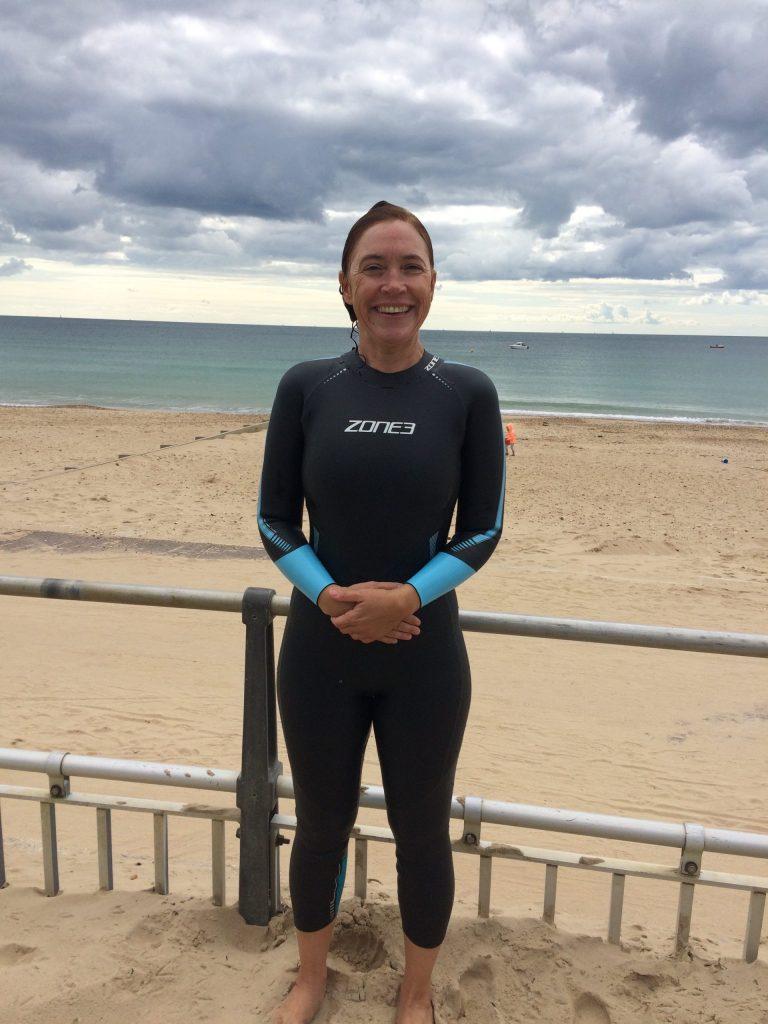
“Swimming is always one of those things that the doctors will tell you to do,” says Gillian. “Everybody can do it, right? You can do it at any speed or pace, you can do a gorgeous, heads-up breaststroke, or you can be the wanker in the middle of the lane doing butterfly. People see outdoor swimming and how happy people are doing it. And who wouldn’t want to do the thing that’s so joyous?”
Growing up in the rather aptly named Waterloo, Ontario, Gillian loved playing in the water and swimming. “I have such great memories of swimming as a kid. I swear I spent every day all summer in the water,” she says. “We’d all get on our bikes in our bathing suits and roll around the neighbourhood. Once you passed your deep end test, you were allowed to go to the pool by yourself. I spent all day there – the lifeguards would have to send me home for dinner and then I’d come right back.”
Perhaps it’s because the water was her happy place that Gillian’s early memory of intense pain, later diagnosed as Ankylosing Spondylitis (AS), stands out. “I was in my pool where I always swam, and felt really comfortable and confident,” she says. “I was treading water, which I could do it for hours, when I got this horrible shooting pain in my bum and sitting bones. I managed to get out of the pool and to the changing room, but I had to get a teacher to help me change – that’s not what you want at 14. You don’t want to have an adult help you get dressed. That’s not cool.”
An emotional experience
Pain, you learn from Gillian’s book, has three forms – nociceptive, neuroplastic and nociplastic, where there’s no mechanical cause. It’s described with a limited vocabulary, and measured with an even more limited numerical rating scale, which doesn’t begin to adequately communicate its extensiveness, how it’s a personal, emotional, full-body experience.
“You can’t have debilitating physical pain without a wild emotional experience, right?” says Gillian. “I think sometimes we do ourselves a disservice in the chronic pain world because we don’t say, I have fatigue today from my pain, or I’m feeling really depressed because I live with this pain. But we live in our bodies, so we can’t dissociate – whatever your body has to experience, you have to be there.”
In this state, being asked to describe your pain, or place it on a scale of one to ten, only adds to your distress. “We have a paucity of language with which to describe these pain states that we experience, and you want a really good shorthand, especially when you’re in a lot of pain because you don’t have the extra energy to go into the details about how, why and where it hurts,” explains Gillian. “If you asked me those questions and I was in a flare, I’d stab you! I don’t have that extra layer of functioning. You can’t have a really painful experience without also having a wild emotional ride.”
The connection between brain and body is fascinating. Chronic doesn’t only explore the emotional effects of living with pain, but also the causality between emotional trauma, especially in childhood, and pain. On the flip side, Gillian explains how positive emotional experiences can help protect against pain.
The power of community
She cites a case where, after decades of chronic pain, a patient finally found relief from his symptoms through psychological treatment for his childhood trauma. For many patients, this social support is also key. In her book, she quotes Melanie Noel, Professor of Clinical Psychology at the University of Calgary, writing: “You can talk to someone about their pain and that can change their whole life. Being validated, being connected, having community – that is not fluff.”
“Professor Noel said to me, and I love this quote from her, she said, ‘you want to cure chronic pain? Get rid of the patriarchy, white supremacy, and capitalism. Those hierarchical systems aren’t helping us show up for each other.’ The connection, the acceptance, the lack of competition or discrimination – ‘You don’t have to fit in. You already fit in,’ as Gillian says – is a crucial benefit of outdoor swimming for people with chronic pain.
“You get community, you get support, you get a feeling of belonging,” she says. “You feel this reverence, like you’re going to worship and experience joy. Experiencing that together is really moving. We have these really individualistic lives, we don’t go to church together anymore, but it’s exactly what Professor Noel says – community is everything.”
It’s also about being able to proactively help ourselves. “There’s something in having agency and feeling that you’re in charge,” says Gillian. “You go to the doctor, ask for help, and they give you what they’ve got, which sometimes doesn’t help, and you feel so alone. So, finding a community and doing stuff that helps is important for everybody, not just people with chronic pain.”
It’s not about replacing conventional medicine, or using cold water as a cure-all – some conditions require extra precautions and consideration.
“I don’t know if it’s the cold water, the swimming, the people, your positive associations, feeling loved and confident and like your body actually works for a minute, feeling that you aren’t in pain,” she says. “Whatever it is, if it works, awesome. Cold water swimming is not without its risks, but when I compare it to the long list of side effects that my medications have, they pale in comparison.”
The buzz
When Gillian lists the benefits, it’s easy to see why people, especially those in chronic pain, are evangelical about swimming outdoors.
“It’s like the greatest drug in the world,” she says. “But I can’t wipe the grin off my face. Every time I get out, I feel so jazzed, like it’s the best thing ever and I can’t believe it. I don’t know if that’s the cold water, the people there, the exercise or the whole freaking thing.”