


How to plan your own swim adventure
Embrace the adventure inherent in outdoor swimming says Simon Griffiths
We’re fond of saying that every outdoor swim is different. Conditions are never identical. You don’t know for certain how your body will cope. This element of uncertainty is the hallmark of adventure. You could therefore say – perhaps with a slight stretch of the imagination – that every outdoor swim is an adventure.
Swim adventures don’t need to be massively challenging or in far-flung locations. All you need is to be open to experiencing adventure in your regular outdoor swims. This means cultivating a sense of excitement and wonder about every swim and tuning your senses to the new and unexpected.
Adventure exists on a scale from close to home swims, to ones that require months of preparation and planning. Often, bigger adventures are facilitated by swim travel companies and guides. Sometimes, the only practical way to access them is through an organiser. I’ve just returned from a trip in the Maldives with SwimQuest, which would have been almost impossible to organise myself.
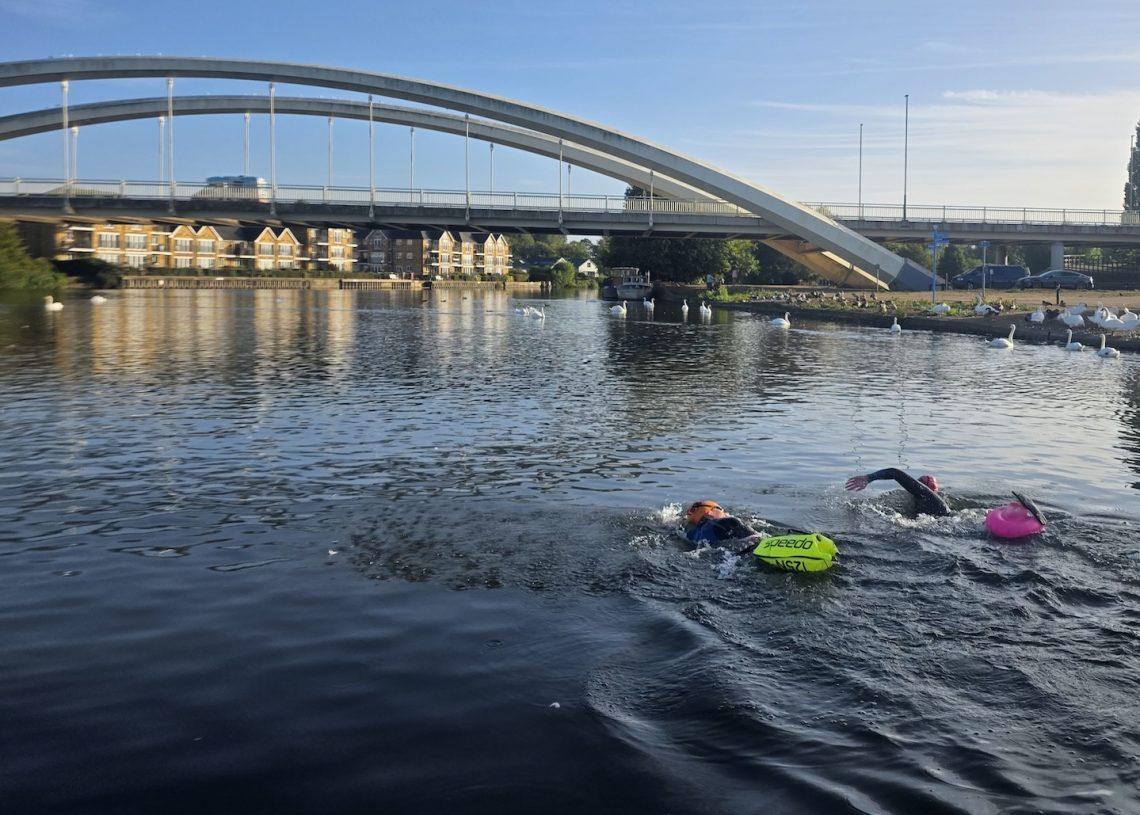
But if you want to add more adventure to your swims, you can also do it yourself. For example, last summer, I swam a 9km stretch of the Thames with friends. We organised car shares to get to the start and persuaded other friends to provide kayak and paddleboard support. It was fun and memorable. We didn’t know exactly how it would work out or how hard it would be. Situations came up along the way that needed to be dealt with (angry rowers, primarily, plus a couple of irritated anglers), but we all finished safely and in good spirits.
These mini-swimming adventures are often among my highlights of the summer. I encourage you to create your own. If you do, here are a few suggestions to make them work. While adventures pitch you into the unknown, they shouldn’t be reckless. Think through how you will ensure your safety and make your plan relevant to where you are swimming. For our Thames swim, this meant…
Safety first
- Tow floats for visibility.
- Kayak or paddleboard support to look out for hazards, alert other river users and carry essential supplies (nutrition, spare clothes, etc.). • Swim in groups, with each group supported by a paddler. • Take regular refuelling and regrouping breaks. • Start early when motorised boat traffic is least. • Swim close to the bank as much as possible.
Also, think about what you will do if you need to abandon the swim early or have an incident on the water. Can you get out easily? Do you need land-based support too? Should you set up a tracker?
Plan logistics
- How will you get swimmers and kayaks/SUPs (if you’re using them) to the start?
- If you’re doing a point-topoint swim, how will you get back?
- How much nutrition do you need and how will you transport it?
- Will swimmers carry their own or put it on a support boat?
- Do you need to inform anyone about your plans or request permission?
- What and where are you going to eat after the swim?
Kit
Think through what you might need on the swim and, importantly, afterwards. Make a list. Consider safety equipment such as a whistle and first aid kit.
Adventures take you into the unknown, which is exciting but involves some risk. Proper planning will help you stay safe and maximise the fun.

Simon Griffiths
I started Outdoor Swimmer in 2011 (initially as H2Open Magazine) as an outlet for my passion for swimming outdoors. I've been a swimmer and outdoor swimmer for as long as I remember. Swimming has made a huge difference to my life and I want to share its joys and benefits with as many people as possible. I am also the author of Swim Wild & Free: A Practical Guide to Swimming Outdoors 365 a Year, I provide one-to-one support to swimmers through Swim Mentoring and I'm the creator of the Renaissance Swimmer project.