

Wading in for civil rights
Black swimmers went to the beach to protest racial segregation in 1950s and early ’60s America. Words by Elaine K Howley
On 1 January 1863, President Abraham Lincoln issued the Emancipation Proclamation, an executive order that changed the legal status of three million enslaved people living in the Confederate States (Texas, Arkansas, Louisiana, Mississippi, Alabama, Georgia, Florida, South Carolina, North Carolina, Virginia and Tennessee) from “slave” to “free” in a single pen stroke.
While a welcome change, the broad shift in the classification of a whole swath of humans had repercussions for formerly enslaved persons across the United States. Though these individuals would officially became constitutionally free in January 1865, thanks to the passage of the Thirteenth Amendment that abolished slavery except as punishment for a crime, there were other mechanisms available to the racists who sought to keep the status quo.
Within a few years, a patchwork of draconian state and local laws sprang up to restrict the rights of Black people. The most overt and repressive, dubbed “Jim Crow laws,” flourished in the South and endured from the 1870s into the mid-1960s to ensure that African Americans were treated as second-class citizens in virtually every realm.
Even the beach was not exempt from this Apartheid-style system of legalised racial oppression, as public beaches were segregated into “Whites only” and “Blacks only.” And these designations were far from “separate but equal” – of Florida’s roughly 2,000 miles of coastline, a mere two miles were legally open to Black patrons. Often, these Black beaches were “small, faraway, and dangerous,” according to a “Missing Chapter” Vox video titled “The Forgotten ‘Wade-ins’ That Transformed the U.S.”
“In New Orleans, for example, the city’s designated Black beach (Lincoln Beach) was an area grossly polluted with sewage from nearby fishing camps,” Vox reports.
And in some areas, these limited leisure locations disappeared altogether; in Fort Lauderdale, where beaches had been segregated since 1927, the only beach Black patrons could access was bought by a developer in 1953 who turned it into a swanky section of town rife with high-rise condos and private beaches where Black people were not welcome.
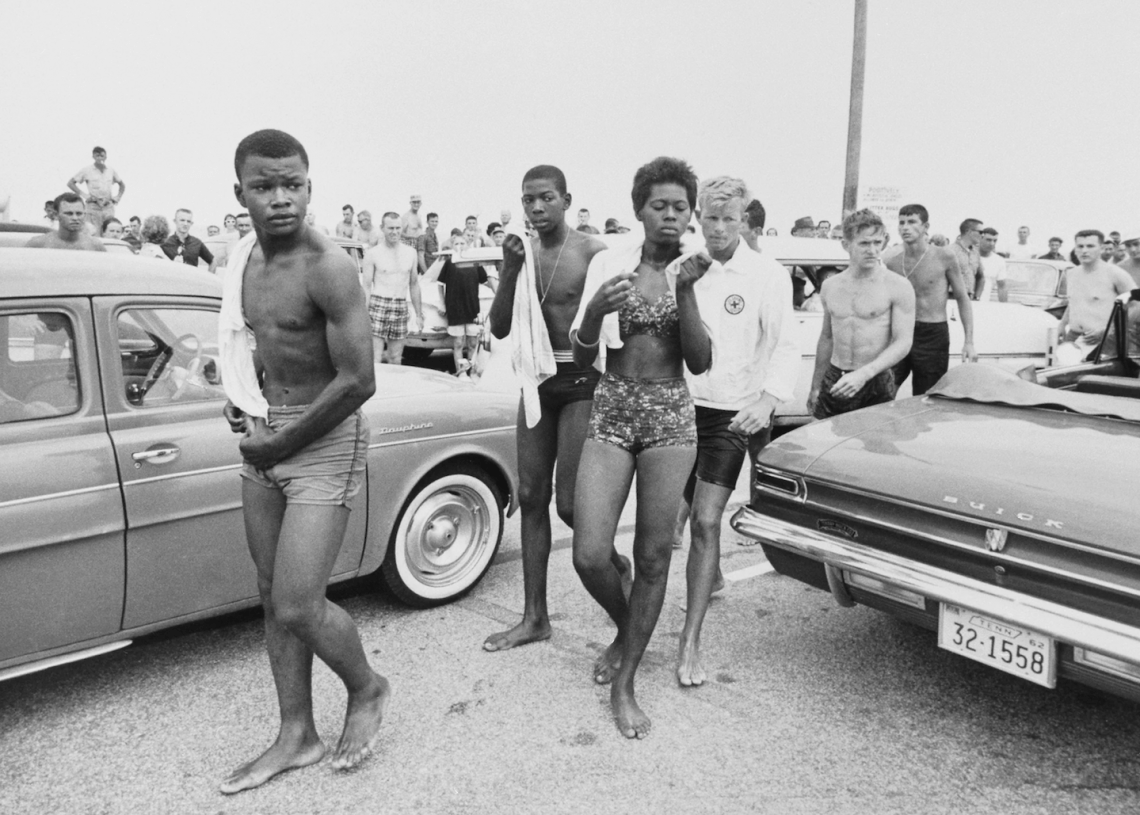
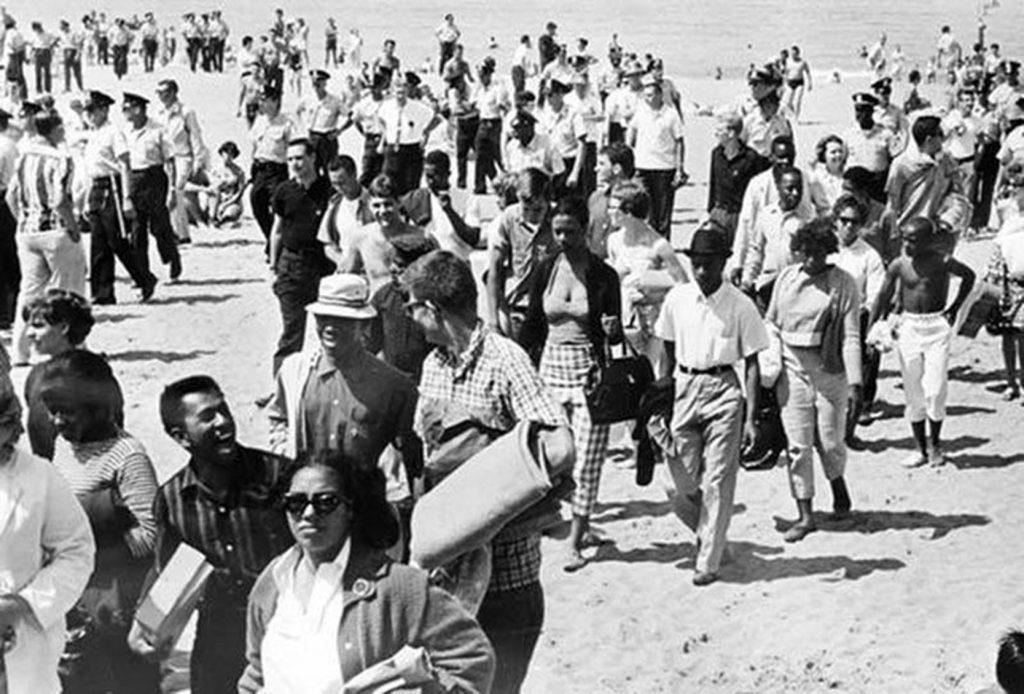
In an effort to assert their rights to not just swimming, but all public spheres, protesters began a series of marches, sitins, bus boycotts, and other acts of Civil Disobedience that grew into the Civil Rights Movement of the 1950s and 1960s. As part of this effort, peaceful protesters and activists began staging so-called “wade-ins” at whiteonly beaches primarily in the coastal South.
In Florida more often than elsewhere, the beach became ground-zero for these wadeins during which African Americans and allied others simply waded into the water to desegregate public beaches. Alas, these non-violent actions were often met with aggression from local authorities.
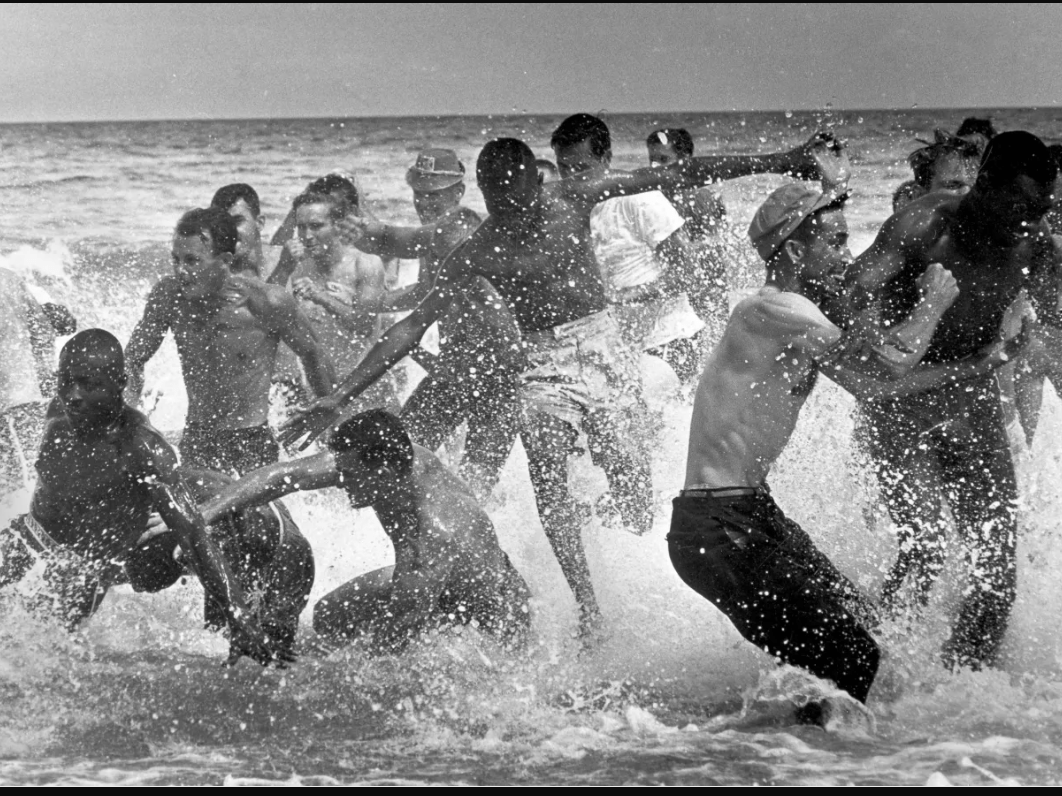
St. Augustine, Florida, became a critical tipping point for the push for racial equality in the summer of 1964 as protests and rallies garnered national and international media attention. Dr. Martin Luther King, Jr., baseball star Jackie Robinson, and other Black luminaries headed to St. Augustine to participate in the protests.
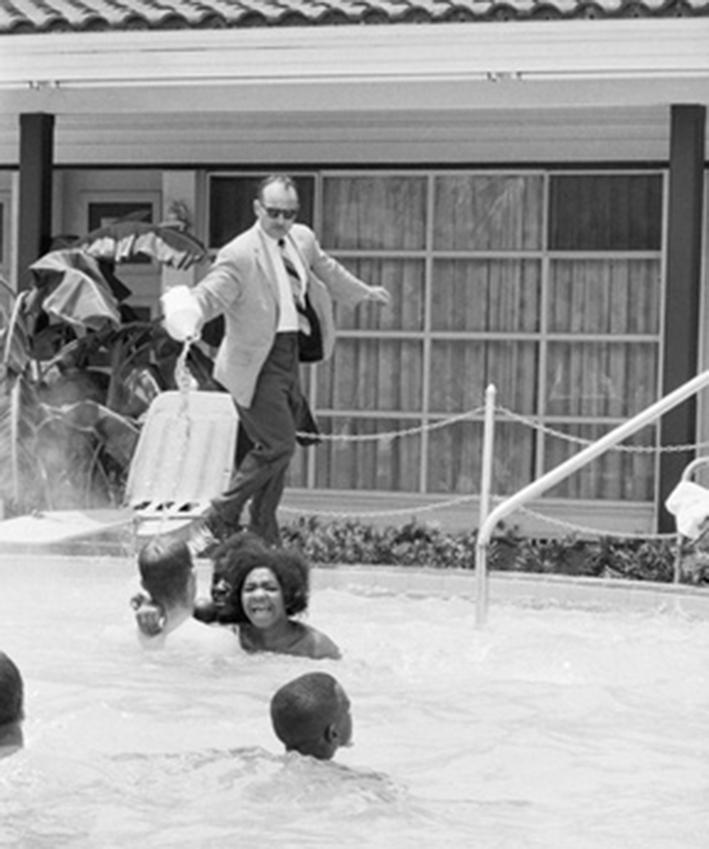
On 11 June, King and 17 others attempted to dine at the white-only restaurant at the Monson Motor Lodge, but were barred and arrested. About a week later, a larger, highly coordinated group of protesters descended on the motel and focused their energy on the pool.
While a group of demonstrators led by a group of 16 rabbis encircled the building and launched into a prayer vigil, five Black swimmers entered the pool by climbing though the hedges that surrounded it. Meanwhile, King led still more protesters in a march down the street toward the motel. In response to the wade-in, James Brock, the hotel’s owner, dumped gallons of hydrochloric acid in the water to chase the protesters out, creating one of the most galvanising photos of the Civil Rights Era. The protesters were promptly arrested.
Tensions in St. Augustine continued rising. Then, on 25 June, 75 people – Black and white activists, local residents, and staff members of the Southern Christian Leadership Conference, a civil rights organisation established by King – peacefully entered the water at St. Augustine Beach. But they were met with violence and aggression from police officers and a hearty cohort of white supremacists.
Cynthia Mitchell Clarke was punched in the melee and her nose was broken. She told Vox that “the demonstrations continued. The fighting continued. The bullying continued. And it wasn’t just about us and integrating that beach. We knew about the bigger picture,” she says.
Later that evening, hundreds of white supremacists rallied in St. Augustine and attacked a march of civil rights protesters, sending 19 Black people to the hospital and injuring many more. As one newscaster described the pivotal day: “The fuse burned down and the racial bomb exploded.”
But that conflagration pushed Congress to finally pass the Civil Rights Act of 1964, which had been stalled thanks to the filibuster efforts of several southern Senators. But the violence that erupted in St. Augustine tipped the scale and Congress finally passed the Act, which President Lyndon B. Johnson signed into law on 2 July. Johnson called the monumental, antidiscrimination bill’s passage “a turning point in history.”
Though the law made racial segregation and discrimination practices illegal, local municipalities around the country found other ways to bar Black patrons from beaches, often by privatising locations or raising prices for entry. Wade-in protests continued, and “pools and beaches remain battle grounds today,” Vox reports.
In Pennsylvania in 2009, for example, “black and brown children were kicked out of their rented pool space because management feared it could ‘change the complexion’ of the private club.”
In Texas in 2015, “white residents called the police on Black teens trying to enjoy the neighbourhood pool,” and in North Carolina in 2020, “a white hotel employee called the police on a Black family using the pool during their stay.”
The fight for equality continues. Sadly, equitable access to swimming facilities remains a flashpoint, more then 60 years after the Civil Rights Act promised full integration.

Outdoor Swimmer
Outdoor Swimmer is the magazine for outdoor swimmers by outdoor swimmers. We write about fabulous wild swimming locations, amazing swim challenges, swim training advice and swimming gear reviews.