
How do I choose the right level of wetsuit?
What’s the difference between an entry-level, mid-level and elite wetsuit – and how do you decide which tier is right for you? Gear Editor Jo Tinsley spoke to Zone3 Founder, James Lock, and Operations Director, Martin McKinlay, about their recent independent wetsuit study with Loughborough Sport to help unpack these questions and many more
JT: I’ve been reading about when Zone3 collaborated with Loughborough Sport to independently evaluate how wetsuit design impacts performance across different swimming levels. What inspired the study?
MM: Often when you’re reading about new wetsuits, it’s all about which one is fastest. But these suits have been tested by a top athlete in a sterile environment, and we all know that when it comes to swimming in a wetsuit, you’re rarely swimming in perfect conditions, right? You’re in a lake, a river, or in the ocean being punched about by waves. So these other tests didn’t feel real life enough for us. Also, while speed is one thing, there are a lot of other factors to take into account when choosing a wetsuit.
The study involved three athletes of different experience levels completing four controlled 750m swims: one without a wetsuit, then in an entry-level, mid-level and elite wetsuit. We wanted to look at the amount of effort you had to use in a suit to maintain an even pace. The idea is that as you go up through the ranges, you should be having to use less effort to hit those strides.
The reason behind this is that the more you spend on a wetsuit, the more panels it has, the more technology, and that should enable you to maintain that same pace, but using less energy. It’s less about how fast the wetsuit is and more about how much effort you’re going to use in that suit, which is applicable whether you’re a novice or a pro.
JT: That’s really interesting, because I think a lot of people would assume that a wetsuit is faster because it’s made of a smoother material, perhaps, but it’s actually all about efficiency. Can you tell us more about the differences between an entry-level, mid-level and elite wetsuit?
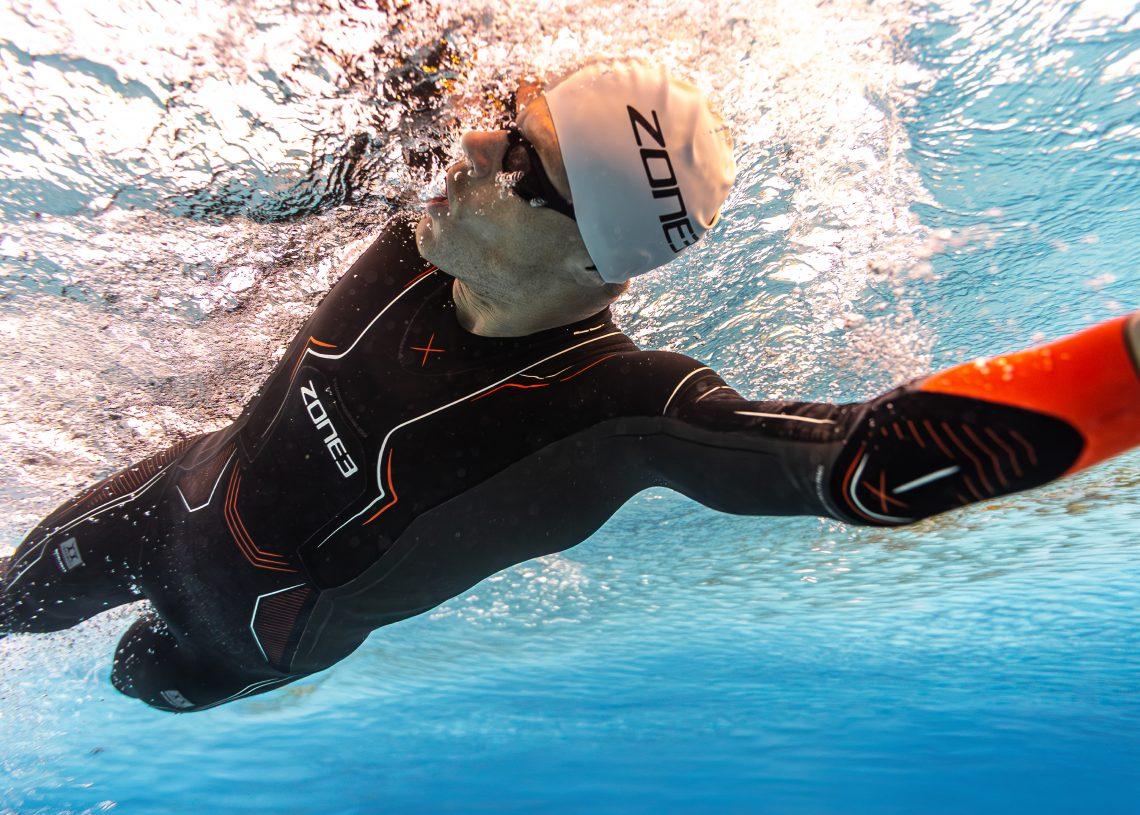
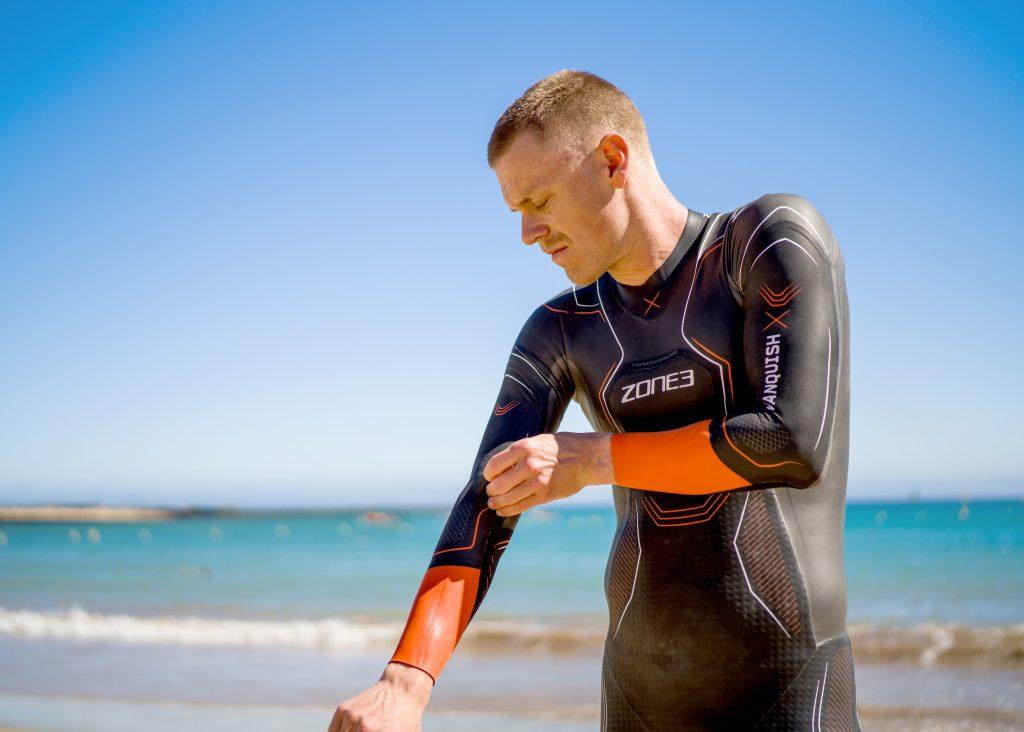
MM: If we look first at an elite-level wetsuit, like the Vanquish-X, we’re looking at over 50 panels. When we’ve got that many panels, it allows us to fit that suit perfectly to the body, because we can change all those different angles and the thicknesses of the panels to really sculpt it to your body. This can affect where the body sits in the water a lot more accurately, meaning we can have hips high, the legs just below the water.
We can also modify things like the fit around the neck, and we can add in some leading edge technologies, like bio rubber, which we use in certain panels to reflect the body’s UV rays, essentially allowing the body to recuperate and recover quickly. We can change the zip orientation, add quick release cuffs. There are many things we can do on that top end. As you go down through the ranges, you then start to remove some of these premium features. So for a mid-level wetsuit, we may remove some of the panels to hit cost points and to help what customers want at that level.
JT: How about an entry-level wetsuit? What sort of things should a novice swimmer be looking for?
JL: To add a bit of context behind why we did the testing with Loughborough Sport, one of the motivations was to reduce the barriers for entry-level swimmers. As a brand, that’s really what we’re trying to do. Having spoke to thousands of potential triathletes over the past 20 years, many of them are put off by the swim. We want to show people why it’s going to be easier than they think. So that was an important part of the test at Loughborough: how much easier it is to swim with a wetsuit because it gives you the buoyancy and you don’t have to roll your legs and core so much to hold yourself streamlined in the water. So, I think, for entry-level swimmer, the most important things are giving them a product that helps them feel confident so the can achieve their goals.
JT: What would suggest that it’s time to level up to a mid-level wetsuit?
MM: You need to check in about what you’re hoping to get out of your swimming. Maybe you’re competing in open water event or triathlon, and you’re looking to get a bit quicker, or you’re using your wetsuit more often, and you’re wanting to increase the comfort levels, or perhaps change the buoyancy. That’s where I would start.
JL: We spend time speaking to our customers about what works for them. I’d say, if you’re going to do one swim per year, like a charity event, an entry-level wetsuit will be fine. In fact, we have a wetsuit hire service specifically for those types of customers, where you can hire a brand new wetsuit for a season to get a feel for it, then you can choose to return it or buy it.
Then there’s the distance you might be swimming. If it’s a short distance, you can get away with a suit that’s not as flexible or as comfortable as some of the more mid- or higher-end ones. But if you’re doing an Ironman or a longer competitive swim, you really want to be kitting yourself out with a wetsuit that’s going to give you the best performance possible. Especially in triathlon – you’ve got the bike and the run to come. So if you can make your life a easier by swimming in a wetsuit that improves your endurance, then that’s going to help you for the rest of the race.
JT: Other than budget, are there any trade offs when it comes to an elite wetsuit?
MM: The biggest thing is around care of the wetsuit. On the elite suits, some of the panels are much thinner, so they do require greater care. But if a wetsuit is well looked after, it shouldn’t be any less durable.
Elite wetsuits also tend to feel colder, mainly in training sessions. Because if you’re in a race, your body will naturally warm up. Which is why we’re looking to add a titanium lining to our top end suit, which reflects the body’s heat.
JT: Finally, what are the benefits of a sleeveless wetsuit?
MM: Firstly, it’s the flexibility; a sleeveless design gives you that extra room around the arms. The other thing, obviously, is water temperature. We see our best sales of sleeveless suits in countries where the water is warmer, so they want the buoyancy, but not necessarily the full coverage.
The results
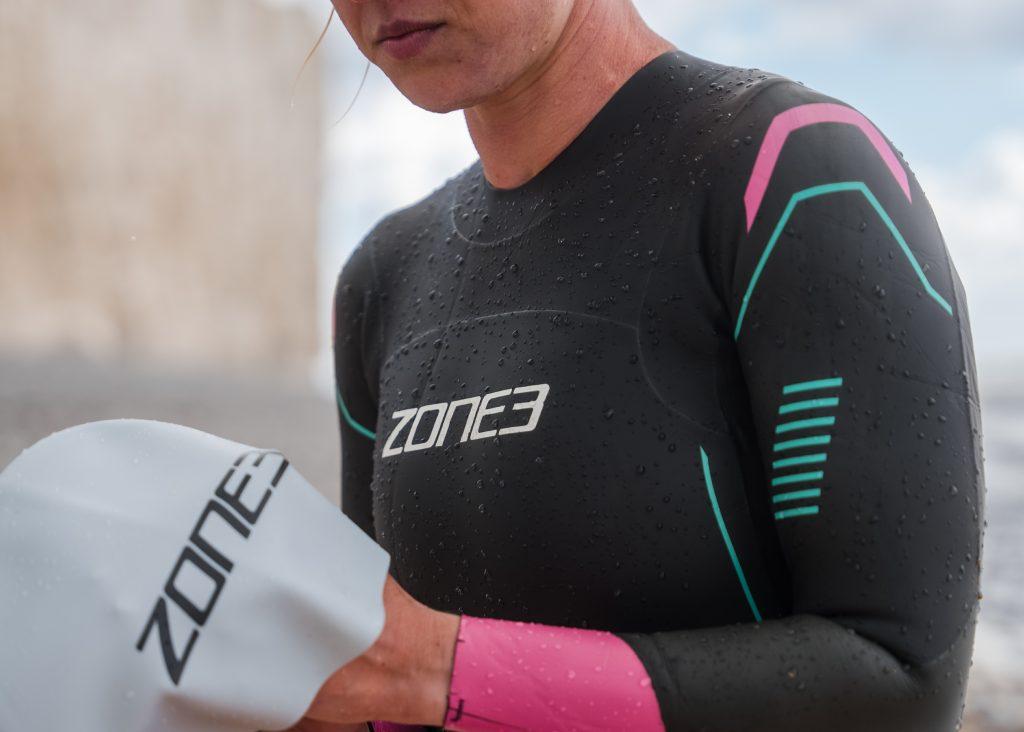
ENTRY-LEVEL
The Zone3 Agile demonstrated measurable gains in speed (2.5% faster) and efficiency (2% better stroke efficiency) at the same perceived effort. The Agile improved body position and reduced drag, helping swimmers move more efficiently through the water. The results, averaged across three athletes, show clear performance benefits at a consistent effort level.
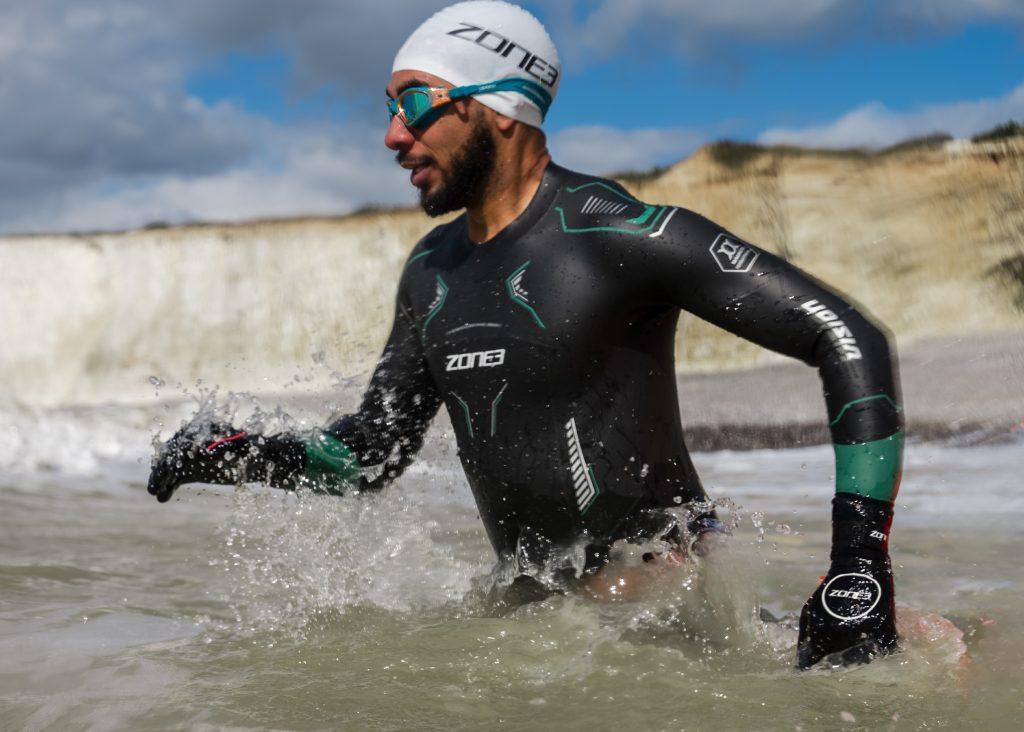
MID-LEVEL
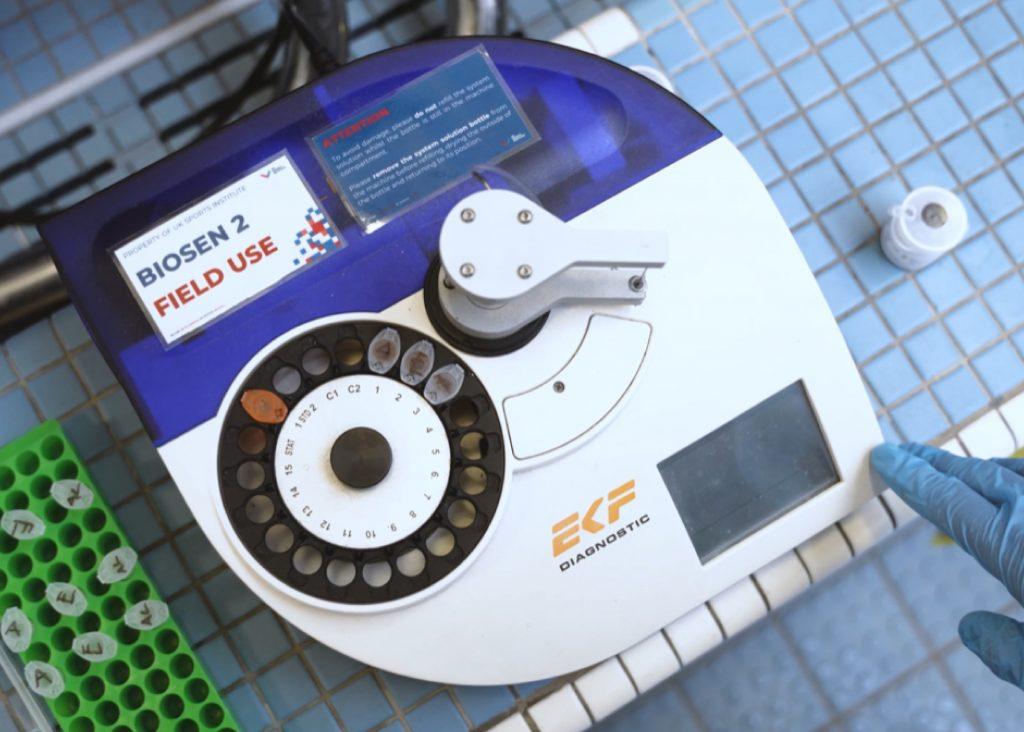
The Zone3 Vision wetsuit produced consistent, measurable improvements in swim performance. The data showed faster times (3.4% faster), improved stroke efficiency (3.6% better stroke efficiency) and reduced physiological strain (12% less blood lactate) compared to swimming without a wetsuit. The Vision balances buoyancy and flexibility, delivering efficiency without compromise.
ELITE
The Zone3 Vanquish-X was the highest-performing suit in the independent Loughborough Sport study of three athletes. It delivered measurable improvements in every key metric – speed (5.2% faster), efficiency (10.3% better stroke efficiency), and physiological load (25% less blood lactate) – confirming its elite-level performance advantage. Averaged results across three athletes showed the Vanquish-X delivered the greatest gains in both performance and efficiency, with the lowest physiological cost recorded.
Read the full results of the Zone3 x Loughborough Sport study.

Jo Tinsley
Jo is the Gear Editor for Outdoor Swimmer and also writes news and features for the website. A keen open water swimmer and long-distance walker, she loves seeking out lakes and lidos close to her home in the Mendip Hills, Somerset. She is the author of The Slow Traveller, editor and founder of independent magazine, Ernest, and has previously tested outdoor clothing and kit for BBC Countryfile Magazine, BBC Focus and Ernest Journal.