
An open water wetsuit for every level
Whether you’re new to swimming and looking for an entry-level wetsuit that’s comfortable and warm, are after a mid-level wetsuit that balances performance-enhancing features with durability, or you are looking for an elite-level wetsuit that prioritises flexibility over buoyancy – read our expert reviews to find the right open water wetsuit to suit your swim.
Entry-level wetsuits
Best for novice swimmers who prioritise warmth, safety and durability over high-end performance features.

ZONE3 Advance, £299
Pro: Features many mid-level elements without the higher price tag
Con: Not designed for long-distance breaststroke
This entry-level wetsuit is aimed at novice and intermediate swimmers looking for a comfortable and performance-focused wetsuit for training, racing or open water adventures. To support new swimmers in feeling confident and buoyant in the water, it features 4mm neoprene panels on the torso and legs, designed to lift the legs and core, which helps improve body position with the aim of reducing drag and fatigue.
Although it is constructed with entry-level swimmers in mind, it has a surprising number of features you would expect in a mid-level wetsuit, such as Slimline Pro-Speed cuffs on the wrists and ankles, which make it quick to remove in race conditions; AQUA-X coating, which reduces water resistance and helps increase speed and provide a sleek, hydrodynamic feel (rarely found in entry-level suits); and 1.5mm Yamamoto #39 Free-Flex shoulder panels for high levels of flexibility, comfort and efficiency with each stroke.
In the water, I found the material doesn’t feel as supple as mid-level suits and while you can swim any stroke, it’s not designed with breaststroke in mind – the high buoyancy in the legs and slightly stiff material makes it feel tiring over longer distances, but it felt fine on a short swim.
Overall, the Zone3 Advance is a solid investment – a suit that will take you from your first event swims through to longer distances and more competitive races, without you needing to level up. JT
ALPKIT Terrapin, £149.99
Pro: Great for both breaststroke
and freestyle
Con: The female size range is
still limited
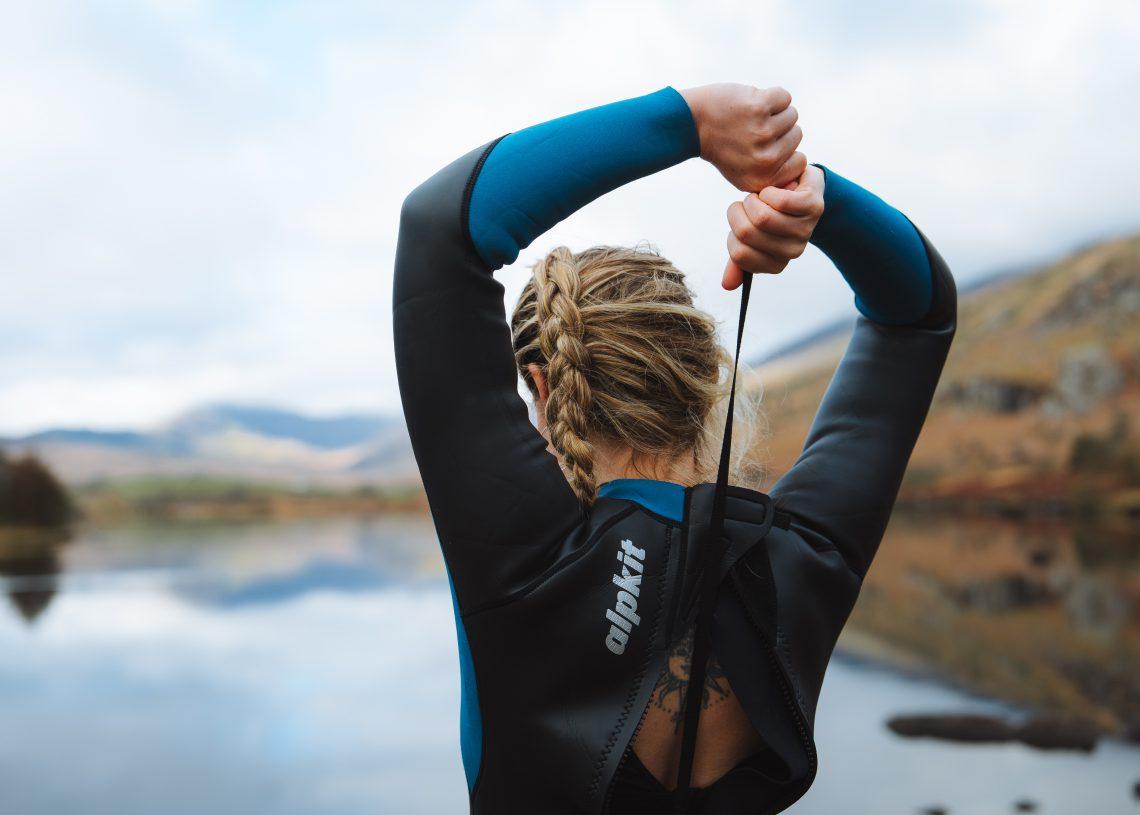
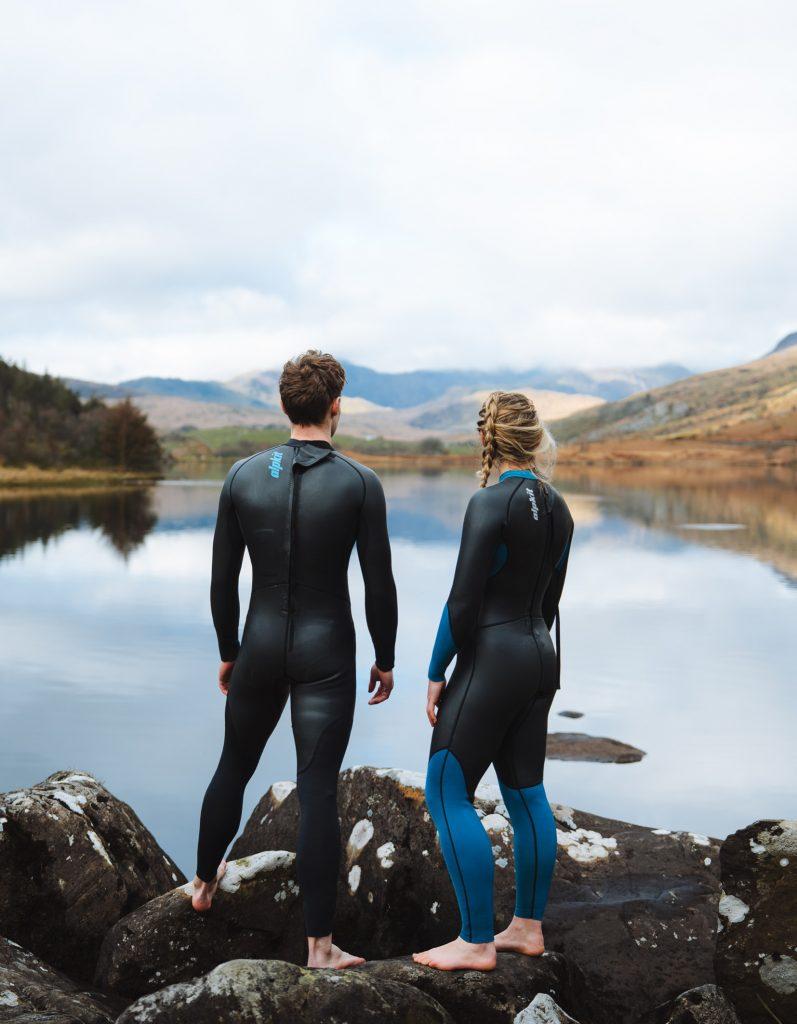
This wetsuit is designed to offer a natural feel in open water, ideal for those who seek the water for how it feels as much as it can be a place to perform. Alpkit has taken an old favourite entry-level suit and redesigned with an improved fit, improved sustainability and increased flexibility for breaststroke swimmers.
As a swimmer who doesn’t often wear a wetsuit, I was keen to see how it felt in the water. I wore the men’s tall and strong, as the largest female size wasn’t big enough. However, despite being too long in the leg, the rest of the fit was pretty good. The female version has colour panels, which is a lovely look, but the panels are made of the same material, a Superstretch neoprene. These panels on the side, lower legs, collar, cuffs and underarms are made with recycled nylon fabric and enable you to get the suit on and off with ease. I also found these panels and fabric make swimming in this suit more comfortable and offers more flexibility where you need it, around the armpit and neckline when swimming.
The varying neoprene thickness offers buoyancy in the right places but also eases movement around shoulders. I am pretty buoyant in skins, so wetsuits can often be too much for me, but this low-buoyancy design worked well for me. I did a lovely long swim in the sea testing the suit with freestyle, breaststroke and butterfly; it kept me warm on a cool-spring swim. Being able to have one suit that you can swim multiply ways makes this a great staple for a swimmer’s wardrobe, it is a great price too offering brilliant value. EF
Mid-level wetsuits
Best for swimmers who want a balance between performance-enhancing features and durability without a premium price
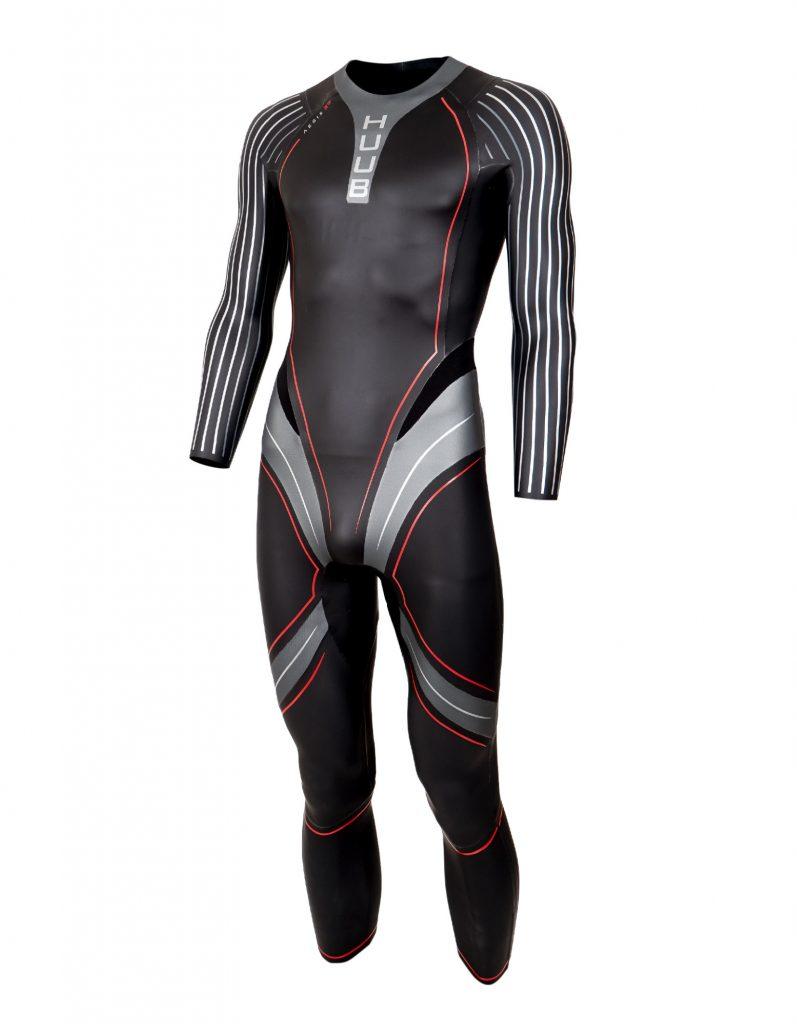
HUUB Aegis XV, £399
Pro: Fantastic fit and flexibility
Con: Requires care when putting on
The HUUB Aegis XV has been a mix of outstanding performance and the occasional reminder to handle it with care. It’s a different proposition from my regular training suit: more technical, more precise, and noticeably freer through the shoulders.
My first time in the suit didn’t actually result in a swim. I put the suit on, felt good about the fit, zipped up, and then – just before getting in – the zip sprang open so forcefully that the two halves separated. Once home, I used pliers to reconnect the zip, and the next day I swam 2.2km without incident. It turns out this is a feature of the breakaway zip, which makes sense on reflection. It’s supposed to unzip quickly for a rapid transition, but does require the zip to be fully engaged in the shoe at the base, and that you take care seating the suit properly around your arms and shoulders. Huub have a useful video that explains this in full.
I’ve since logged 12km in the Aegis XV. The standout is the fit and flexibility; it feels snug without being restrictive, almost as if it’s painted on, with excellent sealing that limits flushing but still lets me stretch and rotate comfortably. Shoulder flexibility is excellent; I never feel like I’m fighting the suit. The buoyancy complements my body position rather than making me feel like a passenger.
The practical takeaway is that I need to take my time putting the suit on: work the neoprene up properly, make sure the shoulders and arms are seated well and do a few range-of-movement checks before committing to the water. Overall, the combination of flexibility, close fit and well-judged buoyancy makes it a joy to use. PH
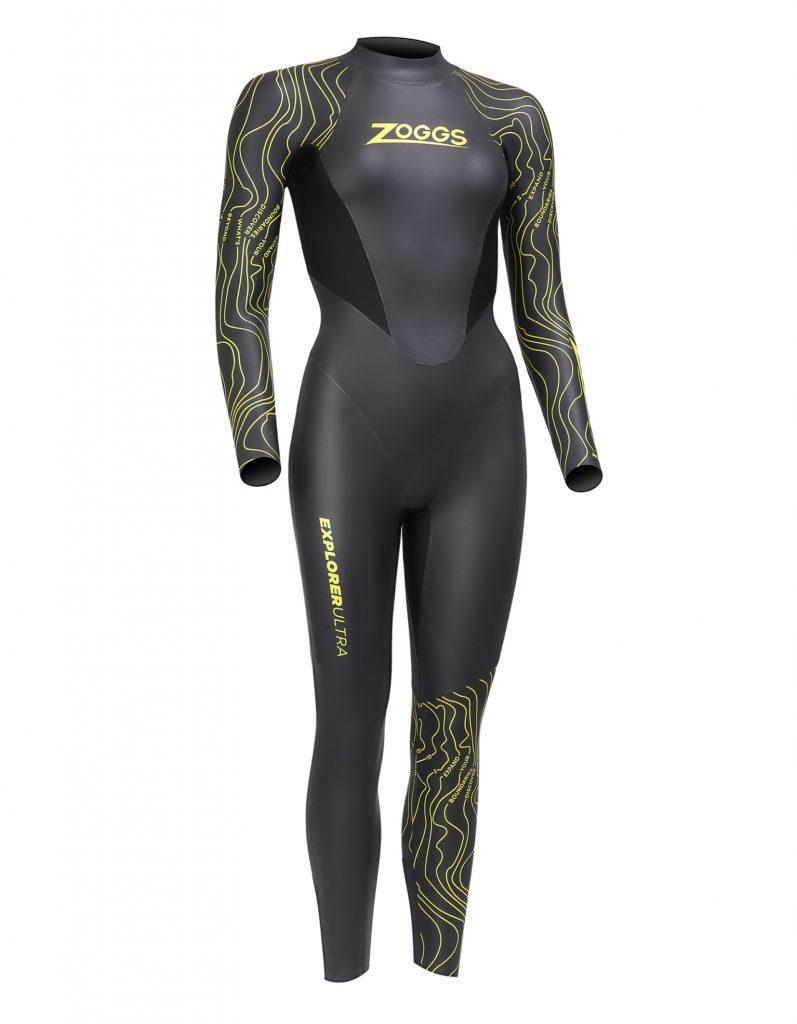
ZOGGS FS Open Water Explorer Ultra, £350
Pro: Customisable arm and leg lengths and high balanced buoyancy
Con: Slim fit through the arms which may feel restrictive for some swimmers
The ZOGGS Explorer range is aimed at open water swimmers, rather than triathletes, and the Ultra is their top-end style in the range. It’s designed to fit as a second skin with a lower crew neck collar for comfort over longer distances. The neoprene thickness varies between 2.5mm and 1.5 mm, which doesn’t provide the insulation of 4mm-5mm wetsuits, but does strike a good balance between durability, warmth and flexibility, with double-faced neoprene in the armpits and inner legs to reduce wear and tear on the material.
The suit offers excellent buoyancy, supporting speed, form and technique throughout the swim. I’ve been swimming 5km-7km events in this suit for the past year and, on longer swims, I definitely came out less exhausted as the suit moves well with the body, provides less drag and supports better body position. It’s designed for a natural, hydrodynamic body position without the excessive ‘lift’ that can sometimes feel unnatural in more buoyant triathlon-specific suits, but I still felt some lift while the shoulder mobility was helpful for longer distances.
The low collar means the neck doesn’t chafe, while the neoprene feels soft and supple, making it easy to take on and off. I also loved the striking map topography design with bright yellow panels on the arms to ensure you are easily seen by others in open water.
The slim arms may be restrictive for certain swimmers, particularly over long swims. But this wetsuit is well thought through and fun to swim in. This is a wetsuit you will want to pull on and forget you are wearing through the swim. SO
Elite-level wetsuits
Best for experienced swimmers who want to prioritise maximal flexibility over buoyancy
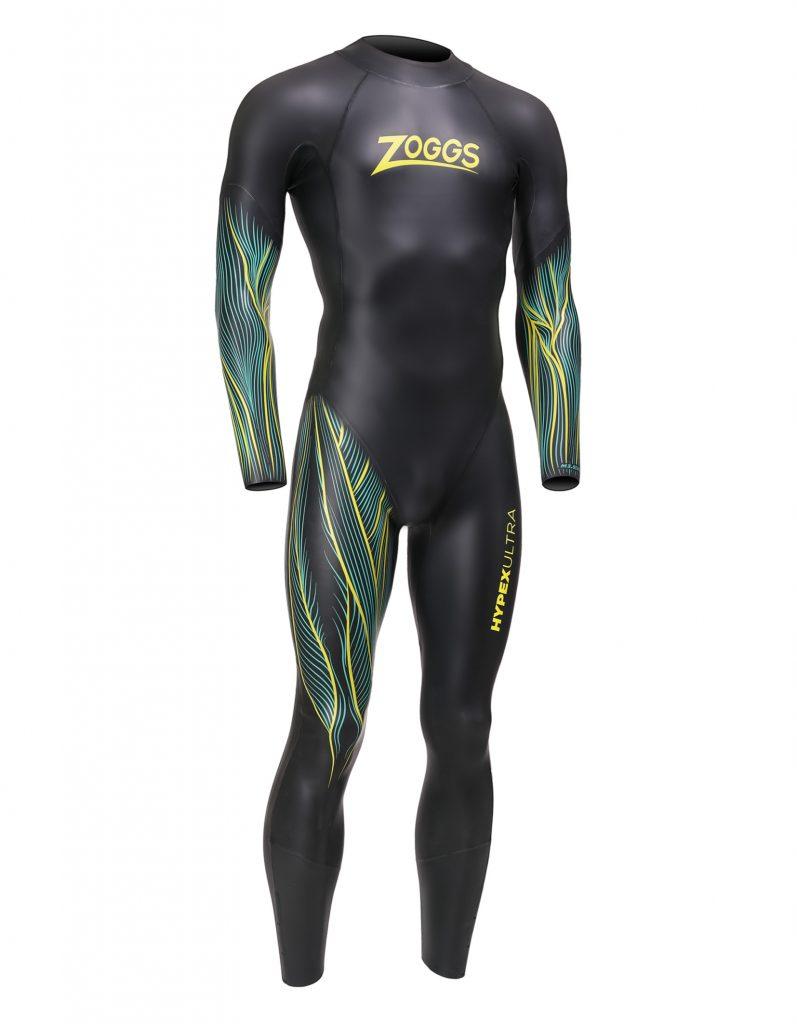
ZOGGS Hypex Ultra FS Triathlon Wetsuit, £470
Pro: Supple, lightweight with adjustable sleeves
Con: Reverse zipper difficult to do up alone
The Zoggs Hypex Ultra FS Triathlon Wetsuit is designed with performance-oriented triathletes in mind but it works just as well for open water races where you want to swim fast.
This suit has thin, flexible neoprene around the shoulders, making swimming feel natural and unrestricted. It also has neutral buoyancy. These two features make it most suitable for swimmers who already have solid technique and a good body position. If you’re a strong swimmer, this is a very comfortable suit to swim in.
Neoprene thickness over the body is less than on many other suits – necessarily so for neutral buoyancy – and this, in theory, means it’s potentially not as warm. However, in practical terms for UK racing, it is warm enough. I raced 5km in at 16 degrees and I was entirely comfortable.
Both the arms and legs can be trimmed – up to 4cm for the arms and 9cm for the legs – making it very customisable. The design is relatively minimalist compared to many other top end suits.
Unlike some other suits, the Hypex lets you swim your stroke, which has pros and cons. For example, if your legs tend to sink as you tire, this suit won’t provide much assistance. But for strong swimmers, it will help sustain your rhythm
and kick timing.
Overall, this is a great suit for confident, efficient swimmers who have, and can maintain, a good body position. SG

ZONE3 Aspire, £549
Pro: Excellent buoyancy sustains body position on long swims
Con: Slight ‘guided’ feel to your swim (which some swimmers might appreciate)
While it’s not quite Zone3’s top-of-the-range suit, this is a serious piece of kit aimed at competitive triathletes and open water swimmers. The focus is on speed endurance through efficiency rather than extreme buoyancy. Swimming in it feels fast and comfortable, even for swims of 10km and above. Hip and leg lift is subtle but noticeable. There is plenty of flexibility around the shoulders, but you may notice that your stroke feels slightly ‘guided’. This isn’t necessarily a bad thing, and some swimmers will benefit from it but others may find it a little disconcerting.
For triathletes, Zone 3’s silicon-based Pro-Speed cuffs help quick removal. While of no relevance to swimmers, they don’t do any harm. This suit performs especially well on long swims in challenging conditions where maintaining form and efficiency are essential. The buoyant panels around the hips and legs (especially on the men’s version) provide support and stability even as you tire, allowing you to stay focused on your stroke rhythm. The buoyancy is also useful if you need to sight frequently, such as in choppy conditions – it keeps your swimming feeling relaxed.
It’s also worth noting that Zone3 now uses Yamamoto B/Prene across its Aspire and Vision ranges, a limestone derived neoprene that is biodegradable under specific anaerobic landfill conditions (but not in normal use!). SG
Sleeveless open water wetsuits
Best for swimmers who prioritise shoulder mobility and like to swim in warmer temperatures
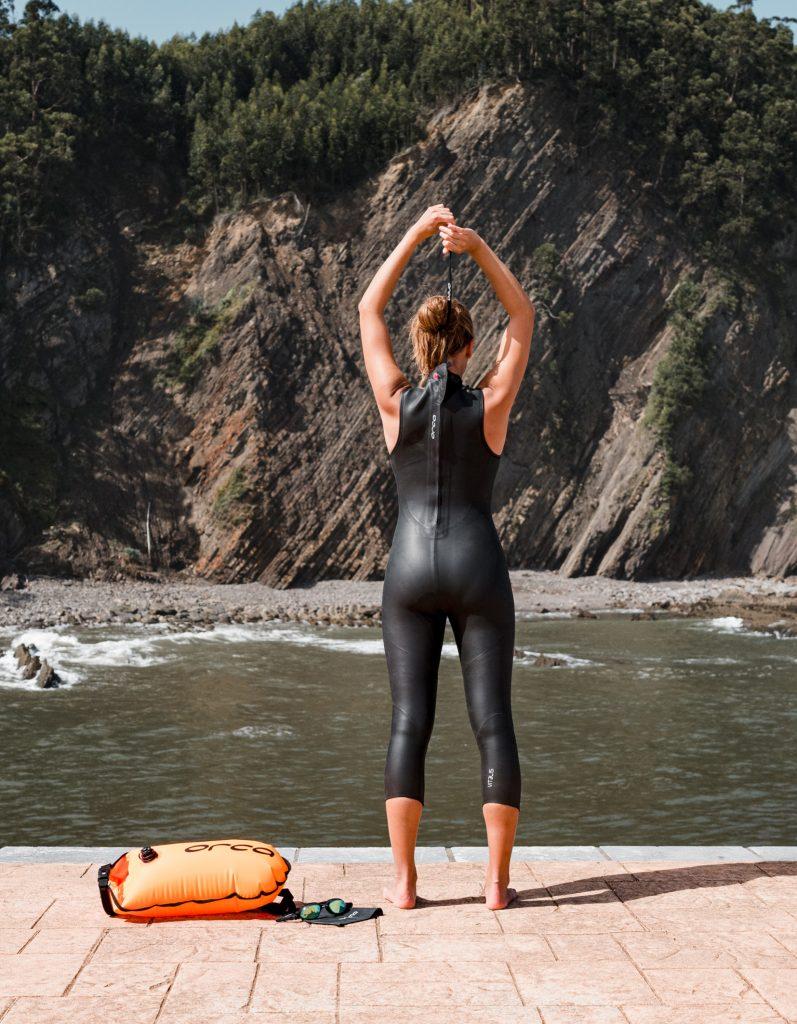
ORCA Vitalis Light, £219
Pro: Complete freedom of movement combined with robust and durable materials
Con: Runs small
If you’re planning to swim longer distances in relatively warm water, the Orca Vitalis Light is a fantastic choice. While full-sleeved suits can feel restrictive, the sleeveless construction provides complete freedom of movement in the shoulders and arms.
The limestone neoprene balances robustness with a high degree of flexibility and comfort – Yamamoto #38 for durability and buoyancy, and the more stretchy #38FS for free range of motion – which creates a natural swimming feel, with a smoothskin finish to reduce drag and allow you to glide faster through the water. It also takes the edge off wind-chill. I really appreciated the laser cut collar, which is lined and feels soft against the skin so that it doesn’t rub at all even on longer distances.
It features 4.5mm neoprene panels in the legs to provide lift and improve body positioning in the water, which made for a really comfortable and natural swim. On the body, it has much thinner panels (some as thin as 2mm), so it’s not the warmest suit.
I often find that Orca suits (and swimsuits) run small, so it’s best to check their size guides carefully before ordering and if you’re between sizes, go for the larger option. Once I got the right size, the ORCA Vitalis Light fit like a glove, with a female specific fit that didn’t budge or let in water during my swims. I also love the minimal look, although you need to wear a bright hat or tow float for visibility. JT
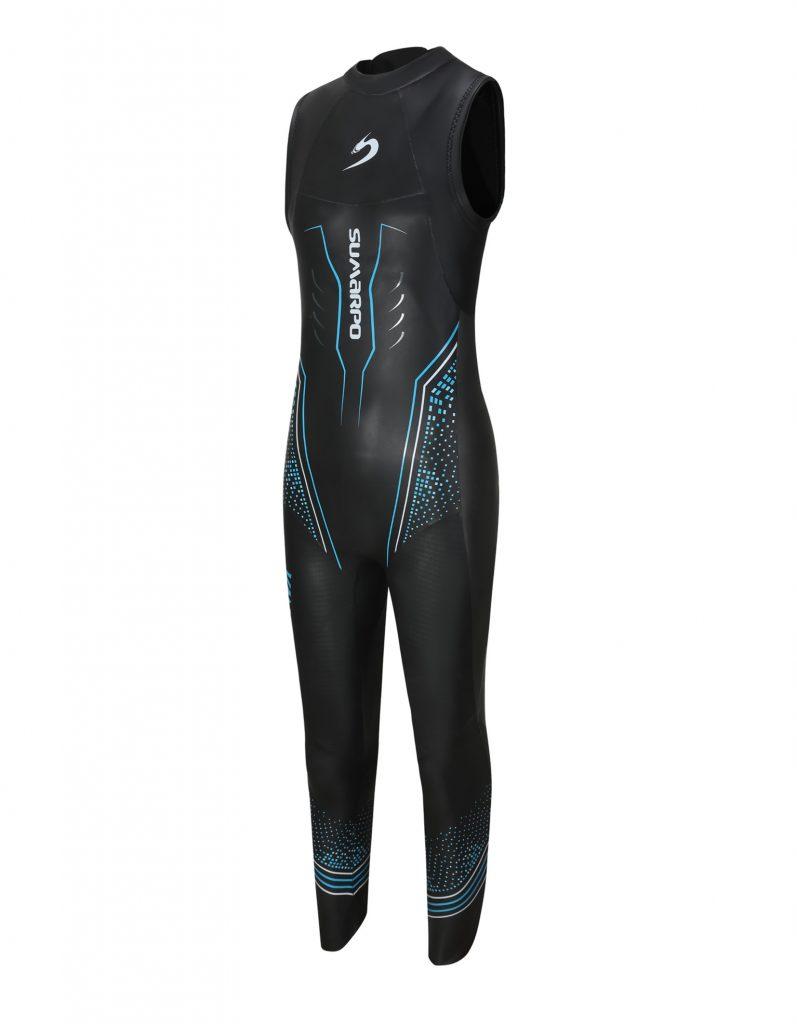
SUMARPO Vanguard Eco Sleeveless, £339
Pro: Simple and surprisingly warm
Con: Nowhere to write your name or contact details inside the suit
Sumarpo have pitched this as a something between a beginner and intermediate suit, which is reflected in the price – and it’s excellent value for money in my humble opinion. At the same time if feels durable, lightweight and is easy to both put on and remove. The construction is simple and feels robust. This suit was an unexpected surprise.
My regular swimming spot is hovering around 10 degrees at present, and with my slim build and the distance I’m covering at this time of year (around 2.5km), the thought of going sleeveless wasn’t particularly enticing. But into the water I went, and that’s where I realised how friendly and effective this suit is.
The fit is just about perfect for me (medium tall), and it’s exceptionally easy to put on. Once in the water, I was really quite blown away by how well it kept my torso and legs warm enough in 10 degrees whilst still allowing the full range of movement that sleeveless suits are so well known for. I was fully expecting a continuous flow of chilly water to be finding a way into the suit through the arms holes, but this proved not to be the case at all. For the price point, the combination of comfort, warmth and freedom of movement were all a revelation.
This suit is aimed at temperature of 16 degrees or above, so the temperature in which I conducted these test swims wasn’t ideal, but it was still enough to keep me at a safe temperature for 2km or so. The fact that was sleeveless meant that I didn’t feel impeded at all with my customary long strokes. PH
READ OUR GUIDE: How do I choose the right level of wetsuit?
What’s the difference between an entry-level, mid-level and elite wetsuit – and how do you decide which tier is right for you? Gear Editor Jo Tinsley spoke to Zone3 Founder, James Lock, and Operations Director, Martin McKinlay, about their recent independent wetsuit study with Loughborough Sport to help unpack these questions and many more.
All products were chosen independently by our editorial team. This review contains affiliate links and we may receive a commission for purchases made.

Jo Tinsley
Jo is the Gear Editor for Outdoor Swimmer and also writes news and features for the website. A keen open water swimmer and long-distance walker, she loves seeking out lakes and lidos close to her home in the Mendip Hills, Somerset. She is the author of The Slow Traveller, editor and founder of independent magazine, Ernest, and has previously tested outdoor clothing and kit for BBC Countryfile Magazine, BBC Focus and Ernest Journal.