Swimming the Hellespont: navigating the current from Europe to Asia
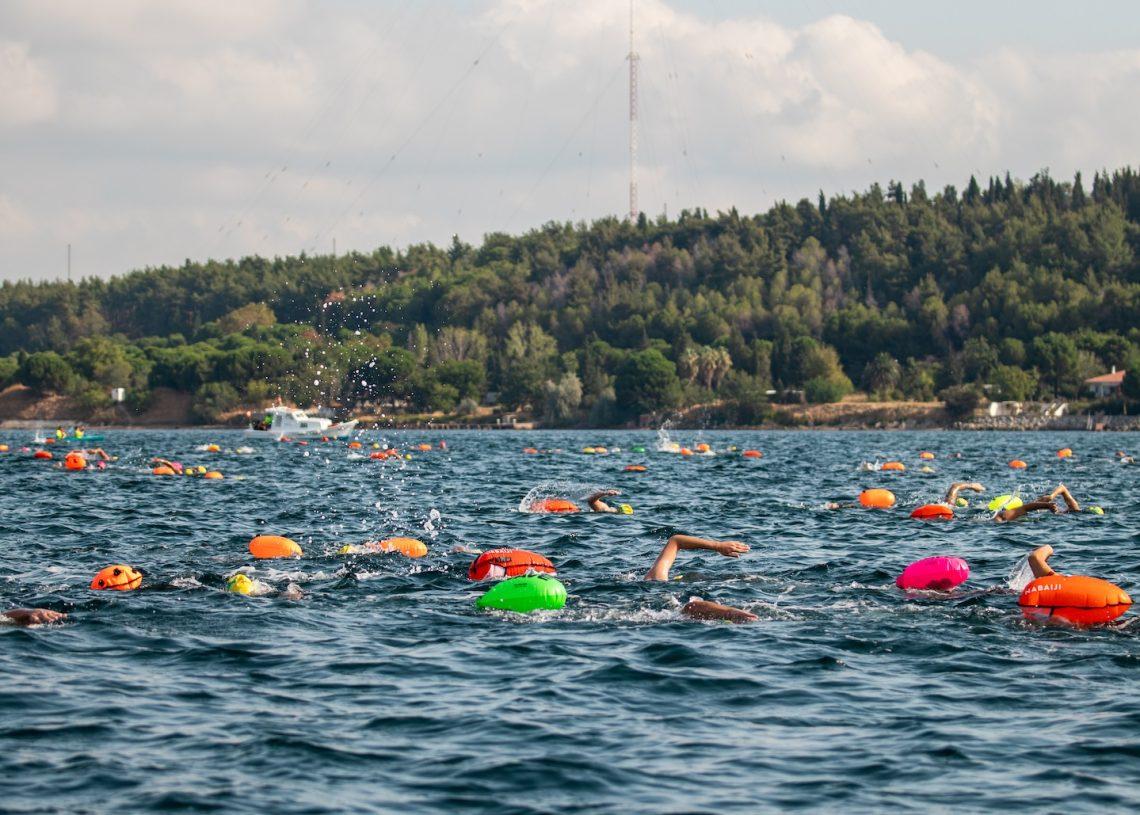
Swimming the Hellespont is unlike any other open-water event, with a fast-moving current, tricky navigation and 1,500 swimmers crossing the Dardanelles. But this historic swim offers much more than a challenge in the water, as Simon Griffiths reports.
Should I elbow my way to the front, start somewhere in the middle or wait at the back?
In open water events, I prefer to be near the front. You often have the best chance of catching a draft from faster swimmers here, and there tends to be more space than in the middle.
But for the Hellespont Swim, there’s a good case to be made for holding back. Crossing the Dardanelles requires navigating a fast-moving current and there are no buoys to indicate the best route. It’s not quite guesswork but finding the optimum route is tricky.
Holding back at the start gives you the opportunity to watch how the swimmers ahead are being affected by the current and may give you a navigational advantage. Timing doesn’t start until you cross the start line, so you’re not penalised for starting later.
The hold-back strategy was recommended to me by a local swimmer and previous winner, so I gave it serious consideration. But in the end, I decided to make my way to the front and take my chances there.

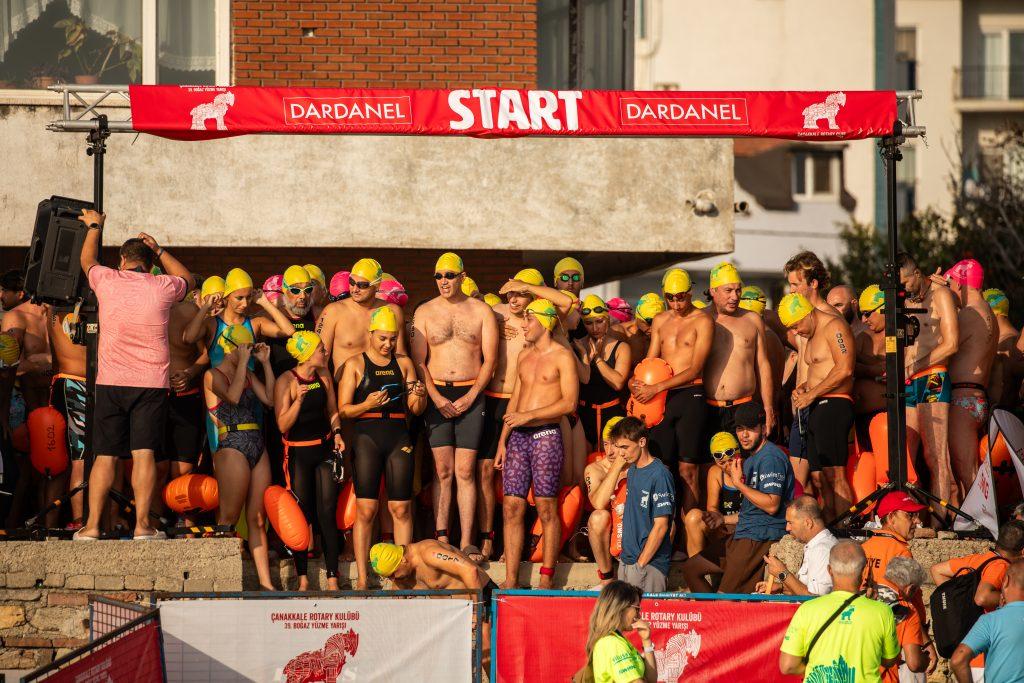
This wasn’t completely straightforward as there were around 1,500 swimmers taking part and only room for about 10 to pass through the gap onto the beach at a time. I wasn’t the only one who wanted to be near the front. I got as far as the second row, which was good enough, and waited in nervous anticipation until the start signal sounded, trying to decide what to aim for.
Course viewing
The day before the event, the organisers took us out on a ferry to show us the course. This was one of the highlights of the trip. Simon Murie, founder of swim holiday company SwimTrek, talked us through the swim and explained what to aim for at various points along the route. Not only was this useful and reassuring, but it was also a chance to properly see the Dardanelles and get to meet fellow swimmers. If you do this swim, don’t miss the preview.
That said, prepare for your navigation plan to unravel as soon as you start swimming. The glare of the sun off the water made sighting tricky. If I do this swim again, I will use polarised goggles rather than tinted ones. I found myself in a pack of about 10 swimmers and decided to stick with them rather than trying to find my own way across.
Smooth crossing
Despite the pre-swim concerns about the current, I found the swim itself straightforward. Conditions were calm and there were plenty of safety boats and kayaks to provide reassurance and to stop you going too badly off course. But I did wonder how Leander could have made the crossing guided only by the light of Hero’s oil lamp. While only a few kilometres across, the strait feels enormous when you’re just a dot in the water. Rugged hills rise on either side while current sweeps you towards the Aegean.
Eventually, I identified some of the landmarks I had meant to aim for, but I still overshot the finish by a few metres and had to scrabble back, which was a minor annoyance.
In fact, the finish came sooner than I expected. I was perhaps 20 to 30 minutes quicker than I would be for the same distance in still water. I’d been enjoying the swim and was disappointed it was over so soon.
More than a swim
A point-to-point swim across a fast-moving current is challenging, fun and would be worth doing wherever it was. But legend, history and geography add significance to this swim, and you feel that in the atmosphere around the event. Even while swimming, and worrying about navigation or pacing, I had a sense of taking part in something that was bigger than swimming.
The swim starts on the European side of the Dardanelles, on the Gallipoli Peninsula. My rudimentary history knowledge told me the World War One Gallipoli campaign was a failure and something of a side show for British forces. But for Türkiye, it’s a story of heroic resistance and a key part of their foundation story. I hadn’t appreciated the extent of the slaughter and suffering until I saw the cemeteries. You can’t help but be moved by this.
The event also takes place on Victory Day, which commemorates the final battle of the Greco-Turkish War. This paved the way for the establishment of Türkiye as an independent republic and adds to the festive atmosphere.
While you’re there
Given the location, it’s definitely worth allowing time on your trip to visit the key Gallipoli sites. SwimTrek put on optional tours, which is probably the easiest way to do this. Troy is also nearby and I enjoyed visiting that too.
Overall, this is a moderately challenging but fun and well-supported swim. The organisation was excellent and the area offers plenty to do in addition to the swim.
Practicalities
Website: hellespontswim.com
Getting there: Fly to Istanbul. Bus or transfer to Çanakkale.
Package options: International swimmers can buy entry directly but there is a lot of demand for a small number of tickets. Alternatively, SwimTrek offer a package including transfers, accommodation, breakfasts and a celebratory dinner.
See: swimtrek.com/packages/swimming-holiday-hellespont-and-dardanelles-swim

Simon Griffiths
I started Outdoor Swimmer in 2011 (initially as H2Open Magazine) as an outlet for my passion for swimming outdoors. I've been a swimmer and outdoor swimmer for as long as I remember. Swimming has made a huge difference to my life and I want to share its joys and benefits with as many people as possible. I am also the author of Swim Wild & Free: A Practical Guide to Swimming Outdoors 365 a Year, I provide one-to-one support to swimmers through Swim Mentoring and I'm the creator of the Renaissance Swimmer project.