

Build your aerobic fitness over winter
Cardio training in winter could see you return to open water stronger, more efficient and better conditioned for swimming, says fitness instructor Vivienne Rickman
It’s that time of year when outdoor swimming sessions get shorter, the dark evenings are closing in fast, and the dropping temperatures mean many of us head to the indoor pool for our training. But not everyone! If you’re not a fan of the repetitiveness of laps (or the argy-bargy of a bit of lane rage), the gym could be your sanctuary this winter. This month, we are exploring how to maintain or improve your aerobic capacity, power, and endurance without smelling of chlorine. Cardiovascular training in winter could see you return to open water stronger, more efficient and better conditioned for swimming.
Here are a few training approaches you could use to help maintain or improve your swimming fitness through winter.
Build Your Aerobic Base
When I coach swimming, we discuss the building blocks of a stroke, and having a strong aerobic capacity has to be the foundation upon which all strokes are built. ‘Long slow-duration’ cardio develops the endurance needed for long-distance swims and a consistent pace in open water. These sessions should be low to moderate in intensity so that they raise your heart rate without feeling overly taxing.
Try 30 – 45 minutes on the rowing machine or stationary bike at a pace where you could hold a conversation easily, or a 40 – 50 minutes treadmill incline walk or easy jog. You are looking for rhythm, not exhaustion. Each week, extend your session by five minutes until you can manage an hour. Consistency is key with this kind of training, you are building the stamina that allows you to swim longer without getting fatigued.
Think of these sessions as the backbone of your winter training, the aerobic base that everything else builds upon.
Interval Training
Interval training alternates between short bursts of high and low intensity training. These sessions develop your aerobic capacity and teach your body to recover quickly between hard efforts. Once your base is established, including interval training can give your aerobic fitness a real boost.
Try 8 × 500m row sprints with one minute of rest, or 10 x 30 seconds hard / 90 seconds easy on the assault bike, or 4 × 3 minutes hard on the treadmill or SkiErg, followed by two minutes of active recovery. On a scale of 0-10 (0 = no effort at all and 10 = so hard I’m going to collapse on the floor when I finish) aim for an 8 on the high intensity sections.
Outake – Active recovery is low intensity movement, that allows your body to recover while keeping the blood moving around the body.
Circuit Training
Circuit training mixes both cardio and strength work together, you will find specific classes at gyms and leisure centres, or you can devise your own. This type of training session is great for building muscular endurance needed for swimming, raising your heart rate to help cardio fitness, improves coordination, and because it can be quite fast paced, it is great for whole-body stamina. It’s fun, and one of my favourites!
A simple plan might include:
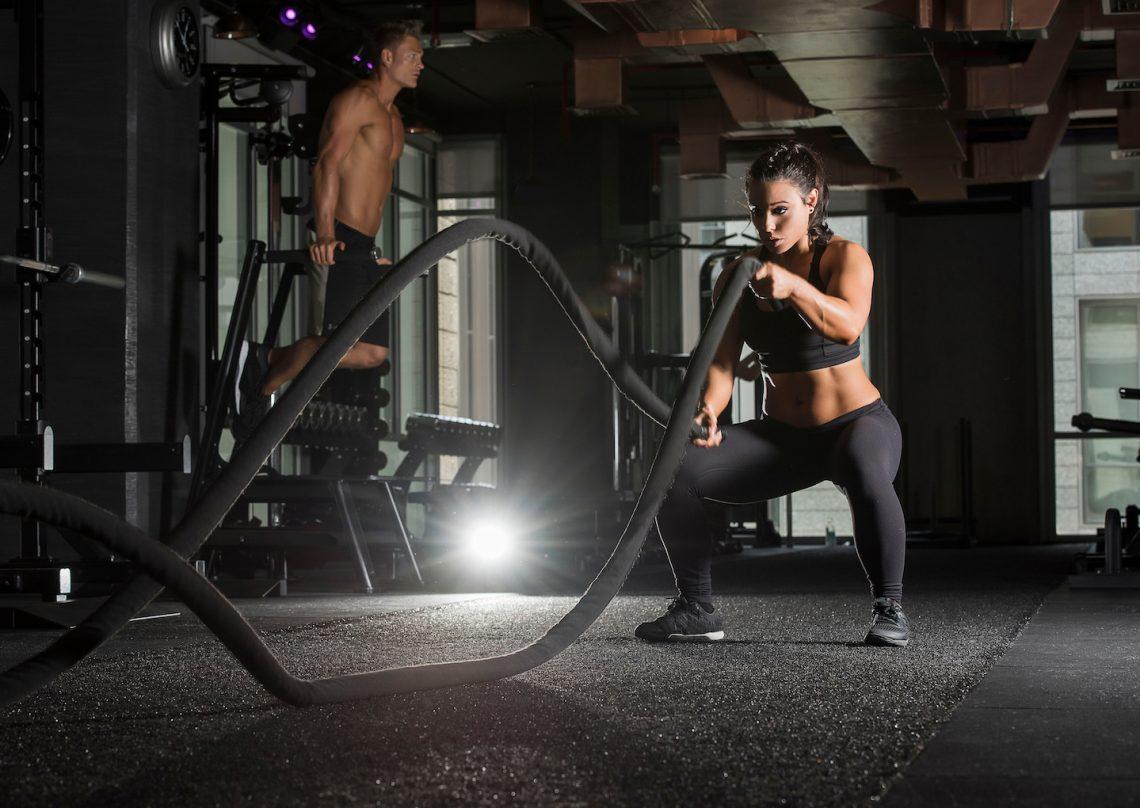
• 30 seconds of battle ropes
• 1 minute of jump rope
• 15 kettlebell swings
• 15 medicine ball slams
• 2 minutes on the rower or SkiErg
Repeat for 4 – 6 rounds with 60 seconds rest between sets. Controlled movements
Strength and Cardio Training
Combining resistance training with bursts of cardio improves coordination, muscle endurance, and the ability to sustain strong, efficient strokes.
Try 3 – 4 rounds of:
• 10 kettlebell deadlift high pulls
• 8 landmine presses
• 10 renegade rows (each side)
• 3 minutes high intensity on the rower or bike
Rest 90 seconds between rounds. These compound exercises strengthen the shoulders, lats, and core muscles that generate pull power and maintain body position in the water. The short cardio bursts improve recovery between efforts.
Training in the gym over winter isn’t a substitute for swimming – see it as a great opportunity to build your cardiovascular fitness and muscular endurance. Trying a mix of steady aerobic sessions, interval training, and functional circuits, you’ll enter the water next spring fitter, faster, and more resilient.

Outdoor Swimmer
Outdoor Swimmer is the magazine for outdoor swimmers by outdoor swimmers. We write about fabulous wild swimming locations, amazing swim challenges, swim training advice and swimming gear reviews.