


My life in sea creatures
Sabrina Imbler’s book, My Life in Sea Creatures, was published last year. It is part memoir, part science, with Sabrina’s story woven into marine communities. Fellow author Doreen Cunningham speaks with Sabrina and reflects on a special read.
As outdoors swimmers we skim the surface of an underwater realm, home to life-forms of bewildering beauty, with sophisticated cultures and communities. Often marine animals stay well out of sight. Elusive sea-dwellers are in the spotlight though in US science journalist Sabrina Imbler’s memoir, My Life in Sea Creatures. Sabrina also illuminates human emotional depths by delicately rendering episodes from their own life, covering both darker subjects, such as eating disorders and sexual assault, alongside triumphs, and joy in the queer community.
A childhood goldfish in a bowl features in one essay, a purple octopus clinging to an undersea cliff in another. Sabrina unpicks their family history while considering the endangered Chinese sturgeon and explores mixed-race identity alongside hybrid butterflyfish. Yeti crabs dance around hydrothermal vents in the crushing pressure and dark of the deeps, while citizen scientists join a swarm of gelatinous sea blobs, later identified as salps, on Riis beach, a queer haven for decades.
The book is an appreciation of ocean communities, and an invitation to find belonging among a multitude of beings. Over Zoom, Sabrina explained their early affinity with the ocean.
Growing up immersed in water
“I grew up in California, 30 minutes from the coast, but I have multiple theories. One is that my parents decorated my nursery with an undersea theme. My first toy was Flounder from The Little Mermaid, I had a fish mobile, fish pillows, fish curtains… but also my family was lucky and travelled to Hawaii a lot. I spent a lot of time snorkelling on my own. That was one of the most beautiful experiences of my childhood; being immersed in water, seeing all the beautiful, vibrant parrotfish and angelfish. I was allergic to trees, grass and flowers so I found terrestrial nature beautiful but hostile. In the ocean I felt transported to a beautiful otherworld.”
The book begins in the aisles of a Petco store where teenage Imbler conducted a solo protest against sales of goldfish, destined to circle the same tiny bowl until death. Sabrina, themselves trapped in middle-school with wealthy tech-heir bullies, surreptitiously released their own goldfish, Quincy, into a koi pond in the local park. We learn how feral goldfish fare: so well they become ecological menaces or melon-sized “wrecking balls”. Once disposed of, goldfish become invasive species, “so good at living” they “ruin whatever balance life might have found before.” They love to dig, gorge on cyanobacteria, incubate algal blooms and spawn hundreds of sticky eggs.
“I will always be a little in love with feral goldfish”, Sabrina writes. “I know this is the wrong kind of lesson to take from it all.” But the “kind of triumph” in the flourishing of discarded goldfish, makes Imbler wonder “what it feels like to be unthinkable too, to invent a future that no one expected of you.” Reading, I felt my heart expand like a feral goldfish.
Ode to the deep-sea octopus
The parallels drawn between Sabrina’s own life and the sea creatures’ habits are so elegant I wondered whether the animals came unbidden or had to be searched for. The answer? Both. Sabrina was helped by their previous job writing click-bait for the charity Oceana, about scientific discoveries on marine life, including Graneledone boreopacifica, the octopus.
“Whenever I encountered a story I couldn’t do justice to with a 300-word blog post I would file it away in my mind. That’s how I learned about lots of the creatures in this book, in particular the deep-sea octopus, the first essay that I wrote.” The octopus had been brooding her eggs, without eating, for four and a half years.
“I was just thinking, ‘Why is this octopus making me feel all of these feelings?’ I kept thinking about how unfathomable it felt to starve for such a long time and the brutality of the sacrifice that all octopuses make for their offspring. Then I started to associate [her story] with my own relationship with my mother and my own relationship with my body and the physical sensation of starving, the story of our disordered eating.”
It’s a typically uncomfortable area for science writers: a mix up of memoir and identifying with and learning from the non-human. Human and non-human experiences are segregated into different paragraphs throughout and Sabrina worked with a fact checker to ensure scientific accuracy. I asked if they worried about anthropomorphising the animals.
“I think about that a lot. In science journalism it’s very frowned upon to anthropomorphise anything, but I feel much more aligned with the school of thought that some degree of anthropomorphism is natural and good, especially if you think about the killer whale Tallequah. She carried the body of her calf for 17 days. That is so recognisable as grief and to call it something else feels unfair and to deny the commonality we have with animals.”
Whales, and other ocean celebrities, do not star in the book. The creatures that do are the strange, the bizarre, those less like us, less easy to identify with.
“How do we find connection or similarity with those animals?” asks Sabrina. “My project in the book was to offer the idea of metaphor as a way to find resonance with those creatures that may not experience grief or pain in the ways that we do. We can still identify with them in a certain way.”
A metaphor for trauma
One extraordinary chapter addresses sexual assault. Sabrina writes about the sand striker Eunice aphroditois, a predatory worm that can grow longer than a man, which lies hidden under the sand, then snatches fish and feasts on them. “Its jaws are magnificent, sprouting from the head like elk antlers with serrated edges. It has antennae too, zebra-striped feelers that twirl upwards to sense for prey.” Most of the writing looks for commonality of experience but in this section Sabrina draws a clear line, highlighting the human animal’s unique responsibility to think about the morality of our actions.
“That’s the only creature in the book that I use as a metaphor for trauma and harm for me personally. We have so much power in how we portray these creatures and for most of the book, my lens is one of wonder and appreciation. It’s still wonder and appreciation for this worm which is kind of scary, but which I think is also beautiful and cool. The sand striker is not the villain but these people can be. The fish living on the reef alongside this worm are my way into this story but it’s not morally negative for the worm to be a predator and I didn’t want people to think of it as a villain.”
More than a mile below the surface, where the body of water above exerts crushing pressure, yeti crabs Kiwa hirsuta find “safe haven” around hydrothermal vents. “Though the yeti crab’s environment seems inhospitable to us, it is nothing to be pitied. The pressure does not crush the crab, and the darkness does not oppress it.” The crab becomes a metaphor for surviving a hostile political and social environment, while dancing. The crabs feed on bacteria that cling to the silky bristles on their claws, and they farm them, waving their claws to ensure a supply of fresh oxygen and sulphides.
“I looked at its big pincers with the hair on. It looks like a feather boa, looks kind of queer. I thought maybe I can talk about queer nightlife with this crab. It literally dances to live. It’s perfect.”
Toxic sea slugs
One of Sabrina’s favourite sea creatures, toxic sea slugs, didn’t make the cut for the book but did make it into an intricately drawn tattoo on their upper arm.
“They’re small and precious and do incredible things. There’s one that has chloroplasts inside it which photosynthesise, even though the slug doesn’t, so it’s bright green. Some of them steal toxic stinging cells from jellyfish and then store them. They’re also beautifully coloured.”
In a later chapter that shimmers and swarms with joy, we find salps that appear one day as translucent blobs on Riis beach in New York, who glow in the depths and form chains as long as 20 feet, “creatures for whom the notion of selfhood exists in the plural.” Riis beach is renowned as being a uniquely welcoming and celebratory space for queer people. Usually, Sabrina told me, it’s full of people swimming and sunbathing but that day everyone was gathered by the shore, deliberating over the blobs.
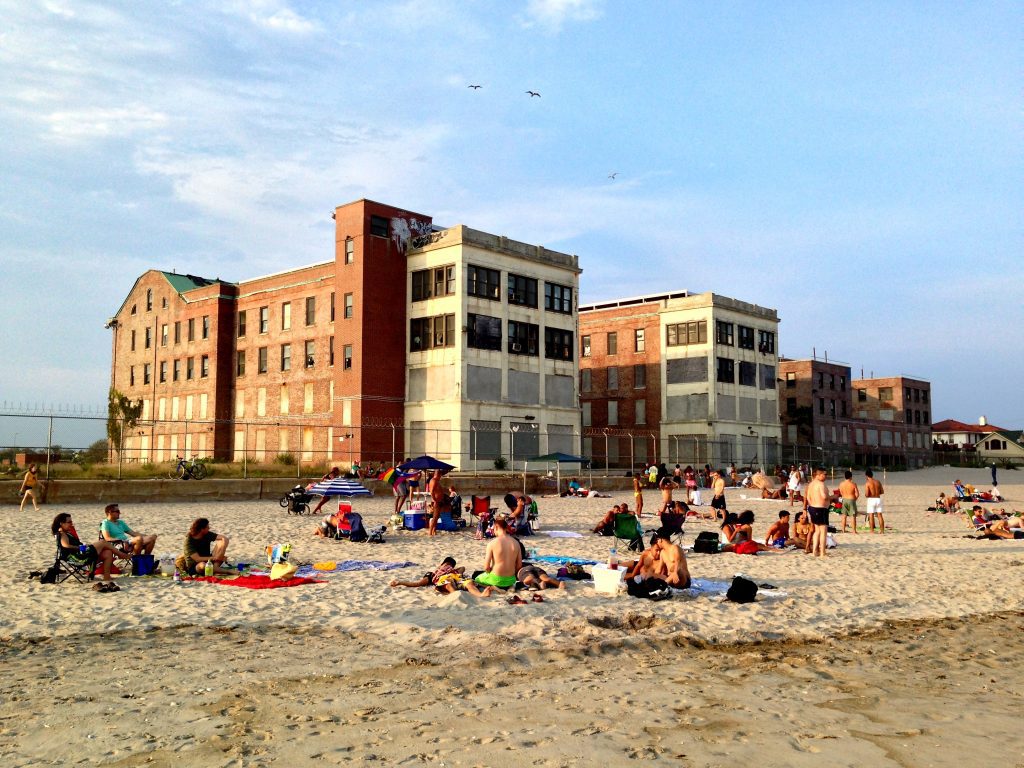
“People were asking important questions like, ‘Could they be fish eggs, could they be baby jellyfish?’ It was a special moment, we’re all at the gay beach doing community science together, involved in this pursuit of knowledge. It was also just so surreal to swim with them because they all floated.”
The effect is an entanglement of the poetry of precise scientific observation and headlong dives of wonder into life on our shared planet. Sabrina hopes readers will come away thinking about community.
“I try to always think about myself in community with animals. Even just in this room there are so many bugs that live here alongside me, I am sharing an ecosystem with them. I also think a lot of us often think of ourselves as individuals. Writing this book throughout the pandemic and also just as a queer person, many of the reasons I’ve been able to survive and thrive and to find so many moments of joy, are because of the communities I lean on. We all work better when we take care of the people around us and take care of the lives around us and think about ourselves as members of communities. The book makes the argument that this should happen for humans, but also with animals as well. They share the earth with us and I think our futures are all entwined.”
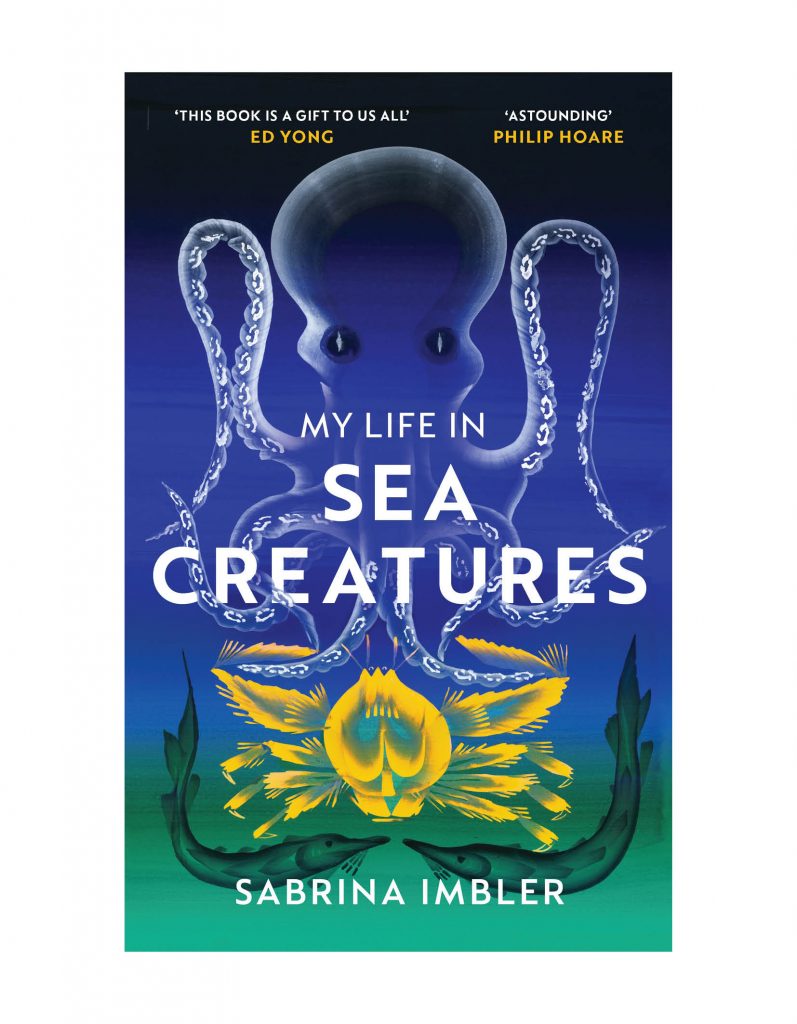
My Life in Sea Creatures
A young queer science writer on some of the ocean’s strangest creatures and what they can teach us about human empathy and survival. Each essay profiles one such creature: the mother octopus who starves herself while watching over her eggs, the Chinese sturgeon whose migration route has been decimated by pollution and dams, the bizarre Bobbitt worm (named after Lorena) and other uncanny creatures lurking in the deep ocean, far below where the light reaches.
Images: Image: David Shankbone; Oregon Department of Fish & Wildlife.
If you buy a product through a link on this page we may receive a commission.

Outdoor Swimmer
Outdoor Swimmer is the magazine for outdoor swimmers by outdoor swimmers. We write about fabulous wild swimming locations, amazing swim challenges, swim training advice and swimming gear reviews.