

Close encounters
When it comes to wildlife encounters, how close is too close? asks Rowan Clarke
From the spider in the bathroom to the foxes in the garden, we’re used to living alongside wild animals. But it’s different in the water. In this alien environment where humans are mere visitors, wildlife encounters can be magical, exciting, strange or downright terrifying.
So, how can we ensure we’re good guests in the water – and that we make it out alive? We hear stories from swimmers who’ve brushed up against creatures of the deep, and from those who advocate for them and campaign for watery habitats.
Who’s the alien?
No matter how much we love swimming outdoors, no matter how weird some aquatic creatures look, in the water, we are the aliens. We have an affinity with water, for sure; it’s life-giving, and it played a significant role in our evolution. But we’re not natural-born swimmers. In fact, we’re one of few mammals who can’t innately swim – it’s only because we possess an incredible capacity to learn that we’ve been able to teach ourselves swimming skills.
Our position as visitors to an alien environment brings benefits and problems. One huge benefit is that it instils in us a sense of wonder and awe.
“My favourite experience was swimming with clouds of sand eels here in Penzance,” says Pippa Best, creator of Sea Soul Blessings. “There were so many more than usual all at one time, in clear water. The lines of tiny silver fish seemed to go on forever, surrounding me, and I got to feel like I was part of the shoal.”
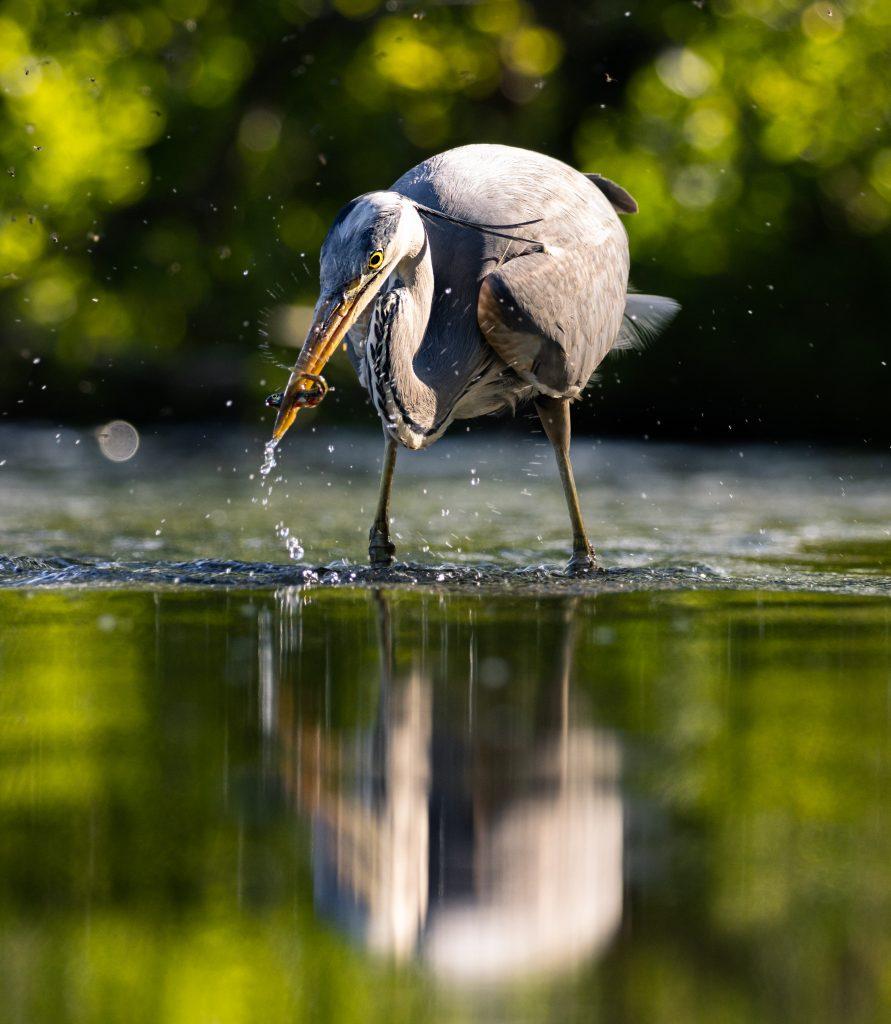
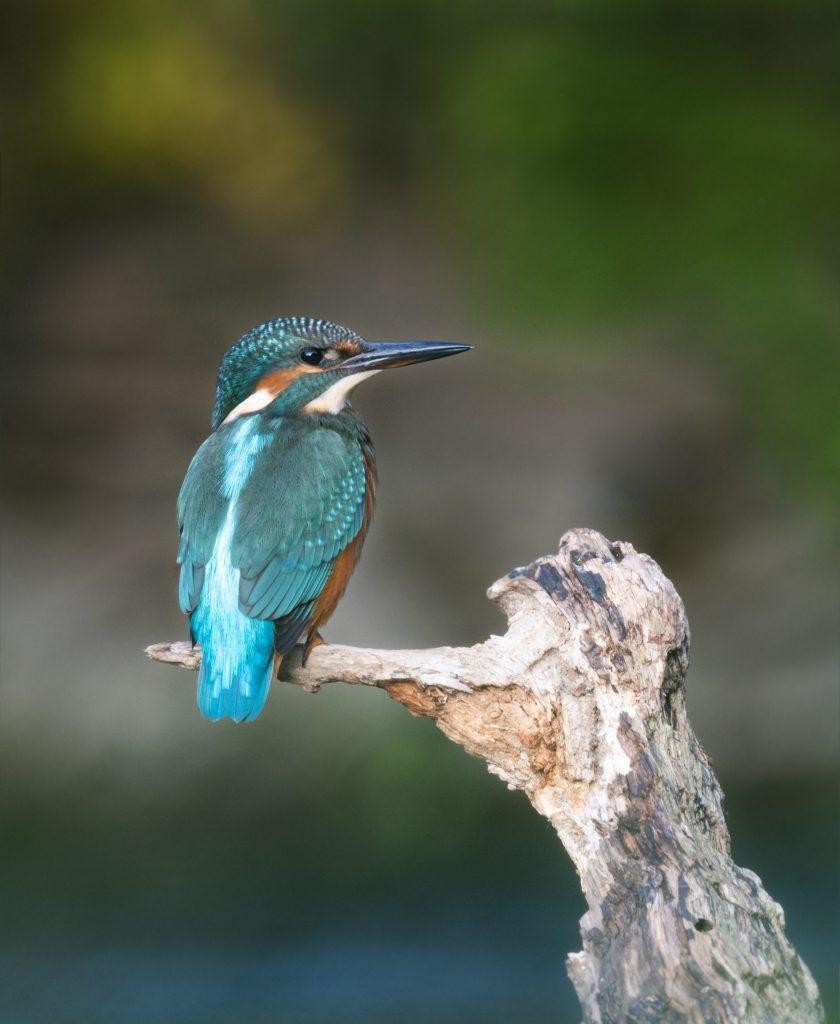
Research shows that experiencing awe at nature has profound effects on our mental and physical wellbeing. It has been found to engage five processes – shifts in how the brain and nervous system work, reduces our focus on the self, increases a sense of connection, increases social integration, and a heightens our sense of meaning – that benefit wellbeing.
As open water swimmers, we’re able to navigate through the water without barriers, immersing ourselves in a truly wild environment, enabling us to experience it almost as though we were part of the shoal. “I once swam through a huge shoal of mackerel in Cornwall – out quite deep,” says swimmer and journalist, Lorraine Candy. “I thought the shoal would avoid me but they sort of parted around me. It was like a soft woosh, like being touched by angels, so much silver and little flutters.”
Beasts and monsters
But there’s a trade-off. In order to immerse ourselves in these wild environments for which we’re poorly adapted, we have to make ourselves vulnerable – to the elements and to what lurks beneath.
This has engendered a kind of perverse fascination with creatures of the deep. Poseidon, Kraken, Hydra, kelpies, sirens; throughout the ages, mythical monsters have guarded gateways to other worlds, lured humans to their deaths and acted as metaphors for our fears and anxieties.
Over time, our stories have shifted to represent contemporary anxieties about the unexplored, industrial or climate-changed world. No longer purely mythical, aquatic monsters are now either scientifically plausible (but rare), or mutated by human activity – think Jaws, The Meg or Lake Placid.
This fascination isn’t confined to fiction. Shark attacks are rare, but the way they’re reported leads us to believe sharks are a real threat. For context, 77 people were bitten by sharks (four fatally) in 2024, according to the International Shark Attack File (ISAF).
So, even when we can rationalise the threat of what’s under the water, why do we jump when something brushes up against us? It comes back to our vulnerability as swimming humans – we’re almost naked, our senses are muffled by the water, we’re relatively slow swimmers, and we can only hold our breath for a minute or so.
“When you’re swimming, you don’t have full visibility – everything is underneath you, and it feels a lot more surprising when things pop up above the surface level and you don’t feel as in control,” says swimmer, Jenny Scott. “I’ve seen seals a couple of times. Someone’s been swimming in-line with the shore, and then the seal’s just popped up in their face. It always looks incredible, but I also think I’d be very alarmed if it happened to me.”
Pesky seals
Seal encounters are becoming more common around the UK coastline. Inquisitive, intelligent and playful, seals are beautiful, elegant swimmers and it’s a privilege to see them in their natural habitat. However, while they’re rarely aggressive, they have been known to terrorise swimmers.
“I was swimming with my tow float, goggles and pink hat, and I was suddenly aware that Spearmint was tugging at my float,” says Moi Shaw, who swims near Plymouth. “Luckily, I had people beside me, and they managed to get my float off and get me into the shore when I collapsed in a heap. So, I am really wary of seals.”
Moi’s encounter was with a seal called Spearmint. Rescued as a pup, Spearmint was hand-reared and then released back into the wild. She became such a nuisance, that she had to be re-released in a wilder, unpopulated area. She’s not the only seal who likes to ‘play’ with swimmers.
“Seals have been widely protected for a little while, so populations and their ranges are increasing, so there’s an increased chance of encounters now,” says Thomas Hawkins, Senior Foreshore Officer in Kent. “They use their mouths to explore and play, but their jaws are very powerful and the bacteria in their mouths is not particularly nice.”
Swimmers are right to be cautious of seals, avoiding them where possible. If you’re approached by one, says Thomas, try to stay still and calm. You should follow the advice in the Give Seals Space campaign from the Seal Alliance.
“We don’t want to go out of our depth, so we’re just doing short swims along the beach, and we’re not talking because seals have got very good hearing,” says Moi, who is doing her best not to disturb or attract the seals “We don’t want them to hear us, and we’re not wearing our safety floats.”
Climate and pollution
While the prevalence of seals is a success story for a protected species, other animals tell a less positive tale about climate change. A few years ago, a vagrant walrus, dubbed “Thor the wanking walrus”, became notorious for swimming up England’s east coast to hang out on Scarborough’s slipway, where he was witnessed masturbating, hence the nickname.
As extraordinary as this spectacle was, his presence was a sure sign of a changing climate. Swimmers also report seeing jellyfish blooms, octopus, basking sharks and tuna around the UK’s coast.
“Bluefin tuna sightings have just exploded,” says Thomas. “As the prey species are moving, predators are following. It’s a sign of how sea temperatures are warming.”
Inland, it’s a similar story. The wildlife we encounter – or don’t see any more – is a strong indicator of climate change and pollution, putting us outdoor swimmers in an important position to advocate for wildlife and its habitats.
“Windermere is culturally significant. It’s economically significant, but ecologically it’s incredibly significant,” says Matt Staniek from the Save Windermere campaign. “Arctic Char is a pollution-sensitive fish that’s been trapped in the lake since the last Ice Age. Over the last 30 years, its numbers have been absolutely decimated. That’s down to climate change, a warming lake and the introduction of invasive species – but the primary driver is the nutrient enrichment [from sewage pollution] within the lake, which is depleting oxygen and destroying the habitat. Those animals aren’t recovering.”
Even the tiniest water residents tell an important story, and observing them offers outdoor swimmers like Michelle Walker the opportunity to act for our waterways.
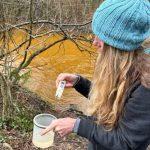
“As a trained volunteer with Bristol Avon Rivers Trust, I regularly do a Riverfly Monitoring Initiative survey of the Langford Brook and count the abundance of eight different groups freshwater insects, like cased caddisfly larvae, freshwater shrimps, and mayfly larvae,” says Michelle. “They all have different tolerances to stressors like pollution and drought, so monitoring these regularly, along with the thousands of other citizen scientists who are part of the UKwide Riverfly Partnership, helps to build up a much richer picture of river health than if we relied on limited government monitoring data alone.”
Bird life
It’s all about understanding the wildlife we encounter. As swimmers immersing in wild waters, this is crucial because it helps us support environmental campaigns and enables us to swim responsibly, keeping ourselves and wildlife safe and healthy. From the magical electric blue flash of a kingfisher to the slightly intimidating sight of a swan gliding across the water’s surface, bird encounters are important examples of both.
“It’s a lot more enjoyable to watch animals when they are relaxed,” says George Cook from the Wetlands Wildlife Trust. “When swimming, it’s always sensible to try and avoid or keep a safe distance from any waterfowl you might see. If there are lots of birds in an area, we would recommend avoiding this area completely to avoid disturbance, and also because the water quality here might not be the best.”
This is especially important in breeding season, when birds are incubating eggs, caring for chicks, or defending their territory.
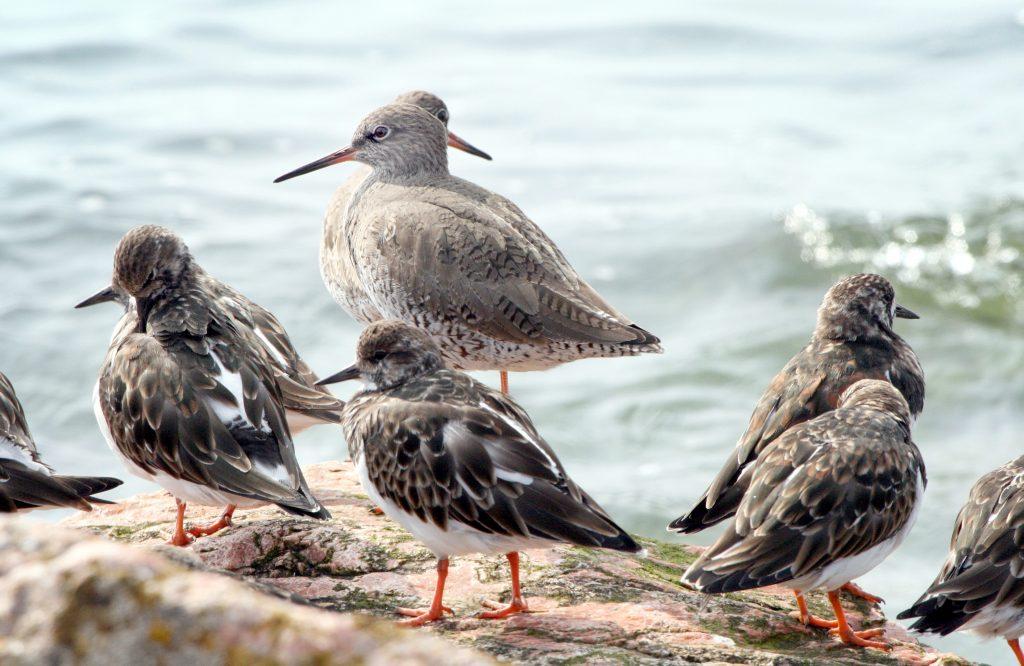
“Male birds can also be more stressed and aggressive during this time, and females might only come off the nest once or twice a day to feed,” explains George. “Mute swans are large, heavy birds with a bony carpal joint where their wings bend. This could hurt if it was used to hit you. If you’re swimming, with only your head exposed and less able to retreat, you are also much more vulnerable, so please avoid getting into a situation where you could stress wildlife and get yourself hurt.”
This brings us back to our vulnerability in the water. It’s the vulnerability that was expressed in the mythical tales of Leviathan and Jonah and the Whale, that makes us jump when a fish brushes against our feet, that makes us frightened of jellyfish, seals, swans and sharks.
But it’s our vulnerability in the water that also allows us to witness wildlife in a way other people can’t. It impassions us with the drive to protect watery habitats, and it instils in us a sense of awe that benefits our physical and mental wellbeing.
It’s worth remembering our place in these environments where we are the aliens, because then we can stay safe, stay respectful, and continue to encounter wildlife with the wonder, admiration and deference that it deserves.
Lead photo by Matt Staniek