

Monsters of the deep
Why are we so fascinated by deep sea monsters? Rowan Clarke asks writer and academic Prema Arasu
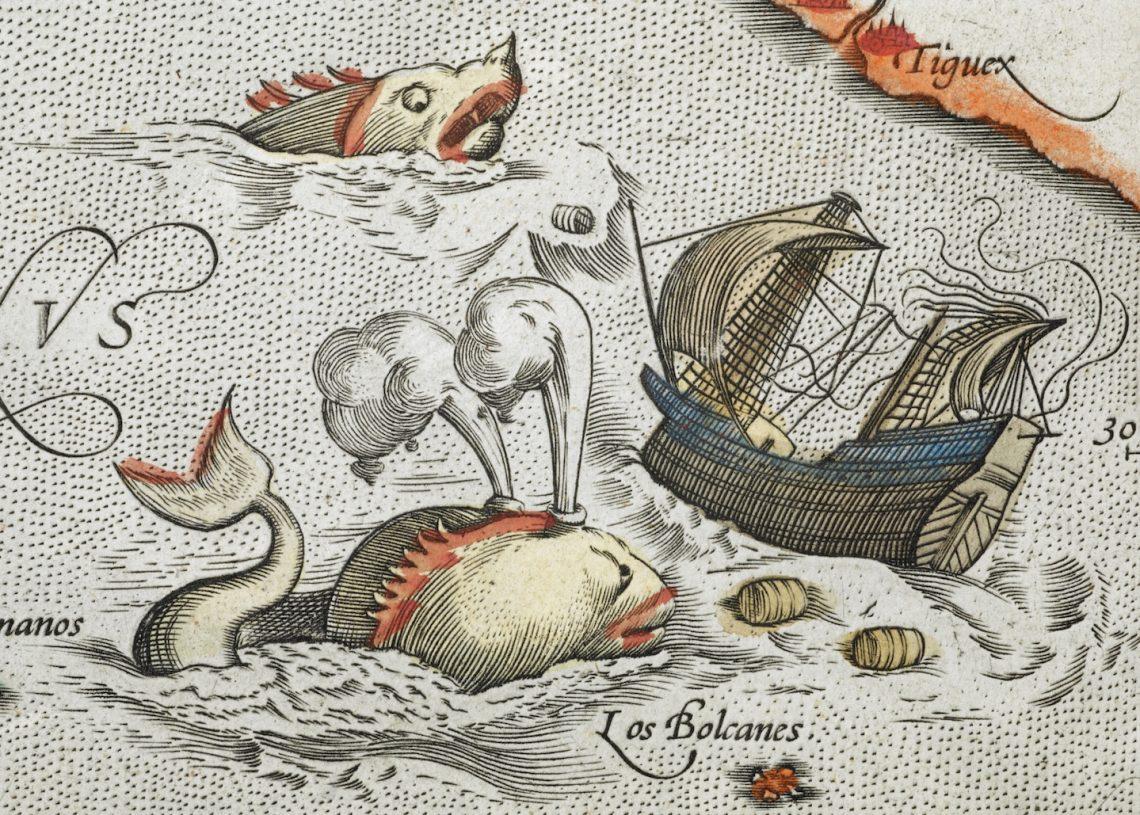
Across time and place, humans have told tales of monsters. From the creatures of our imaginations to exaggerated real animals, they have appeared in art, literature and popular culture representing, in Prema Arasu’s words, “our greatest fears, of the unknown, fear of the dark, fear of the natural world, even fear of the self.”
Our fascination with ocean-dwelling monsters is perhaps more pervasive than anywhere else. In their beautiful book, The Book of Sea Monsters, Prema examines the ‘Leviathans of literature’, the deepsea monsters, in stories and poetry from Babylonian and biblical tale to 20th-century authors like Arthur Conan-Doyle. We spoke to them about what inspired this incredible book, and why we love stories about creatures of the deep.
Real monsters
Working as a post-doctorate research fellow at the Minderoo-UWA Deep-Sea Research Centre in Perth, Australia, it was the way we perceive real-life aquatic creatures that inspired Prema to explore the theme of sea monsters in literature across cultures and ages.
“Deep-sea animals are often compared to monsters because they have features that tend to make people uncomfortable – no eyes, colourless, long tentacles for feeling in the dark, sometimes a lot bigger than their shallow water counterparts,” they say. “These are all adaptations to low light, high pressure conditions, but tend to be represented in the media as alien and creepy. The constant references to the other got me thinking about monstrosity and how we project the idea of monstrosity onto animals, real or imagined.”
Those of us who swim in the sea will probably relate to this idea of projecting ideas of monstrosity onto real creatures. While we may also imagine made-up creatures, our contemporary knowledge of ocean life means that we can, to an extent, rationalise those fears.
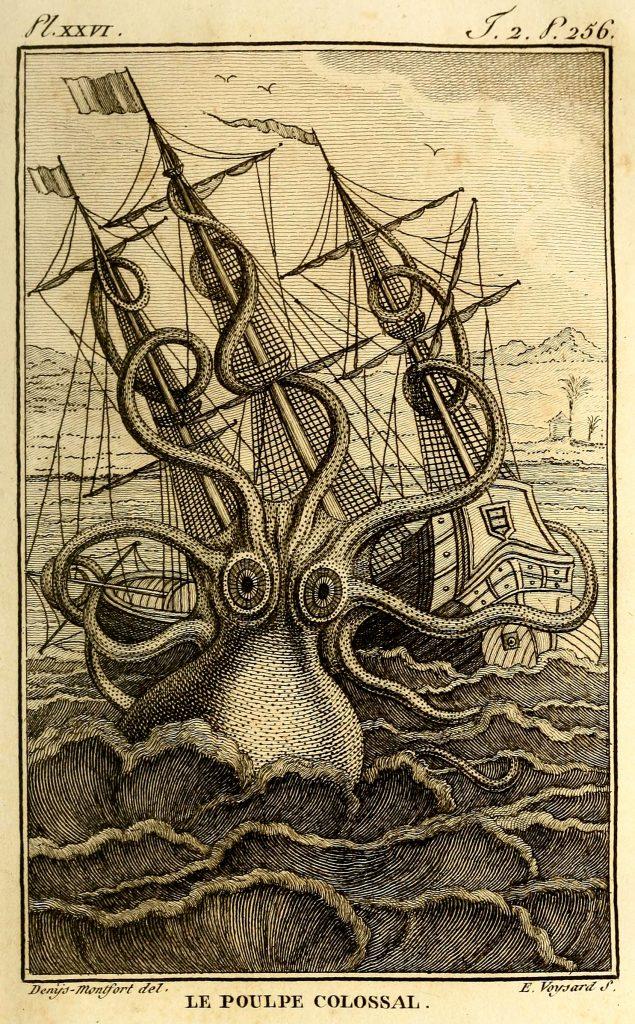
“The age of sail and the subsequent advances in oceanography and natural history transformed the ocean into a knowable, tameable entity,” says Prema. “The ocean was mapped, made flat, warped and even diminished in visualisations such as the Mercator projection. With the rise of mercantilism, the ocean was a mechanism of wealth transfer, and control of the oceans meant world domination.”
But, says Prema, while modern oceanography classified thousands of new animal species, this didn’t strip the underwater world of its mystery or render it ordinary.
“Science does not necessarily disenchant the ocean or its inhabitants – this is a notion I explore in my book of poetry, Vampire Squid, which draws closely upon current deep-sea science.”
Living by the sea
Hailing from a coastal city were children start swimming in babyhood and learn beach safety from a young age, Prema is a swimmer, although they prefer to get in the laps at one of Perth’s many pools. But the ocean plays a crucial experiential as well as academic role in their life.
“Submerging myself in the Indian Ocean is immediately calming – that’s not to say I don’t sometimes let my imagination get the best of me and start imagining monsters below when I’m in deep water, but from what I understand, this seems to be a universal human tendency,” they say. “Some theorists suggests that the ocean triggers something primordial in us. It’s comforting in a way, but reminds us that the humanist separation of man and nature is a construct. This combined comfort and fear leads to an overwhelmingly sublime feeling; something I think many ocean swimmers can resonate with.”
‘Leviathans in literature’
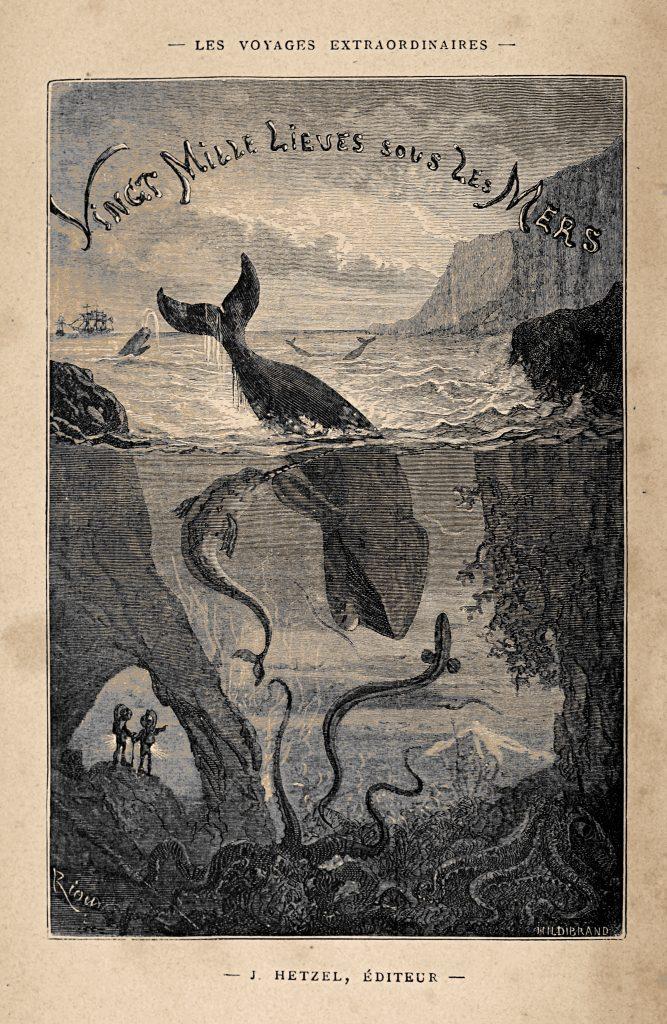
With a background in English and Literary Studies, Prema began their exploration of literary sea monsters with the European classics. Readers of The Book of Sea Monsters will find familiar stories, such as Jonah and the Whale and Twenty Thousand Leagues Under the Sea.
It also includes poetry such as ‘The Rime of the Ancient Mariner’ by Coleridge, works by Tennyson, and “several fantastic poems by women such as Ann Radcliffe and H.D. who use leviathans and mermaids to explore ideas of captivity and power.”
“Homer’s sea monsters were obvious inclusions, while Moby Dick opened up an interesting discussion about how real animals such as whales and giant squid are constructed as monsters despite being real animals known to science,” says Prema. “As part of my research on kraken and the giant squid, I also found references to protoscientific texts like Pliny the Elder’s Naturalis Historia and Erich Pontoppidan’s The Natural History of Norway, which contain vivid descriptions of monsters as part of systematic categorisations of life.”
It’s fascinating to read in The Book of Sea Monsters how texts like Naturalis Historia from AD 77, include tritons and nereids (mermaids) alongside whales and dolphins.
“The natural history texts I’ve included indicate that ‘sea monsters’ were, for a very long time, considered a category of real animals that were either unusually large, dangerous, or elusive,” explains Prema. “In the 19th and 20th centuries, we see a shift towards monsters as being defined by their fictionality, thanks to debunkers like Henry Lee and Bernard Huevelmans.”
Modern day monsters
And yet, our science has certainly not crushed our imaginations when it comes to sea monsters. While the ‘monsters’ are more akin to real life creatures, and the anxieties they represent have changed, there is still something about the ocean, about what lurks within in it, that we find enthralling.
“We continue to see aquatic monstrousness represented in popular film and TV today, indicating that they still frighten and fascinate us,” says Prema. “In movies like Godzilla and The Meg, sea monsters often represent a form of punishment for environmental destruction.”
At the same time, there is a shift in literature and storytelling that can perhaps help us better understand the oceans.
“There is a turn in contemporary thinking towards thinking and writing about the ocean for what it is, rather than a metaphor for human internality or fear,” explains Prema. “The ocean in (good) contemporary fiction is not something to be conquered, it simply exists. This is best exemplified in my favourite Mary Oliver poem, I go down to the shore:
I go down to the shore in the morning
and depending on the hour the waves
are rolling in or moving out,
and I say, oh, I am miserable,
what shall—
what should I do? And the sea says
in its lovely voice:
“Excuse me, I have work to do.”
The Book of Sea Monsters by Prema Arasu is published by Bloomsbury and available in all good book shops.