


Chilly challenges
Rowan Clarke takes a tour of this year’s winter swimming events, competitions and challenges
Have you set your sights on any cold water challenges this winter? We’re not talking about those amazing feats of human endurance like ice miles, but the sublime, ridiculous and utterly joyful chilly thrills that bring together the winter swimming community. From fancy dress relays to earning badges, it feels like we’re back to pre-Covid levels of winter swimming fun. Only we’ve picked up several thousand more winter swimmers since 2020. So, whether you’re a seasoned winter swimmer or a relative newbie, here’s our guide to the cold water challenges, events and competitions you can enjoy this winter.
Pass me the glue gun
Say that you’re swimming in the International Winter Swimming Association UK Cold Water Championships (Tooting Bec Lido, London, 25 January 2025), and it sounds like you’ve reached peak athleticism. But IWSA events are about celebrating the whole winter swimming community.
“What is special is that winter swimming is about family – the colder the water, the warmer the welcome and that is so true with the IWSA,” says Colin Hill, Director of IWSA Partner, Ullswater Swim Place. “Although we obviously have some amazingly fast swimmers taking part in the events, it’s really about being part of the wonderful experience of international winter swim races. These are places where you can meet and get to know winter swimmers from around the globe and make some amazing friends along the way.”
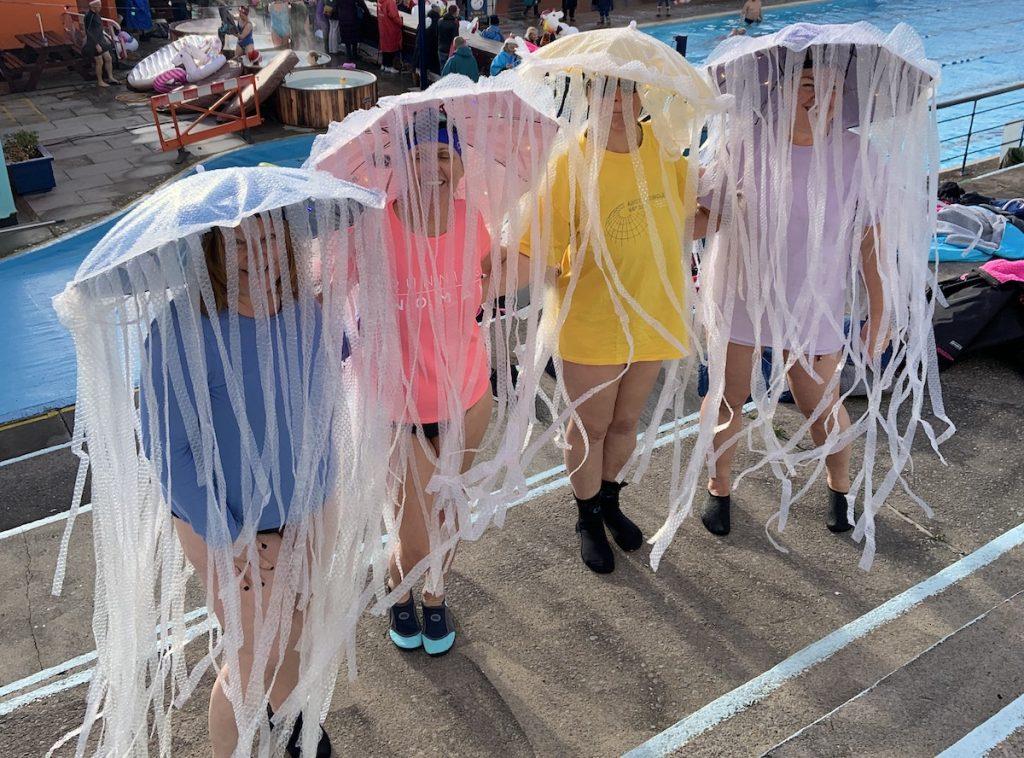
With an emphasis on participation and community, IWSA events feature fun and fancy dress. The Cold Water Championships will include freezing races from freestyle and butterfly sprints to the fancy hat relay. You’ll also find hot tubs, saunas, food and stalls. Anyone can enter via the South London Swim Club website.
Elsewhere, lidos and swim spots have adopted an IWSA-style format for their own ice galas. Celebrations of local winter swimming communities, these events are often put on as fundraisers for lidos and pools.
A great example is the Portishead Popsicle (14 December 2025), which raises important funds for Portishead’s community-run open air pool. You can enter a serious race like the 133 metre freestyle, or you can opt for the fancy dress relay or ‘Grand National’ where competitors ride inflatable unicorns.
Sandford Park Lido in Cheltenham will be hosting the Big Dip (1 December 2024) and a free Christmas Day dip, which you can book online.
Cold water safety
One of the reasons lidos are such great venues for winter swimming challenges and events is safety. Lido lifeguards get extra training for looking after cold water swimmers, there are sheltered places to warm up post-swim, and lidos can control the water temperature.
Many lidos set their pools to operate at 11-14°C. This is great news if you’re new to winter swimming, especially when they offer coached introductions to cold water throughout the winter.
Cold water safety is a hot topic as yearround swimming grows. Using the latest research and drawing on experience, the IWSA and International Ice Swimming Association’s (IISA) have honed their health and safety support for events. For those of us who swim under our own steam, using lifeguarded lidos and open water venues is the safest way to explore cold water swimming.
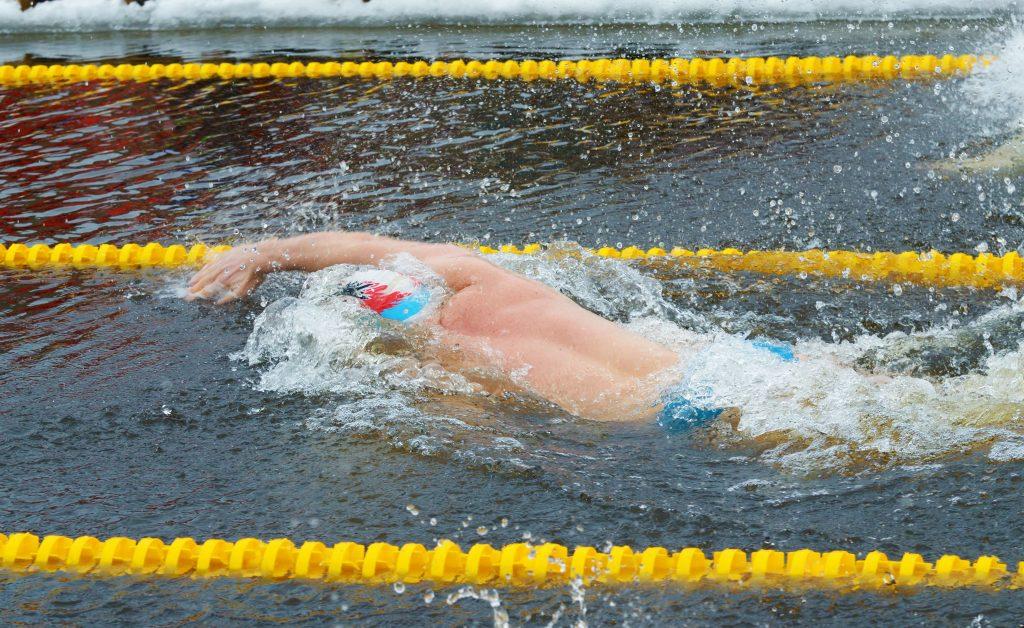
“Winter swimming offers tremendous physical and mental health benefits, but it also comes with risks that must be managed with care,” says Paul, General Manager at NOWCA, whose safety systems operate swimming venues. “Safety is always our top priority, and we are committed to supporting swimmers so they can fully enjoy the experience of cold water swimming. Our network of venues are some of the best operators in the UK, and they trust the NOWCA system to enhance their safety protocols and offer swimmers an extra layer of protection.”
And if you don’t live near a lido or one of NOWCA’s 22 ‘Sub Zero Club’ venues? “The NOWCA Wild app provides essential safety features like tracked swims, emergency contact notifications, insurance for members, and access to local swim groups,” says Paul. “We’re here to ensure that swimmers can safely enjoy the many benefits of winter swimming, wherever they are.”
Polar bears and penguins
One of winter swimming’s most popular challenges hugely benefits from using NOWCA venues and education, local swim groups and its own online community.
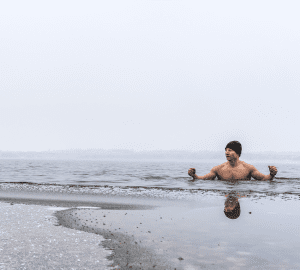
“I started The Polar Bear Challenge in 2017 as a fun way to motivate myself and a few friends to swim through the winter,” says Pauline Barker, aka Mama Bear. “The original Polar Bear Challenge was simply to swim 200 metres twice a month from November through to March in just a swimsuit as per IISA and IWSA rules.”
In the years that followed, the Polar Bear Challenge grew from 250 to 3,000 participants. Pauline added more categories, including Penguin and Extreme Penguin who wear any amount of neoprene or just hat, gloves and booties respectively.
“The challenge has changed and grown over the years in response to my best guesses as to what will be popular with the growing numbers of swimmers embracing the cold. The big surprise has been the rise of The Penguins,” says Pauline. “There’s something for everyone in the challenge and whether you are an experienced Jedi or a first time and terrified Penguin Classic there is the same recognition for everybody that what we do is tough and that just getting in the water can be a huge achievement.”
Challenges like Pauline’s are fun, yes, and completers get the best medals. But they’re also fantastic for encouraging peer support, either through the Polar Bear Challenge’s Facebook group or within cold water communities.
“No one is competing with or measuring themself against anybody else – it is a personal challenge and the community is rooting for everybody to make it through to March,” says Pauline. “There is also now a huge amount of experience from those who have done the challenge for a few years and folk are always willing to share hints and tips on coping with the cold and encourage the newbies.”
Serious chills
Pauline Barker’s ice swimming CV is impressive. It includes 10 ice miles, one of which she swam butterfly. It’s hard to comprehend what an incredible feat that is.
The ice mile, a mile-long swim in sub-5°C water, is ratified by the International Ice Swimming Association or IISA. It’s peak ice swimming and requires more than one winter of careful, strategic and coach-supported acclimatisation and training.
The IISA is the Olympic committee of cold water swimming. In fact, its vision is to make swimming in icy waters a recognised extreme sport with a clear set of safety and integrity rules so that it will one day be included in the Winter Olympics.
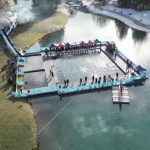
This year, the GB Ice Swimming Championships will take place in Rother Valley Country Park (14-15 December 2025) before the selected Team GB heads to Molveno in Italy for the World Championships (14 January).
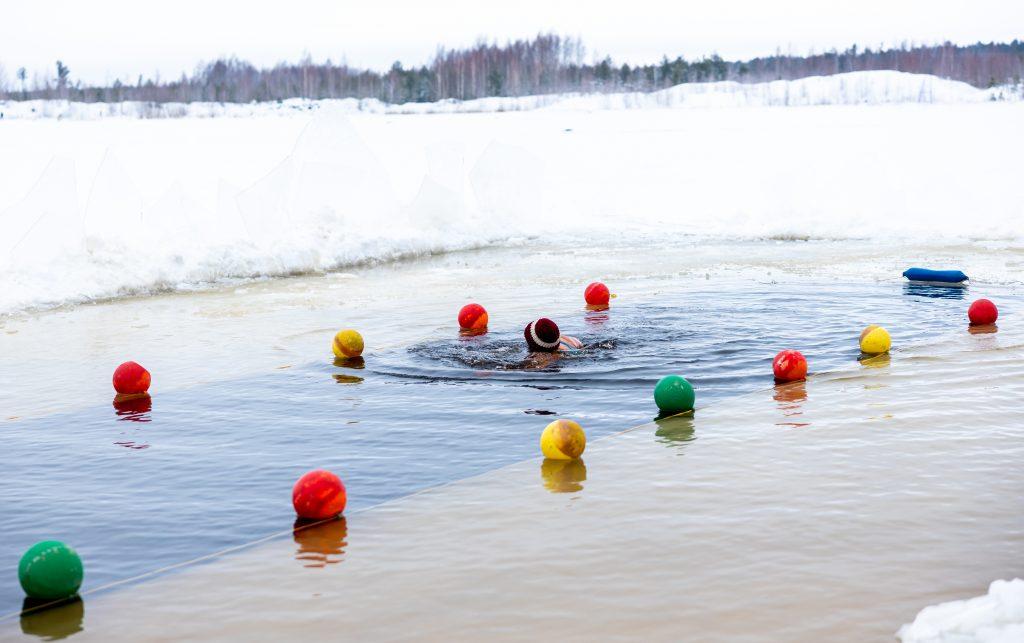
“Everything we’ve done on the competition side has been geared towards taking the sport into the Winter Olympics,” says Jonty Warneken, para ice swimmer and IISA’s Vice President. “It’s always been about making sure that we can replicate distance and time so that the records stand up.”
IISA events are where the fastest competitive, masters and para-ice swimmers compete. The ice mile is a standalone challenge, separate from IISA’s racing calendar where distances go up to 1km.
While nobody swims at an IISA event wearing a handcrafted bonnet, it’s still about cold water community. And, by giving a platform for the fastest and most hardcore endurance ice swimmers, it completes the winter swimming spectrum of events and challenges.
From coach-led dips and fancy-dress antics, to gentle challenges for new winter swimmers and hardcore ice miles – and everything in between – there are so many ways to experience the thrill of the chill this winter. Winter swimming is democratic, inclusive and it brings limitless joy – and we’re here for it.
Dip safely in winter
Winter swimming is an extreme sport and safety is everything. Here are our tips for taking on an event or challenge safely.
- Start with support: If this is your first winter season, start while the water’s still in double digits with support from a coach or organised group if possible. If you’re taking on a new challenge or competing, coaching support is invaluable.
- Educate yourself: Learn what happens to your body in cold water, how to recognise issues and how to cope with them. We recommend NOWCA’s free cold water quiz and cold water induction course (£20 or £5 for members), nowca.com
- Respect your limits: You might be tempted to push yourself, but remember that you’ll have more fun and enjoy more benefits if you swim or compete at a level appropriate for your experience.
- Join others: It’s so much safer to swim with other people, especially in the winter. Whether you’re training for an event or taking part in a challenge, doing it with others is more enjoyable too.
- Take warming up seriously: Warming up post-swim is a critical part of winter swimming. Invest in decent post-swimming gear, and learn how to warm up properly.
- Take advantage: Use coaches, groups, lidos, NOWCA’s Wild app and experienced swimmers’ wisdom. It’s the advantage of having an established winter swimming community – use it!

Outdoor Swimmer
Outdoor Swimmer is the magazine for outdoor swimmers by outdoor swimmers. We write about fabulous wild swimming locations, amazing swim challenges, swim training advice and swimming gear reviews.