

From first dip to ice mile
Finding your ‘why’ in winter waters, by psychologist Lexi Tinkler
I study what makes humans flourish, and there’s something fascinating about the winter swimming journey. Whether you’re content with brief dips or called toward ice miles, understanding why you’re drawn to cold water transforms random suffering into purposeful challenge. Not everyone needs to swim a mile in sub-5°C water (that would be madness for many). But finding what winter swimming means for you personally? That’s where the magic happens.
As a runner, not a swimmer, I understand the pull of pushing boundaries and that sweet spot where challenge meets capability. But I’ve learned that sustainable challenges, the ones that enhance rather than exhaust us, align with our deeper purpose, not anyone else’s expectations.
Taking the plunge: mental preparation matters
Before you even touch the water, your mind needs preparation. Visualisation isn’t new-age fluff: neuroscience shows that mental rehearsal activates the same brain regions as actual experience. Your nervous system begins adapting before you take a single step.
Try this: Close your eyes and see yourself at the water’s edge. Feel the cold air, hear the water, notice your breath. Now imagine entering calmly, breathing steadily, feeling capable. Watch yourself managing the cold shock, controlling your exhale, finding your rhythm. This mental blueprint makes the real experience feel oddly familiar. You’ve been here before, in your mind.
Practice box breathing on dry land: four counts in, hold for four, four counts out, hold for four. This becomes your anchor when the cold hits. The body remembers what the mind rehearses.
Your purpose shapes your path
Think carefully about what draws you to winter water. Your why will shape everything: your goals, your progression, even your definition of success. I’ve noticed distinct patterns in what pulls people to cold water and where they find their sweet spot.
Perhaps you’re seeking presence and mental clarity. The cold strips away mental chatter like nothing else. If this resonates, your perfect practice might be brief, mindful immersions. Progress for you means deepening presence, not extending time. Two minutes of complete awareness beats ten minutes of endurance.
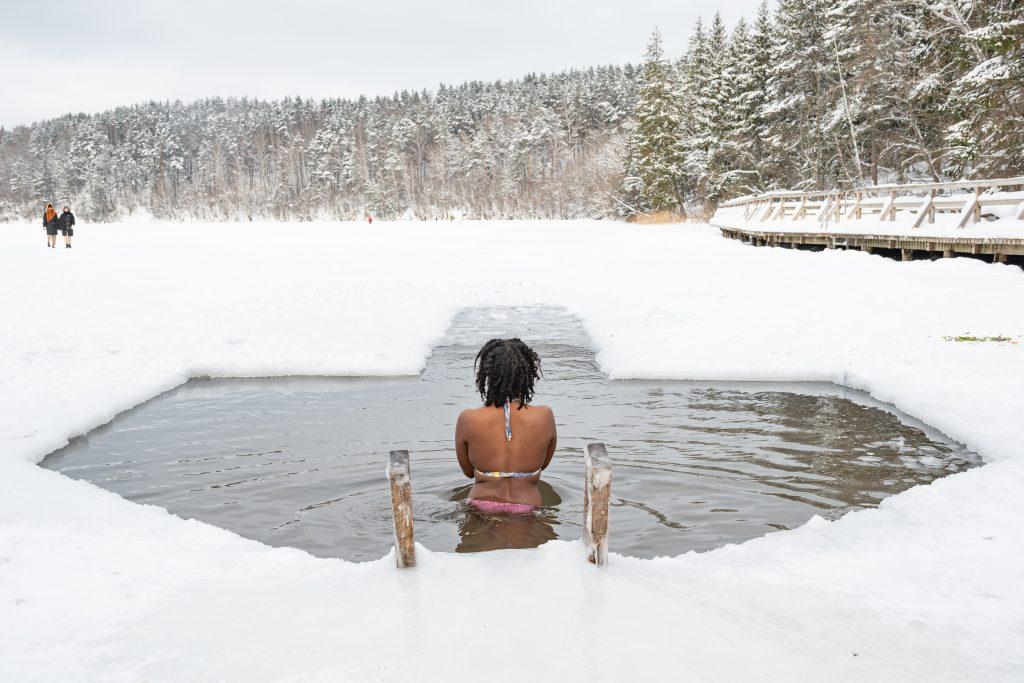
Maybe you crave community and connection. The shared experience of cold water creates instant bonds: the knowing looks, the communal shivers, the ritual of post-swim warming. Your progression might be measured in friendships formed, traditions created, belonging found rather than minutes endured.
You might need the structure of a significant challenge. Some minds require a big goal (like an ice mile) to feel fully engaged. Without that North Star, you feel restless, purposeless. The journey toward something audacious brings you alive in a way that maintenance never could.
Or perhaps you’re seeking something primal: a conversation with nature, a return to something essential. You might swim the same spot for years, becoming intimate with seasonal changes, learning the water’s moods and messages. Each path is equally valid. But knowing which one lights you up from within changes everything about how you approach this practice.
Finding flow
You know those moments when time disappears? When you’re so absorbed in something that you forget to check your phone, forget to worry, forget even to notice if you’re happy? You only realise afterwards (“that was brilliant”) but in the moment, you weren’t tracking anything. You just were.
That’s flow. It’s when skill and challenge are perfectly matched, when you can just about meet the challenge ahead of you. Not so easy you’re bored, not so hard you’re panicked, but right at that edge where you’re stretched but capable. You’re not thinking about doing; you’re simply doing. Hours feel like minutes. The inner critic goes quiet. You look back and feel a deep satisfaction.
Flow emerges from three conditions: clear goals, immediate feedback that tells you if you’re succeeding, and a balance between skill and challenge.
Psychologists have spent decades studying why these moments matter so much for our wellbeing. Unlike momentary pleasures that fade quickly, flow experiences build lasting fulfillment. We’re wired to feel most alive not when we’re comfortable, but when we’re meeting a challenge we can just about handle. Winter swimming naturally creates these conditions.
Cold water demands total presence. Your busy mind (the one replaying yesterday’s awkward conversation or planning tomorrow’s meeting) shuts up. You can’t think about your emails when you’re navigating 8°C water. This forced focus is exactly what our scattered, multitasking brains desperately need.
The beautiful thing? Flow is available whether you’re attempting your first winter dip or training for an ice mile. It’s not about how long or how far. It’s about finding your personal edge: challenging enough to require full attention, manageable enough to feel capable.
What positive psychology tells us about goals
Research on goal achievement offers clear lessons that winter swimming demonstrates perfectly. We know that self-efficacy (your belief in your capability) builds through small successes, not giant leaps. Three controlled breaths today, four tomorrow. This isn’t just being cautious; it’s how confidence authentically develops.
The difference between intrinsic and extrinsic motivation matters enormously here. Studies consistently show we persist longer and feel more satisfied when driven by internal rewards (mastery, autonomy, purpose) rather than external ones like praise or comparison. Ask yourself: Am I doing this because I’m genuinely curious about my capabilities, or because I want to impress someone? The answer shapes everything. Traditional goal-setting often becomes self-punishment. We push ourselves toward arbitrary markers that someone else decided mattered. But meaningful winter swimming goals pull you forward through genuine curiosity. Instead of “I should stay in longer,” try “I wonder what three minutes feels like?”
Your winter, your way
Whether you’re preparing for your first winter dip or contemplating an ice mile, remember: this is your journey. Find your why. Seek your flow. Honor your micro-wins. And know that whether you swim for thirty seconds or thirty minutes, you’re doing something profound: choosing your own challenge, on your own terms..

Outdoor Swimmer
Outdoor Swimmer is the magazine for outdoor swimmers by outdoor swimmers. We write about fabulous wild swimming locations, amazing swim challenges, swim training advice and swimming gear reviews.