



Immerse in weather
Rowan Clarke discovers how noticing the weather can change us and the world
September is so evocative of change. New school years, turning leaves and a tingle of anticipation for a new winter swimming season. Except the seasons aren’t as defined as they used to be. And for outdoor swimmers consistently immersed in the weather, this brings both challenges, threats and opportunities.
On one hand, we have unpredictable and extreme weather and the consequential event cancellations, pollution incidents and swim safety issues. On the other, we benefit from experiencing all nuances of weather, finding new opportunities in the blurring of the seasons and advocating for climate justice. As autumn dawns and ice swimmers hope for cold water, marathon swimmers for an extended season and swim event organisers for no disruptions, we ask how best to enjoy our crazy weather.
Weather with you
When we talk about the benefits of outdoor swimming, we focus on immersion in water, landscapes and nature, often overlooking the weather. Perhaps we just accept that sunshine is the apex weather type. But why do we yearn for sunshine?
It’s because fiction is awash with pathetic fallacy, meaning emotional value is sewn into our view of weather. In other words, it’s more than an aversion to getting soaked by the rain, it’s that we associate rain with gloom, depression and melancholy.
While we’re not all fair-weather swimmers, we probably swim despite poor weather rather than intentionally heading out in a downpour. But, in his book In All Weathers that’s exactly what author Matt Gaw says that we should do.
“If we wait for the kind of weather traditionally described as good, we wouldn’t get much swimming in. But also, we wouldn’t have much experience of life,” he says. “Being outside in all weathers lets us experience how it dramatically transforms the light, textures, shapes and colours of the world around us. One of the joys of swimming outside is that no swim is the same – wild water is a living, shifting, dynamic thing – and weather is part of that.”
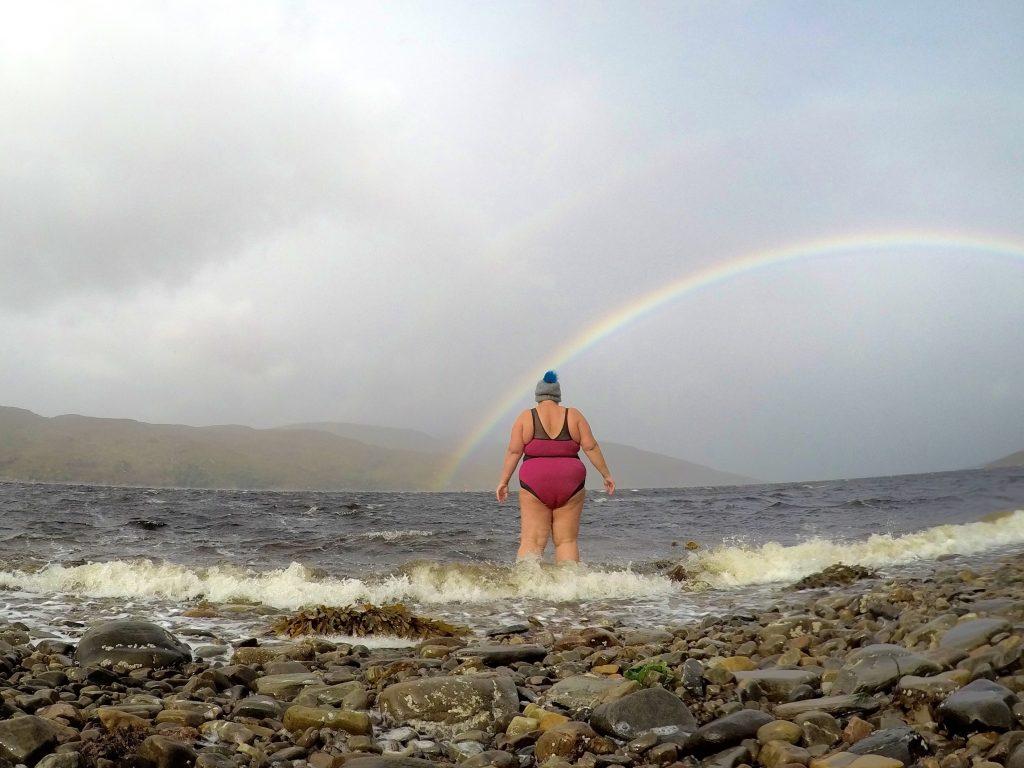
If you’ve gone swimming despite a ‘poor’ forecast and been mesmerised by drops of rain on the water’s surface, the silver light of fog or the way the wind whips up the water, you’ll understand what Matt means. But diving deeper, it seems that different weather patterns affect us more profoundly than we might expect.
Rain, for example, is thought to have a positive effect of our mood, to help relieve depression, even. Scientific research shows that the negative ions released by water could have therapeutic effects on mental health conditions like depression and anxiety.
“Negative ions are atmospheric molecules charged with electricity. They are most abundant by rivers, beaches and mountains, where air molecules are broken up by moving water and they are there too when it rains,” explains Matt. “These negative ions, which are breathed in, transferred to blood and brain, have been linked with biochemical changes that impact positively on mental health. So, while we might associate rain with gloom and noir and misery, being out in the rain – swimming in it – could actually boost our mood.”
Seasonal fluidity
The problem is, our weather patterns are becoming increasingly anxiety-inducing. Swimming in the rain may be joyful, but not when it brings flooding and pollution. What’s more, we can’t ignore the signs of climate change. Globally, this June was not only warmer than any previous June, but it was also the thirteenth month in a row to beat that record. The result? More chaotic, unpredictable weather. Put into perspective, the outdoor swimming-specific challenges this brings are nothing compared to the global threats of climate change. But polluted rivers, stormy seas and winter waters too warm for ice swimming are indicative of a planet in trouble. For open water swimmers, unpredictable conditions are a nightmare. They cause events to be cancelled, they impact training and they disrupt swims.
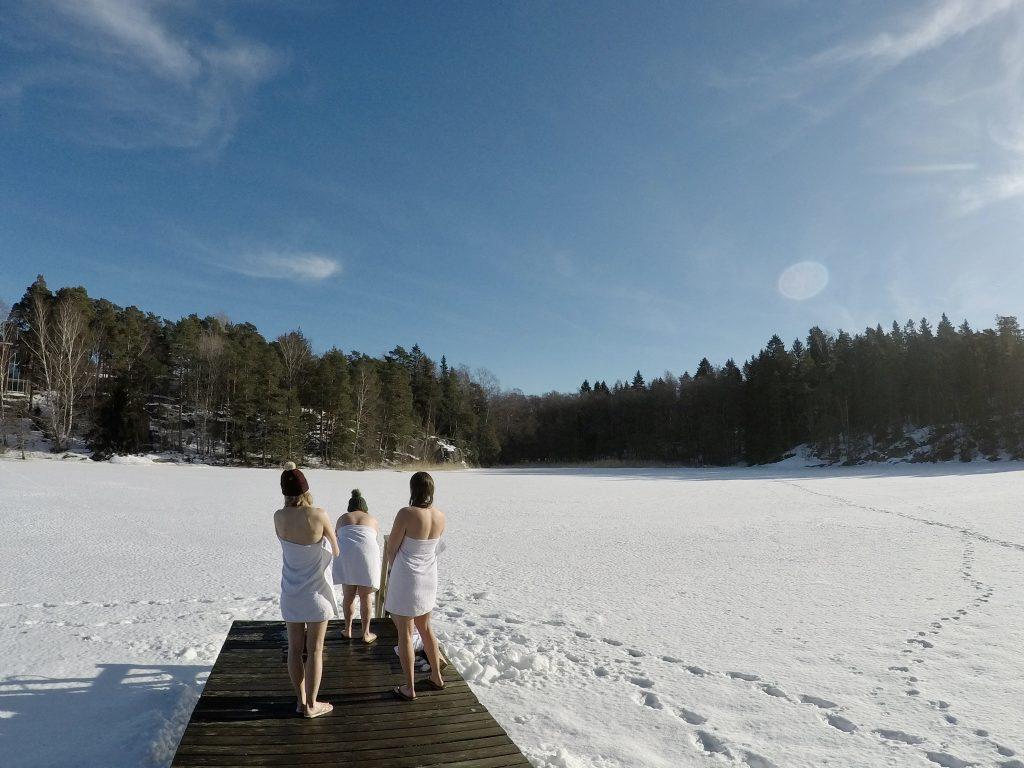
“My ice mile didn’t happen the first time around because it was too warm,” says Becca Harvey, who eventually moved to Scotland to find sub-five-degree water. “Training for an ice mile, you need that consistency. It can’t be too stormy so the water’s too treacherous or the river’s not accessible and you don’t want to be training for a whole other season and not get the temperatures.”
New horizons
This is true for distance swimmers, too. Capitalising on rising temperatures is one of the reasons that the English Channel swimming season has extended over the past few years.
“Routes that were formerly extremely difficult due to the cold have become commonplace,” says global ice and marathon swimmer, Jaimie Monahan. “Northern Hemisphere classic routes typically swimmable in July and August are now expanded into May through October. I guess it’s good for swimmers chasing laundry list goals or saying they were the earliest or latest to swim a route, but it’s sad for the world.”
On the face of it, opportunities to swim earlier or later in the season may feel like finding a positive in a bleak situation. But it’s also hugely problematic, as articulated by Emma France who runs Dover Channel Training. She worries that Channel-swimming hopefuls are naïve about the increasing number of variables involved in swimming the English Channel.
“One of the hardest aspects of the sport is when a swimmer gets blown-out of their tide, by which I mean the weather isn’t good enough to swim during the tide that was booked,” she says. “I had this happen to me in 2009 and it was incredibly tough psychologically as I ended up waiting a month for another window. That was back in a time when the season wasn’t as saturated as it is now. Now there is a real danger that there won’t be another opportunity. This is made even more problematic by the other change that seems to be happening with climate change and that is more unsettled weather.”
Turning tides
Warmer weather undoubtably allows more enjoyment of a longer swimming season. Guilty neoprene gloveless hands-up if you gratefully basked in an early October heatwave last year.
But being immersed in our natural environment and directly impacted by climate chaos, means that we’re also moved to take action. Just look at how much traction has been gained by the campaign for better river water quality over the past few years.
This response is global. In New York, for example, Jaimie Monahan explains how the organisation URBANSWIM’s swim events have positively influenced water quality advocacy, encouraging people to explore their local waters and take on ambassadorial roles.
“On my very first standalone open water swim race in New York City, I dove in and was immediately stung by sea nettles – a type of jellyfish associated with poor water quality,” she says. “New York State has since enacted environmental protection legislation that has positively impacted water quality and I never encountered this type of jelly again, in spite spending over two full weeks of my life immersed in NYC waters.”
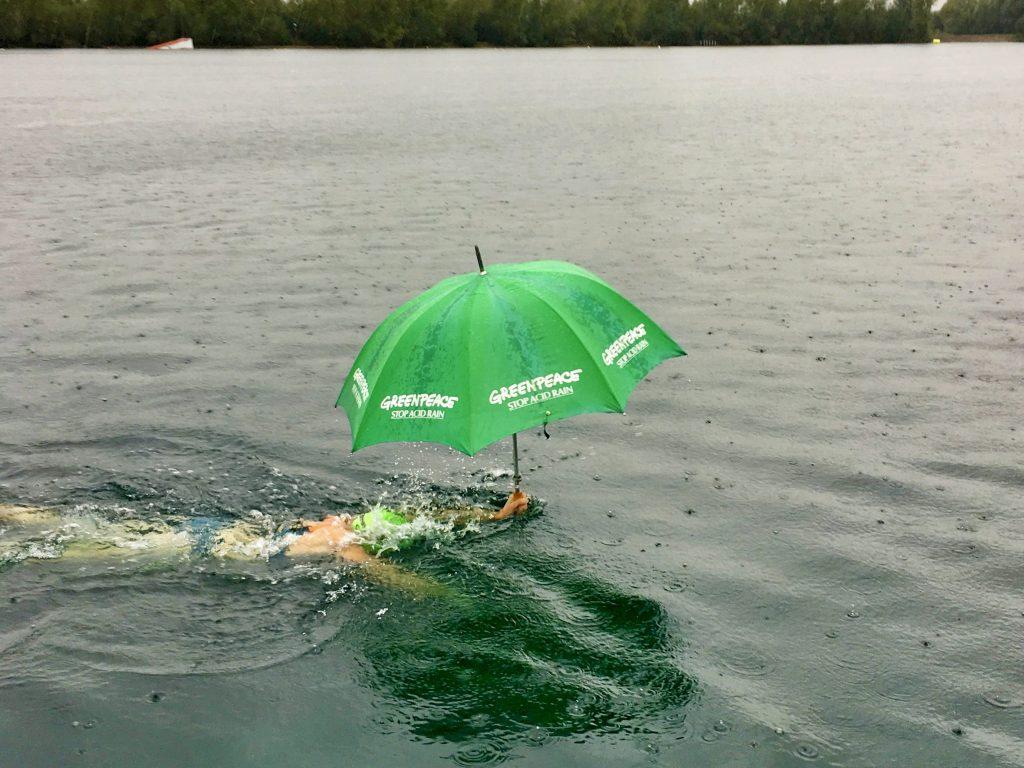
Positioning ourselves as ambassadors for the environment, it feels even more important that we immerse ourselves in water, landscape and weather. By noticing seasonal shifts, weather patterns and the impact of our swim spots, we can better advocate for our climate.
“Even though we constantly talk about weather, unless it is extreme – unless it breaks our infrastructure, screams at us, shouts louder than the din of our everyday life – we rarely notice being in what is a universal and freely accessible experience of nature,” says Matt Gaw. “If we ignore things like weather, we don’t notice its change and how our environment is being warped by our actions.”
So, as we move into autumn from a summer that has been posturing as autumn, make the most of swimming for longer; seek out that warm, autumn sunshine. But also, take joy from the silver light cast by fog, the colours when the clouds are black, the way water droplet fall on your skin. It’s good for you and, ultimately, it gives us hope against climate change.
The last word goes to Matt.
“I think it comes back to that idea of being present in our own lives,” he says. “If we see our world through a weather lens, if it becomes a model for our interactions with the natural world, I think we do become more attune to nature’s rhythms – we notice seasons and we notice weather and climate change. And that’s important because we don’t protect what we don’t love and we can’t love what we don’t know.”

Outdoor Swimmer
Outdoor Swimmer is the magazine for outdoor swimmers by outdoor swimmers. We write about fabulous wild swimming locations, amazing swim challenges, swim training advice and swimming gear reviews.