


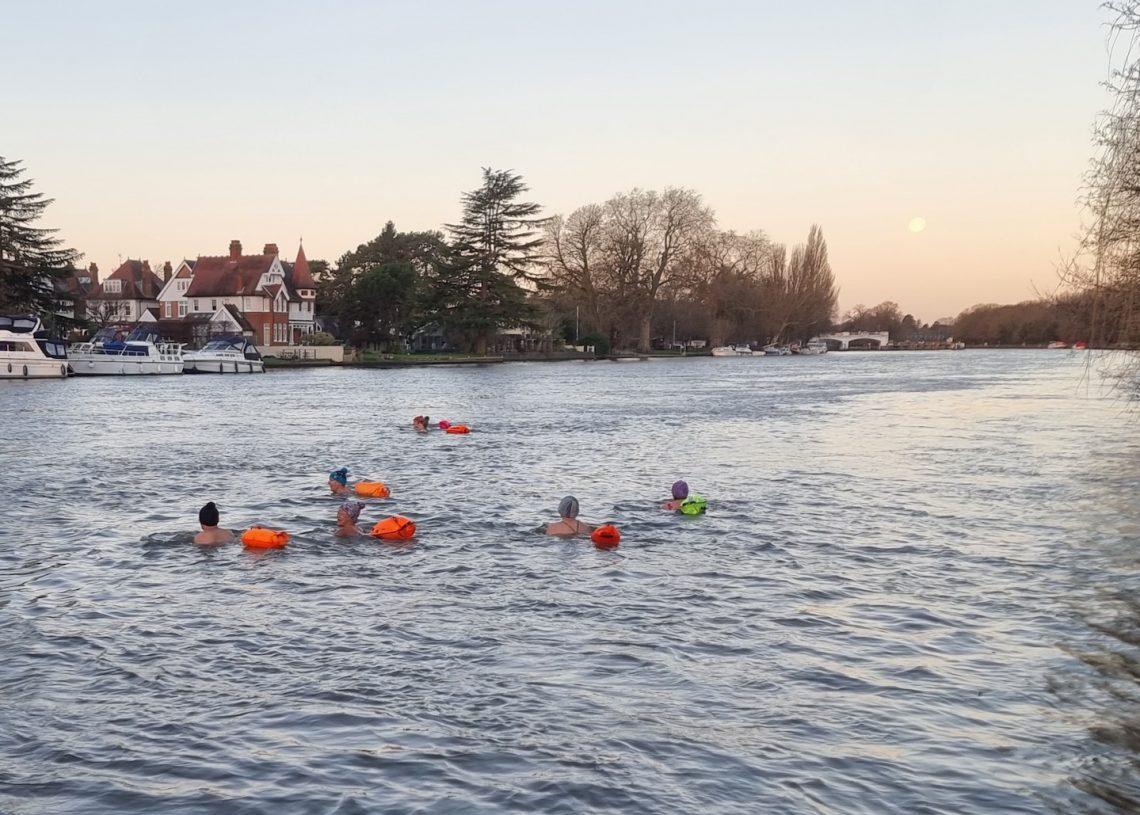
Fast, exhilarating and a little scary: a winter swoosh
Simon Griffiths explores how winter puts the wild into river swimming
At times in winter, more than 300m3/ second of water flows over the weir at Teddington Lock – enough to fill an Olympic-size pool in around 10 seconds.
With the river here is something like 100m wide and averaging about three metres deep, this flow rate translates to a current speed of around one metre per second – or 3.6km per hour. In swimmer’s language that’s one minute 40s per 100m – faster than many people can swim.
But it doesn’t stop us swimming. In fact, we’ve swum in the Thames when the flow rate has exceeded 400m3/s. The force of water is impressive.
These high flow rates are a feature of winter swimming in the Thames. In summer, the flow can be less than 10m3/s – you barely notice the water moving. We look forward to the high-speed days, monitoring the flow gauge at Kingston to determine the best times to swim.
Time to swoosh
Here’s how it works. First, we check the exit point and our emergency exit point for any obstructions. Then we strip down to our swimsuits, perhaps leaving on a single layer to help maintain warmth. When everyone is ready, we walk (or jog) about 400m upstream, check our entry point, remove any remaining layers and stuff them in our tow floats.
We then enter the water and let the river swoosh us downstream. On good days, we can cover the distance in under five minutes. It’s fast, exhilarating, and a little scary.
Risk management
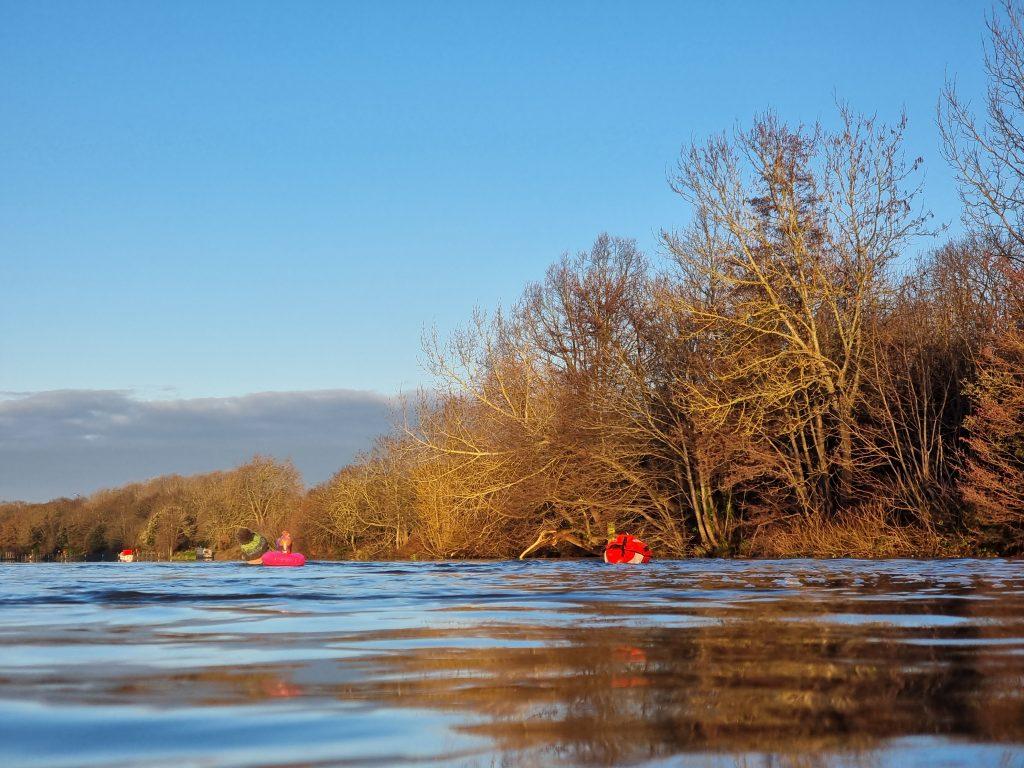
This type of swimming is not without risk, and we’ve been accused of recklessness. But we do think it through and plan how to stay safe. Acclimatisation is important to minimise cold water shock and we only swoosh if we’re confident the river will carry us to our exit point long before hypothermia sets in. High flow is good because it’s quicker. On low flow days, we shorten the distance. We use tow floats for visibility and something to hang on to, but they can snag on low branches. We therefore keep clear of the banks.
Then there is the risk of overshooting our exit. When the current is faster than you can swim, you need to get this right first time. Nobody has missed the exit yet, but if they did there are several other escape points further downstream. This is one reason why we like to build in plenty of margin for our safe time in the water.
What about pollution?
Fast flow rates usually follow heavy and persistent rain. This, we know, increases the risk of pollution. For most of us, this makes winter swimming in the Thames strictly head-up. I also leave a bottle of warm water at the finish to rinse off, and I clean my hands with sanitiser before eating. I’d rather have a clean river, but this is the reality we need to deal with if we want to swim – and I don’t hear many reports of illness, so these measures seem to help.
Finally, and importantly, we layer up quickly after swimming. The best part of a wild winter swim is feeling smug and discussing it over tea and cake afterwards, but only if you’re warm again. My kit includes thermal layers, a fleece (or two), a large coat, thick socks and windproof trousers. It’s not stylish, but it works.
Winter often offers opportunities for wild, adventurous and memorable swims but the risks are higher than in summer and you should prepare accordingly.

Simon Griffiths
I started Outdoor Swimmer in 2011 (initially as H2Open Magazine) as an outlet for my passion for swimming outdoors. I've been a swimmer and outdoor swimmer for as long as I remember. Swimming has made a huge difference to my life and I want to share its joys and benefits with as many people as possible. I am also the author of Swim Wild & Free: A Practical Guide to Swimming Outdoors 365 a Year, I provide one-to-one support to swimmers through Swim Mentoring and I'm the creator of the Renaissance Swimmer project.