

Want a healthy brain? Develop your swim skills!
Dr Hussain Al-Zubaidi reveals how developing new skills in swimming does wonders for your mental health, memory and your brain’s ‘neuroplasticity’
I have recently been working with the Royal Voluntary Service in preparation for Mental Health Week, developing a series of videos on the NHS ‘5 Steps to Mental Wellbeing’. One of those steps is to learn new skills. With swimming, this might mean taking your very first dip, learning a new stroke, or venturing into outdoor or coldwater swimming for the first time.
Learning a skill isn’t just about gaining competence in a new activity. From a medical perspective, it provides a range of psychological benefits. Developing a skill helps to build confidence and self-esteem, both of which are linked to lower levels of anxiety and depression. It also gives us a sense of achievement and purpose, qualities known to act as protective factors for long-term mental health. And perhaps most importantly, it can bring us joy. This combination of challenge and reward stimulates our brains, encouraging resilience, motivation, and positive emotions.
Swimming offers a wide spectrum of opportunities for skill development. I’ve experienced this personally. I still remember my wife patiently teaching me front crawl. At first, I could barely manage a single length without gasping for air. But through consistency and practice, each small improvement added up, and now I’m a confident long-distance open-water swimmer. The journey itself, not just the outcome, has been transformative for both my physical and mental wellbeing.
Key aspects of skill development in swimming:
- Embrace different learning styles: Variety is essential. Mix up your sessions with drills, technique focus, or bursts of tempo. It also helps to keep pool sessions interesting!
- Consistency over perfection: As the saying goes, practice makes perfect but the real secret is consistency. Small, regular efforts accumulate into significant progress over time.
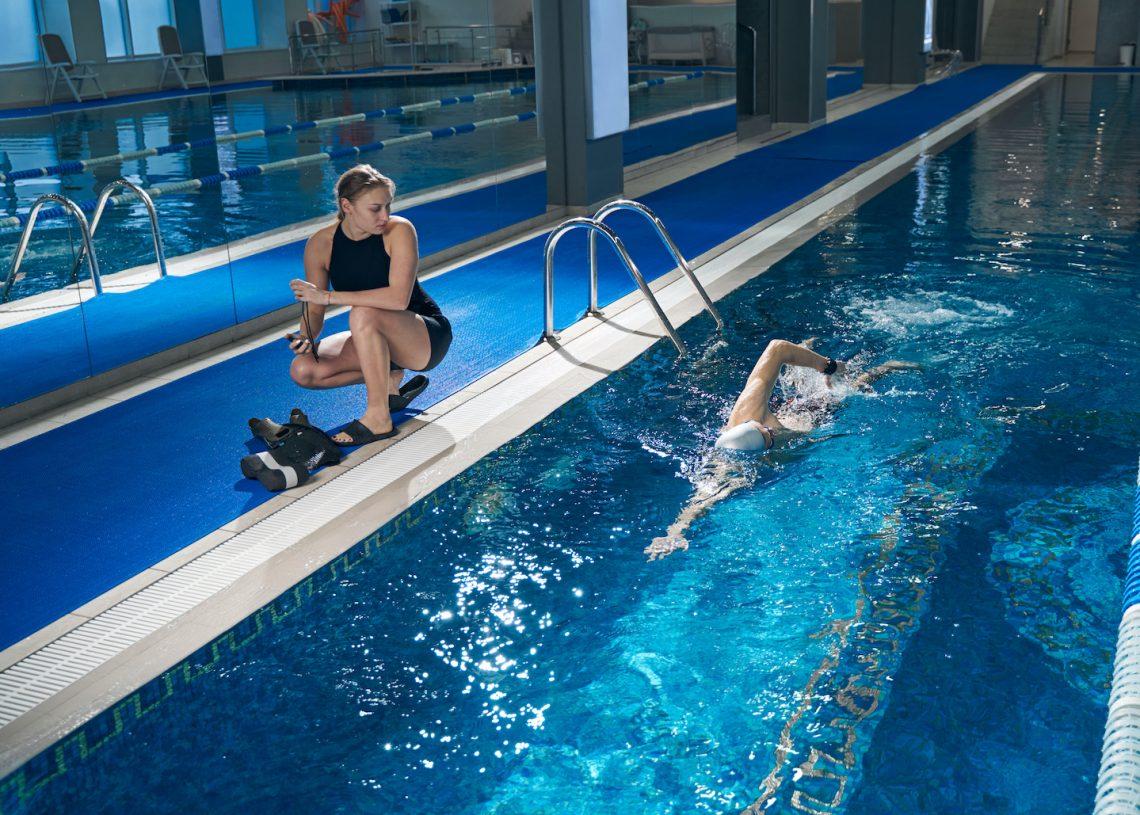
- Feedback and reflection: Objective feedback is invaluable. Ask a friend to film your stroke, time your laps, or simply notice how your body feels in the water. Reflection helps reinforce progress and identify areas for improvement.
The neuroscience of learning new skills
What’s happening in the brain when we practise something new, like a swimming drill or a different stroke? Each attempt strengthens the connections between brain cells, gradually making movements feel easier and more automatic. This process is called neuroplasticity, essentially the brain’s ability to adapt and rewire itself. The benefits go beyond swimming technique. Regularly challenging the brain with new skills is linked with better memory, sharper thinking, and even protection against age-related cognitive decline. In other words, each time you step out of your comfort zone in the water, you’re not only boosting your swimming ability but also giving your brain a long-term health workout.
Suggestion of the month:
If you’re daunted by trying something new, don’t go it alone. Learning with others increases motivation and accountability. Bring a friend, join a group, or sign up to a coached session. The social connection is an added plus alongside the physical and psychological benefits.

Outdoor Swimmer
Outdoor Swimmer is the magazine for outdoor swimmers by outdoor swimmers. We write about fabulous wild swimming locations, amazing swim challenges, swim training advice and swimming gear reviews.