
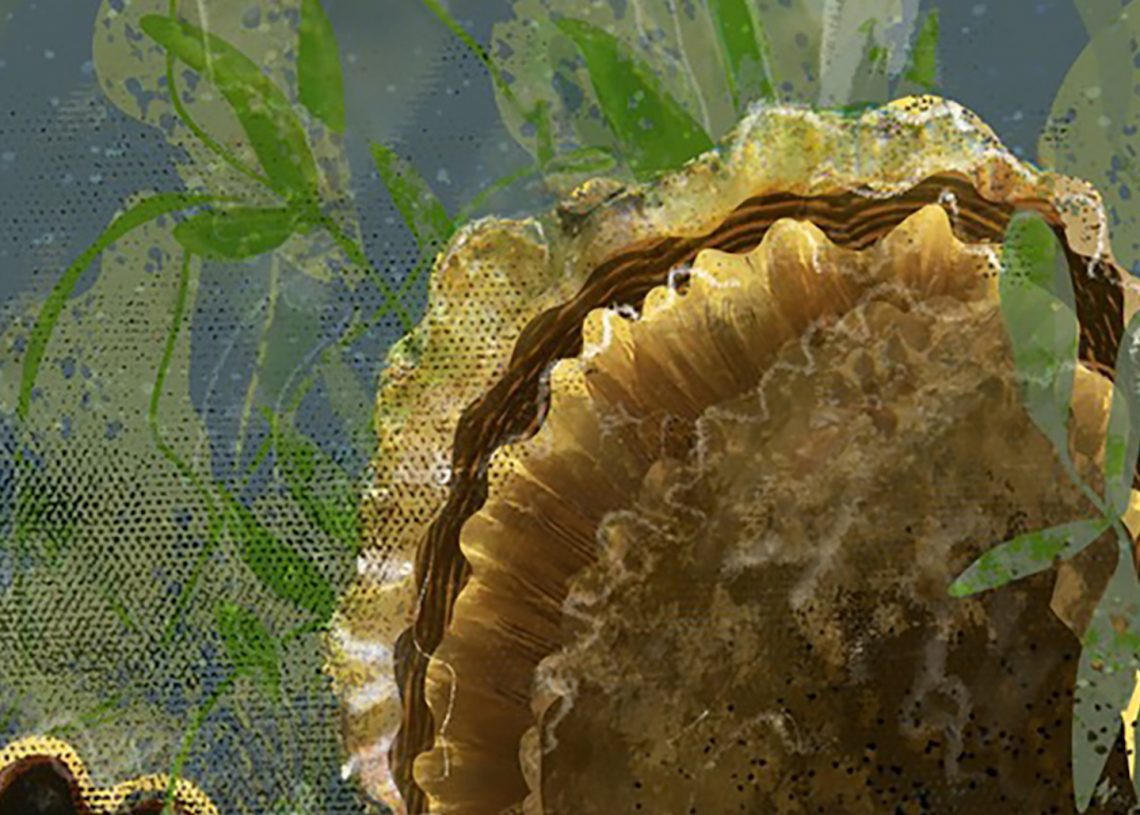
Water wildlife: Native Oyster
Register to get 3 free articles
Want unlimited access? View Plans
Already have an account? Sign in
A feast for the Romans and a Victorian staple, the once humble oyster (Ostrea edulis) has had a long and varied history on British shores
For the invading Romans, Britain was a cold place filled with barbarians, but it had a redeeming feature alongside the metals exported from its mines. Britain had oysters.
Roman insatiable taste for oysters had caused Mediterranean populations to decline. In the preceding Greek Empire, oysters were cultivated by scattering broken pottery in the sea, providing a substrate for free swimming baby oyster larvae to cement themselves on and settle down to adult life.
In contemporary times, overfishing, disease, habitat loss, pollution and competition from introduced species have reduced oyster populations throughout their native range from Norway to Morocco.
Precious eco-system
Oysters declining aren’t just a loss for people who enjoy eating them. Their colonies provide nurseries for other wildlife, their shells sequester carbon, and they clean the seawater around them.
An adult oyster can filter up to 200 litres of water in one day. BSAC launched Operation Oyster to support restoration of oysters, in this initial phase collating sightings of oysters via this online reporting form.
Their relatively flat shells can be found washed up on the tide line, and they can be spotted living in intertidal areas, as well as in the sea where they are constantly submerged.
Oysters grow on areas where the seabed is hard, on wrecks, and on built structures in the sea, such as pier legs.
An expensive delicacy
As oysters have declined by 95% over the past 200 years, we are used to seeing them as expensive items to be individually savoured. However, in the 19th century they were given away as free bar snacks to entice people to drink beer in pubs.
For the Victorians, the poorer you were the more oysters you used – in place of expensive beef, to make beef and oyster pie. Oyster middens, heaps of oyster shells discarded after they’ve been eaten, show us that oysters have long been an important food for people.
At Culleenamore, County Sligo, the ribbon midden of oyster shells, which is six metres deep and 200 metres long, dates back to 1050CE. Oyster shells are abundant in Mesolithic middens.
Back on the menu
On menus now you are more likely to see rock oyster (Saccostrea glomerata) or pacific oyster (Crassostrea gigas), but some native oyster beds are still being cultivated and harvested in Britain and North America.
In Essex the oyster beds around Mersea are being restored by the Essex Native Oyster Restoration Initiative. Alongside establishing a Marine Conservation Zone and a fisheries management plan waste oyster shells from shellfish stalls in Borough Market, London and on Mersea Island are being brought back to the sea and used to provide substrate for larval oysters to settle and grow on.
This is not just a project aiming to harness the ecosystem services of improving water quality and increasing biodiversity that oyster beds offer. Oysters and livelihoods from their harvesting are living cultural heritage connecting back to Roman times and beyond.
Where to see oysters
• River Fal, Cornwall
• Lough Foyle, County Londonderry and County Donegal
• Porthcawl, Bridgend County
• Loch Ryan, Dumfries and Galloway
This article is from the February 2023 issue of Outdoor Swimmer. Click here to subscribe to the magazine. Words: Susanne Masters, Illustration: Alice Goodridge