A mile to a marathon
Have you swum in mass participation events but feel ready to take your swimming to the next level? Coach Kate Gillwood gives the lowdown on solo swims and explains how you can step up to marathon distances
As you stumble out over slippery stones onto the mat and under the gantry, you are elated to have swum a mile for the first time. What an achievement – to go from short, shivery dips and 30 maybe 40 lengths in the pool, to this.
The start line was nerve wracking; the other swimmers around you were excited and confident, chatting away. The starting horn blew, you ignored those running and diving in, swimming furiously to the front, and walked in only to find yourself bouncing around in the melee. But you love the open water, so much freer than the fumes of chlorinated pools and unpleasant lane rage. This way you get to swim as part of the stunning natural world.
Mass participation swims have a solid place in the open water community. They offer security and accessibility for all swimmers. It is exciting to be part of that, to build confidence in a safe environment. But there is that other thought taking shape in your mind. You want to swim on your own, go further, do a solo swim. It might feel like a huge jump from that mile to a marathon (which is 10k or above) but it is more possible than you might think. However, preparing to swim a marathon needs commitment, time and support.

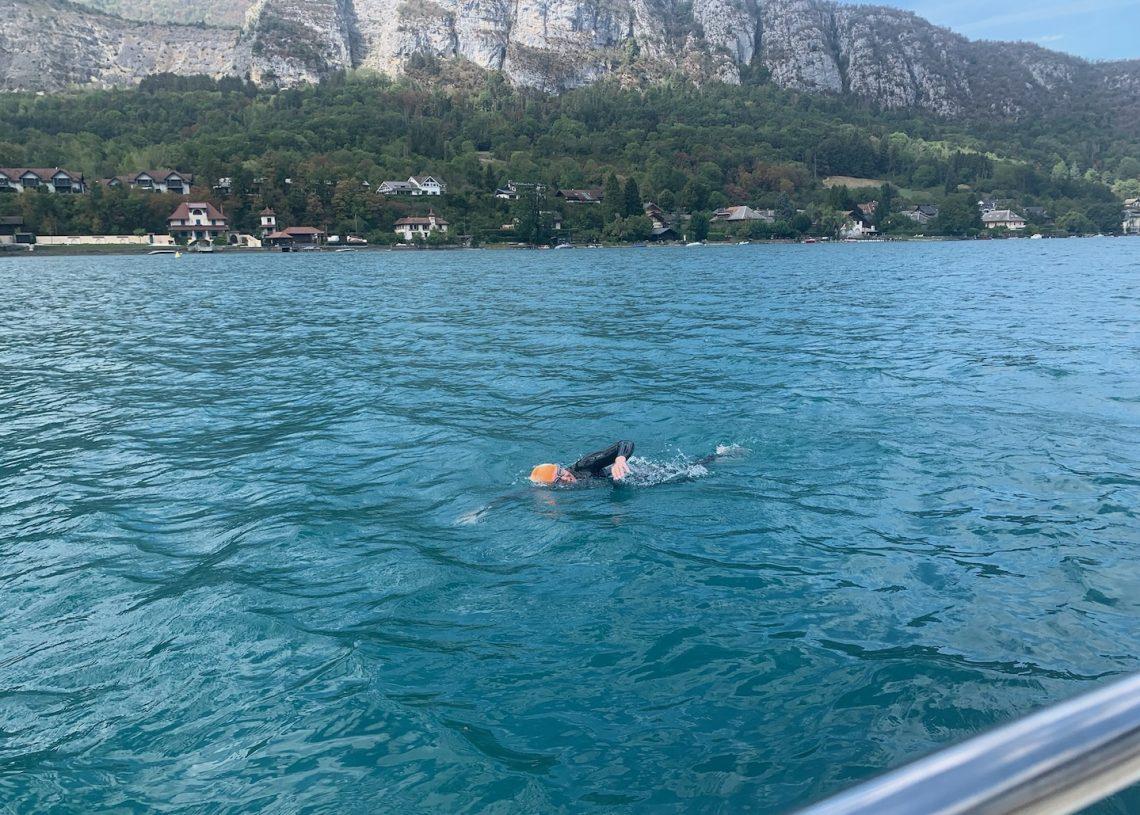
When you think of solo swims you imagine quietly gliding through the scenery, but a solo swim is also a carefully planned event, with all possibilities considered and a number of people involved.
Your team should include a coach, a boat (and pilot), observer (if you want ratification), a feeder and of course your friends and family because without their support it will be really hard to fit this into your already busy life. Your team on the boat will all have to be knowledgable enough to understand potential safety hazards and how to proactively avoid them or react when necessary, plus know what everyone needs to do to respect and enjoy the environment.
All in the preparation
To transition from a mile to 10k or above requires pool training for speed, endurance and technique, plus land based exercises. Not because you are trying to break any records but because being as prepared as possible means on the day you will walk into the water with confidence knowing that you have the resilience to enjoy it. The goal is to get to the end feeling like it really wasn’t too hard even though your shoulders will be sore.
You also need to understand and learn to manage your feeds. Marathon swimmers try a plethora of different food stuffs. It is acutely important to train with what you plan to use on the day so you know how your body reacts and what helps lift your mood. You need to ensure you get sufficient energy and something to give you a lift when the going gets tough – which could be marshmallows or even salted potatoes!
Recognition on paper
And then there is ratification. There is something special about getting a certificate from an international organisation saying that your swim has been recognised, a validation of your achievement. Two examples are the World Open Water Swimming Association or the Marathon Swimmers Federation. If you want ratification your observer is key. They must log a range of details every hour after the start time. These include water temperature, wind speed, wind direction, time they make a log entry, your apparent mood and stroke rate. They must also take photographs and videos of you swimming, all to be submitted to the international organisation you choose to seek ratification from. The feeder must also submit a log of every feed, including time and what you ate or drank.
Other information required is GPS data. There are various tracker devices out there but the best ones work on both GPS and mobile connection, so they never drop out. Your swim location is also important in terms of the likely water conditions and what equipment you use. There are some stunning possibilities across the world, but all impact on the availability of local support. When you climb onto the boat to go to the start point all of this will have been meticulously planned, everyone will know what they need to do. All of this means two things: you will be as safe as possible and you will enjoy your swim.
Kate Gillwood is an open water coach, teaching mainly in Portobello, Edinburgh; swimfreedom.co.uk

Outdoor Swimmer
Outdoor Swimmer is the magazine for outdoor swimmers by outdoor swimmers. We write about fabulous wild swimming locations, amazing swim challenges, swim training advice and swimming gear reviews.