
A year-round approach to training for long swims
Register to get free articles
Want unlimited access? View Plans
Already have an account? Sign in
Simon Griffiths looks at a year-round approach to preparing for major endurance challenges
Part of training for long swims is – perhaps obviously – doing long swims. But training for hours on end isn’t always productive or practical.
On the productivity side, those long swims are important, but you will progress quicker with a more varied approach, as we explore below.
Practically, many public pools still operate booking systems introduced during the pandemic. Once your hour (or sometimes less) is up, your swim is over. Even if you’re lucky enough to have unrestricted pool access, endless lengths in a public lane can test your patience and forbearance as much as your physical endurance.
Outside, things may be easier, but in many countries you are limited by the climate. There may only be a few months when you can safely swim for several hours. Also, unless you swim at a supervised venue, we don’t recommend swimming alone, especially if you’re in the zone and losing awareness of your surroundings. So what to do?
Winter miles make summer smiles – but think smarter
Runners and cyclists often log big distances over the winter to build endurance. As a swimmer, you might find this difficult – and it isn’t necessarily the best way to use your pool time in those colder months anyway.
Instead, winter is ideal for working on your swimming technique, especially early on. Shorter, focused swims let you work on form without fatigue interfering.
You will also benefit from a variety of pool sessions mixing speed, threshold and longer distance efforts. Swim different strokes, too. As the winter progresses, you can try some longer continuous swims, but keep technique your top priority.

Spring boosts
If you have the time and budget, an early season training camp or swim holiday is a great way to get some distance in before the summer. But choose with care.
Some training camps are aimed at Channel and Oceans Seven swimmers, will push you hard, and take place while water temperatures are still cool enough for qualifying swims. These camps build mental toughness as well as physical condition. Pick one of these if you have a major marathon swim planned and want a tough-love approach to your training.
For something more relaxed, choose a swim holiday that offers longer swims. I did a ‘long-swims’ week in Mathraki (near Corfu) with SwimQuest a few years ago. We swam 5km to 8km most days, and one day we swam a straight 10km. But the agenda was relaxed, the pace easy, and the water temperature comfortably over 20 degrees.
Another option is an Ultraswim 33.3, in which you cover 33.3km over four days. For some swimmers, completing one of these might be an end-of-season goal. But if you are already a seasoned distance swimmer, bringing in a competitive element early in the season could add a new dimension to your training.
Group up for summer
If you must swim alone, your safest option is a supervised venue or a lido on a quiet day. We can’t recommend swimming alone in open water, although we know some people do.
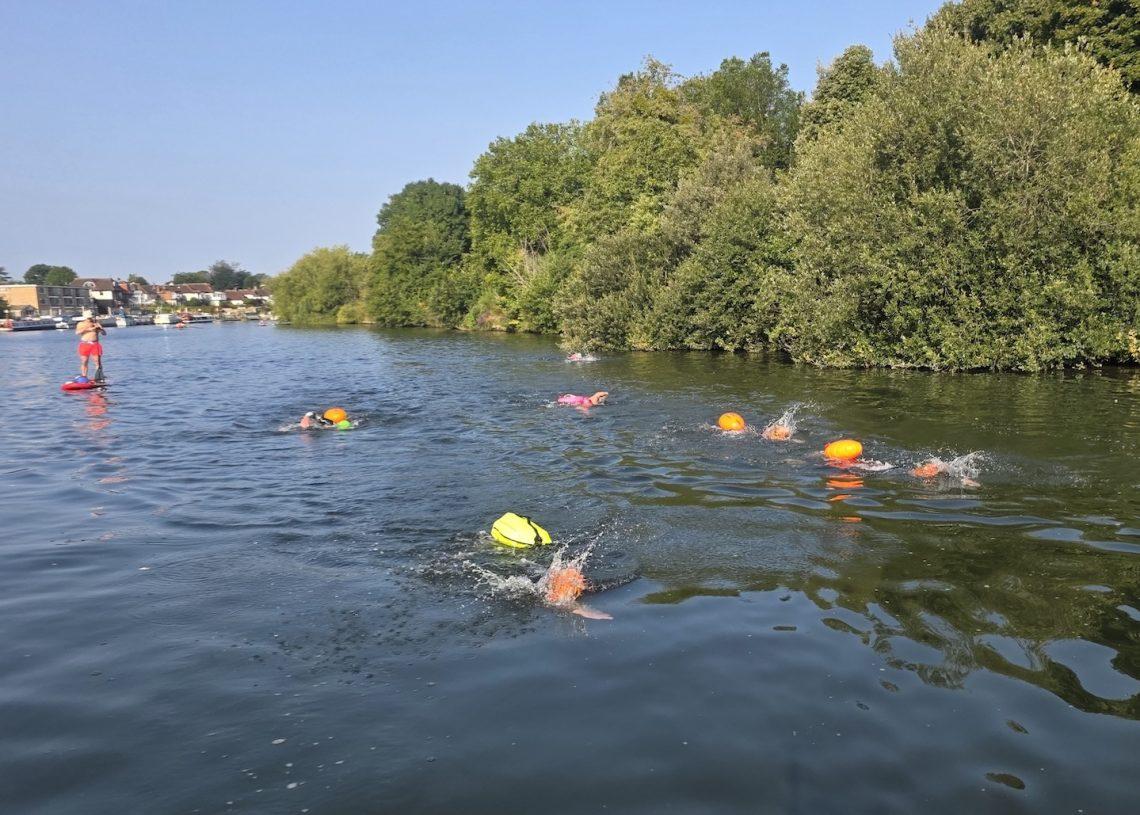
Instead, could you persuade some friends to swim or paddle with you? This might be a regular thing – once a week maybe – or a one-off special occasion. For example, if you want to explore a new stretch of river, cross a lake or swim around a headland, can you find people to share the adventure with? It takes a little organising but it’s worth the effort. I try to bring together a few friends each year for the 7.5km swim from Hampton Court to Teddington Lock. Swimming in a group with paddleboard support makes it easier to avoid the many skiffs and other boats also using that section of the Thames – and it’s more fun than swimming solo too.
Getting event-ready
It’s likely your big challenge is in the summer. If it’s a major swim (for you), allow yourself several months to prepare and build up gradually. It’s best to avoid sudden jumps in distance – they risk injury and burn out. Many swimmers follow a pattern of adding 5% to 10% each week for three weeks, and then cutting back to 50%-75% for an easier week.
Most swimmers benefit from a taper in the final week or two before their big swim. This is a gradual reduction (tapering) in your training volume. The idea is to reduce fatigue while maintaining fitness.
Stay strong on land
It can feel overwhelming to add land-based training to a busy swimming week, but even one session a week helps. It builds strength and reduces your risk of injury. In the first instance, pick something you enjoy, whether it’s yoga, Pilates, exercise classes or hitting the gym: anything that gets you moving in a different way. If you have more experience or are aiming for a significant challenge, then consider a tailored strength and conditioning programme.
Make the most of your fitness
It seems a shame to build your swimming fitness for a single event. Once your big swim is over, look for other challenges: a shorter swim with a fun angle or one in an iconic location. If I get the chance, I like to do a late season swim somewhere warm – not necessarily a swimming holiday, but a holiday built around a swim.
The flexible year
Thinking about your long-swim training in a yearly cycle keeps training varied and productive:
• Winter – refine your technique
• Spring – build distance
• Summer – race or complete your main challenge
• Autumn – recover, explore and have fun
This structure also lets you adjust if your main event is in a different season. The key is flexibility – and remembering that long swims aren’t just about endurance. They’re about variety, balance and enjoyment, too.