


Ankle mobility for swimmers
Building ankle strength and flexibility can literally propel your swimming technique, supporting a more effective kick, says personal trainer Liz Lowe
The ankle’s primary movements are plantarflexion (feet point forwards, toes move away from body) and dorsiflexion (feet flex, toes come towards the body). Plantarflexion is particularly key for swimming. Two other movements, inversion (sole of foot turns inward) and eversion (sole of foot turns outward), occur at the subtalar joint just below.
Test your ankle mobility
This quick test can give an indication of ankle tightness. Measure around 5 inches (12.5cm) from a wall. This is roughly hand width. Facing the wall in half-kneeling position, place one foot with toes against the marker. Take the knee towards the wall, keeping the heel down (stopping if this causes any pain). If the knee doesn’t reach the wall, working on ankle mobility may be beneficial. As a caveat, there could be other issues, and personalised advice may be more appropriate. Strength and mobility limitations in the ankle joint can impair stability and balance or lead to compensatory pain elsewhere (for example, knees or hips), so it’s well worth looking after this joint.
Three ways to build stronger, more flexible ankles
1. Keep them moving
Joints love movement, and performing the actions mentioned earlier (plantarflexion, dorsiflexion, inversion, eversion), plus adding rotations to take the ankles through their full range of motion, will help keep ankles mobile. Try a few reps of each while seated or add a balance and strength element by standing on one leg and working the other.
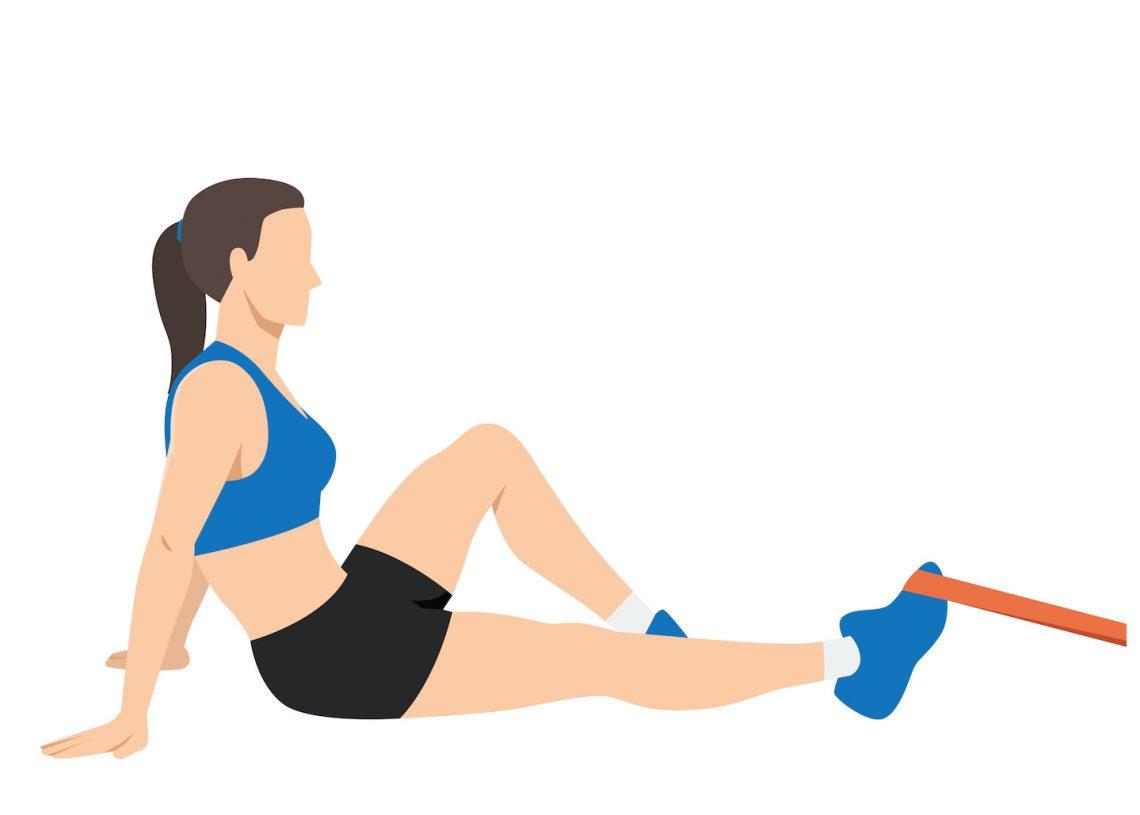
To build more strength and stability, perform the same moves seated with a resistance band looped around the foot.
2. Stretch and strengthen the calves
Calf stretches: Come into dorsiflexion, placing the ball of the flexed foot against a wall. You should feel a stretch through the ankle and calf. Adjust the angle to adjust the stretch. Hold for up to 30 seconds.
Calf raises: Place balls of feet on yoga blocks or similar and come up onto tiptoes before descending slowly with control. To add a balance challenge, try a singleleg version.
3. Heel-elevated squats
Elevate heels on yoga blocks or similar and come into a squat position, ensuring chest is lifted, arches of feet remain active, and knees track over second/third toes. Hold for a few seconds and come up, repeating 5-10 times. Over time, a deeper squat and reduced heel height may be accessible.

Outdoor Swimmer
Outdoor Swimmer is the magazine for outdoor swimmers by outdoor swimmers. We write about fabulous wild swimming locations, amazing swim challenges, swim training advice and swimming gear reviews.