



Top tips for festive dips
Christmas morning dips, New Year’s Day swims and loony dooks: a mad dash into the sea has become a festive tradition. If you’re tempted to join in this year, follow our top tips for safe swimming.
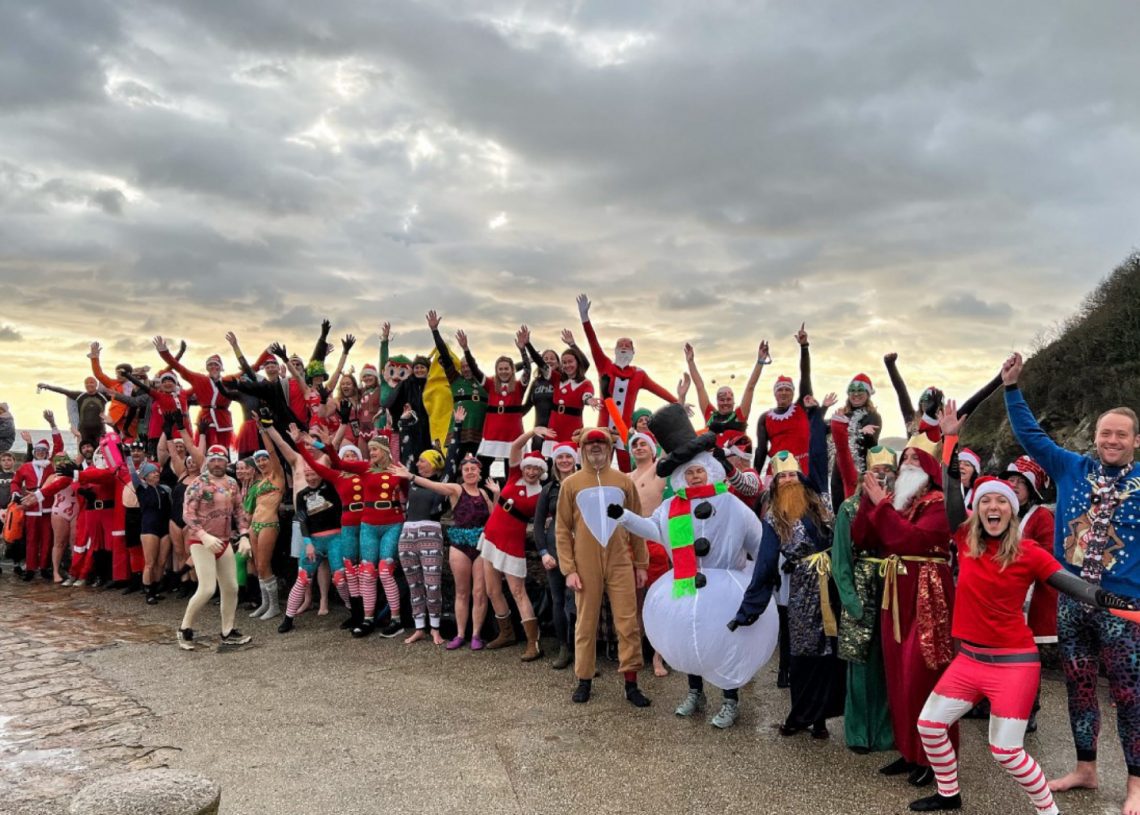
Turkey? Basted. Presents? Wrapped. Christmas tree? Decorate. Dash into the sea with hundreds of people? Let’s go! The cold water dip has become a firm festive tradition, with swims taking place on Christmas Day, Boxing Day and New Year’s Day all around the world.
But can anyone do it? Should you take the plunge with a hangover? What if your rellies want to join in? We share our top tips on safe festive dipping.
Read our list of festive dips 2025/6
A long tradition
Festive swims began in the 19th century with the first open water swimming clubs. In Brighton, for example, the oldest swimming club in the UK met every morning at 7am, and that included Christmas Day, Boxing Day and New Year’s Day. But it wasn’t until the 1970s and 80s that one-off festive dips became a thing. One of the best-known UK New Year swims is the Loony Dook in Edinburgh. It was started in 1986 by a group of friends wanting to wash away their hangovers. Forty years later, it is bigger, brighter and loonier than ever.
Hangover cure?
A bracing dip is often touted as an efficient way to get rid of your Christmas or New Year hangover, but even if you are a seasoned cold-water swimmer, you should still be aware of the risks of a cold-water dip the morning after.
Cold water indeed clears your head, but during the season of excess, be mindful that cold water swimming while hungover also increases your risk of hypothermia. Being hungover makes you tired and dehydrated with low blood sugar levels and electrolyte imbalance, which causes muscle fatigue and cramps.
Swimming under the influence of alcohol is a big no-no. Alcohol causes blood vessels near the skin to dilate, increasing heat loss, so you’ll get colder and struggle to warm up. It also impairs your judgement, coordination and reaction times, so save the mulled wine for later.
Cold water chaos
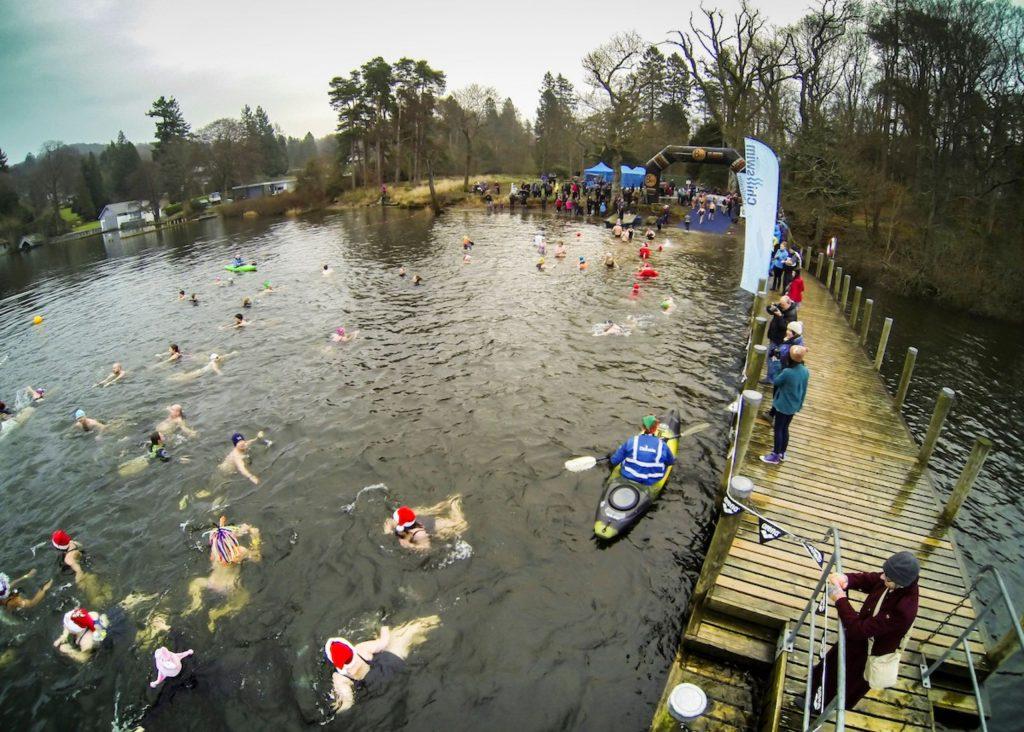
Every year, there are organised swims by local Rotary Clubs, swim venues and lidos. They raise important funds for charities like the RNLI. These events often provide safety cover with lifeguards or the RNLI in attendance. But not all festive dips are so well organised or have safety cover.
If this is your first or only cold water dip of the year, or you’re taking unacclimatised friends or family, we really recommend finding an organised swim or swimming at a venue with lifeguards. You can find our list of 2025 festive dips here.
But, if you’re going to an ‘at your own risk’ event or dip independently, be aware that running into water and throwing yourself into the sea is very different from a more traditional and considered entry.
Swim safely
Follow our top tips for safe festive swimming so you can enjoy the rush of cold water dipping in (relative) comfort.
- If possible, acclimatise. A few brief dips before the big event will prepare you for the cold and make your swim more enjoyable.
- Make sure you are wrapped up warm before the swim. And don’t get undressed until the last minute.
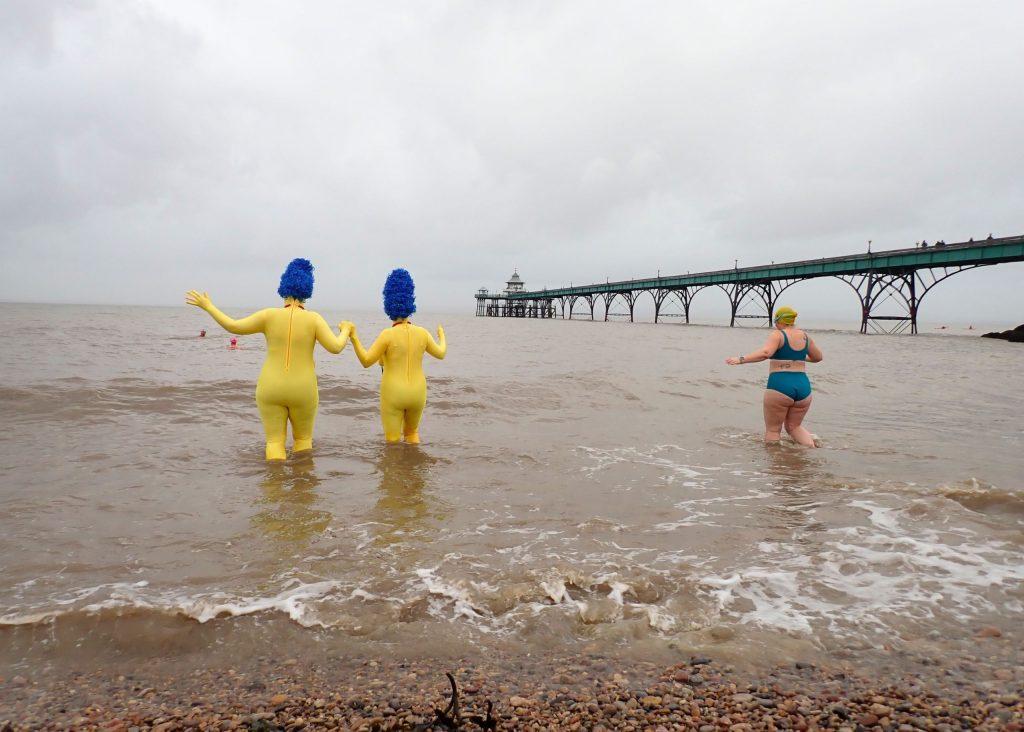
- Wear the right kit. Wear a swimming hat, or two, to help preserve body heat. You can also wear neoprene gloves, booties and a balaclava. If you are wearing fancy dress, make sure it is suitable for swimming in – be aware that it’ll get heavy in water! You can always wear a wetsuit under your Santa suit.
- Take care when running into the sea. A madcap dash into the sea isn’t so much fun if you twist your ankle.
- Do not dive or jump in. Cold water causes a huge intake of breath and cold water shock, which can be very dangerous. Instead, immerse yourself slowly, remembering to breathe, and do not put your head under the water until your breathing is under control. Once you’ve overcome cold water shock, you can get out and jump in.
- Keep it brief. In winter, even experienced swimmers often only swim for one or two minutes at a time. You might not feel cold until after you get out of the water, so be aware of ‘after drop’ and do not stay in the water too long.
- Get dressed quickly. Remember that your body temperature will continue to drop after you get out, so take off your wet clothes and put on your warm, dry layers as quickly as you can after you get out.
- Warm up slowly. Do not have a hot shower or bath. Hot water can cool your core, and it can be dangerous. Instead, make sure you have plenty of warm clothes, wrap up well and have a hot drink and something to eat.
Prepare for your festive dip
You’ve already started preparing for your festive dip by reading this article – knowing what happens to your body in cold water will help you stay safe.
But you can also make sure that you warm up well after your swim by packing the right kit.
Your kit checklist
- Your swimmers, plus neoprene accessories and a hat to wear in the water
- Towel
- Flip flops or Crocs to wear to and from the water’s edge
- Warm, loose, comfortable layers
- Woolly gloves
- Woolly hat (or Santa hat!)
- A warm weatherproof coat or changing robe
- Flask of hot drink
- Cake
Main photo by @lizziecroxford; event @mad_hatter_sports

Jonathan Cowie
Jonathan Cowie is our former editor. He is a year-round skins swimmer with a particular love of very cold water. He has competed in ice swimming competitions around the world. He is a qualified open water coach with a particular love of introducing new swimmers to the open water.